
Mobile Locksmith Response Time Guide for Emergencies
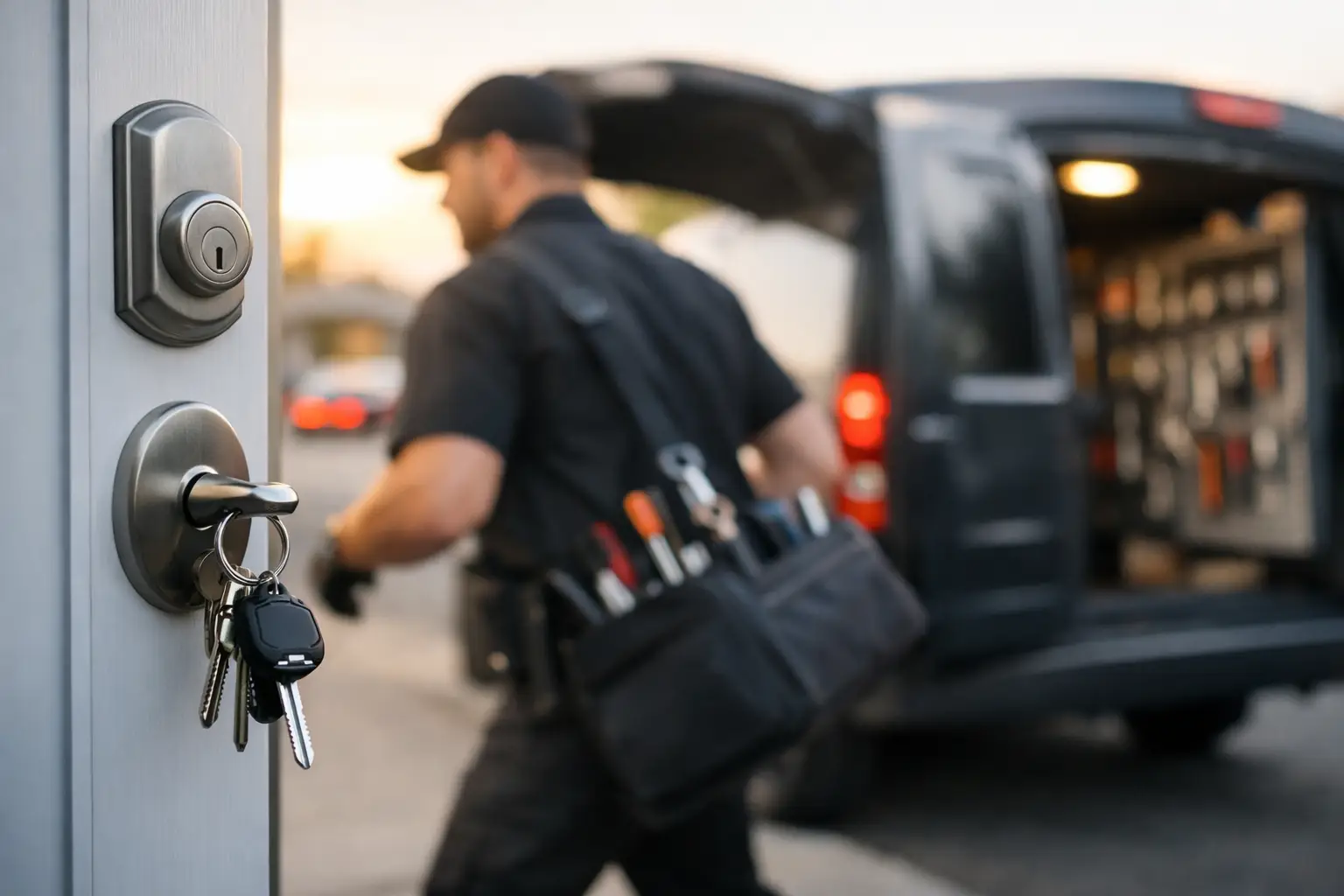
A lockout rarely happens at a convenient moment. It may be late at night outside your home, in a parking lot with your keys inside the car, or at a business entrance before employees arrive. This mobile locksmith response time guide explains what affects arrival times, what a qualified technician can do once on-site, and how to make an urgent service call go more smoothly.
For homeowners, drivers, and businesses in Montgomery County, a fast response matters. But the right response is more than getting a technician to your location quickly. It also means sending a licensed, insured, and properly equipped professional who can identify the problem, protect your property, and complete the appropriate repair or entry service on-site.
What Affects Mobile Locksmith Response Time?
A mobile locksmith travels directly to the customer, bringing tools, key-cutting equipment, diagnostic technology, replacement hardware, and programming capability when needed. Because the technician is dispatched from a current location rather than waiting at a storefront, response time can vary based on the conditions of the call.
The first factor is location. A locksmith already working in Rockville may reach a nearby residence or office sooner than a call across the county. Service areas such as Silver Spring, Bethesda, Gaithersburg, Germantown, Potomac, and Olney can involve different travel routes, traffic patterns, and distances. Giving an exact address or nearby cross streets when you call helps the dispatcher send the closest available technician.
Time of day also matters. Rush-hour traffic, road closures, severe weather, and late-night conditions can all change travel time. A professional 24/7 locksmith should communicate clearly rather than making promises that do not account for real conditions. An honest estimated arrival window gives you useful information while allowing the technician to travel responsibly.
The nature of the problem can affect dispatch planning as well. A basic house lockout may require a different tool set than a damaged commercial door, an electronic access issue, or a vehicle that needs transponder key programming. Explaining what happened before the technician is sent helps ensure the right professional arrives with the equipment needed to address the issue without unnecessary delays.
When a Fast Locksmith Response Is Most Important
Some lock issues can wait for a scheduled appointment. A loose deadbolt, a door that sticks occasionally, or a planned rekey after moving can often be handled during normal hours. Other situations deserve immediate attention because they affect access, security, or a person’s ability to get where they need to go.
An emergency call is appropriate when you are locked out of your home, vehicle, or business; when a key breaks in a lock; when a door will not secure after damage; or when an ignition failure leaves you stranded. Business owners may also need urgent service if a compromised lock leaves a restricted area exposed or if panic hardware is not functioning properly.
There is a practical distinction between inconvenience and risk. If you are in an unfamiliar area, have a child or vulnerable passenger with you, or cannot secure your property, tell the dispatcher immediately. That context helps the locksmith company prioritize the situation and provide appropriate guidance while help is on the way.
If there is an immediate threat to people or property, contact emergency services first. A locksmith can restore access and repair security hardware, but emergency responders are the right resource for active danger, medical concerns, or a suspected break-in in progress.
What to Tell the Dispatcher for a Faster Visit
A clear first call can reduce back-and-forth and help the mobile technician prepare. Start with your exact location, including the building number, unit number, parking instructions, or a visible landmark if you are in a large complex. For a vehicle lockout, share the make, model, year, and your vehicle’s location.
Then describe the issue in plain terms. Let the dispatcher know whether you are locked out, whether a key is missing or broken, whether the lock is turning but the door will not open, or whether the door will not lock. For commercial properties, identify the affected door and whether it uses a standard lock, keypad, access control reader, panic bar, or other hardware.
It also helps to mention any prior damage or attempted repair. A lock that was drilled, forced, or altered may need more than a standard entry procedure. Honest details allow the technician to bring appropriate replacement parts and avoid discovering a critical issue only after arrival.
Finally, be ready to verify that you have the authority to access the home, business, or vehicle. A reputable locksmith protects customers by confirming ownership or authorization before opening a locked property. That process is a sign of accountability, not a delay tactic.
Need a Fast, Licensed Mobile Locksmith?
Multi Locksmith LLC dispatches licensed and insured technicians throughout Montgomery County for home, auto, and business lockouts, broken keys, and urgent lock repairs.
📞 Call 240-706-4799What Happens After the Locksmith Arrives
Arrival is only the first part of the response. A trained locksmith should assess the lock, door, key, or ignition before beginning work. The goal is to use the least destructive method appropriate for the situation while preserving existing hardware whenever possible.
For a residential lockout, the technician may be able to restore entry without replacing the lock. If the lock has failed, the professional can explain whether repair, rekeying, or replacement is the better option. When keys have been lost or may be in someone else’s possession, rekeying can prevent old keys from working without requiring every lock to be changed.
Vehicle service requires a similar diagnostic approach. Modern vehicles may use transponder chips, remote fobs, push-button systems, or ignition components that require specialized tools and programming knowledge. A professional automotive locksmith evaluates the vehicle’s security system before choosing the correct method, rather than forcing entry and risking damage to the door, weather stripping, or electronics.
At a commercial property, the technician may need to inspect door alignment, hinges, closers, latch engagement, or access control components in addition to the lock itself. A door that will not lock reliably is not always a lock problem. Addressing the complete issue helps restore dependable security for employees, tenants, inventory, and restricted areas.
Response Time Is Also About Preparation
The quickest way to reduce the impact of a lock emergency is to prepare before one occurs. Homeowners can keep a trusted contact’s number available, consider a rekey after a move or personnel change, and address stiff locks before they stop working. Drivers should keep a spare key plan in mind and avoid storing their only working key inside the vehicle.
Property managers and business owners benefit from a more structured approach. Maintain current records of authorized contacts, document which doors use restricted keys, and schedule repairs when hardware begins showing signs of wear. Master key systems, access control, properly maintained deadbolts, and correctly installed panic hardware can reduce confusion when access issues arise.
Preparation does not eliminate every emergency. Keys break, batteries fail, locks wear down, and people make understandable mistakes under pressure. It does, however, make the next call easier because you can provide accurate details and reach a verified local professional without searching through unconfirmed listings.
Choosing a Mobile Locksmith You Can Trust
During a lockout, it is tempting to call the first number that appears in a search. A better approach is to look for a company that clearly identifies its local coverage, provides 24/7 emergency support, and sends licensed, insured, background-checked professionals. Those standards matter because a locksmith is being asked to work on the entry points that protect your home, vehicle, or business.
Ask whether the company handles the specific service you need. A locksmith experienced with residential rekeying may not necessarily have the equipment for transponder programming, ignition repair, commercial access control, or panic bar service. Broad on-site capability improves the chance that the technician can resolve the issue during the first visit.
Communication is another sign of professionalism. You should receive a clear explanation of the estimated arrival, what information to have ready, and what the technician will assess on arrival. Multi Locksmith LLC approaches emergency calls with that level of care because fast service should never come at the expense of proper identification, skilled workmanship, or respect for the customer’s property.
When you need help, focus on the information that will get a qualified technician to you efficiently: your location, the type of lock or vehicle involved, the condition of the door or ignition, and any immediate security concern. A prepared call and a trusted mobile locksmith can turn a stressful interruption into a controlled, professional repair.