
Residential Locksmith Security Upgrade Guide
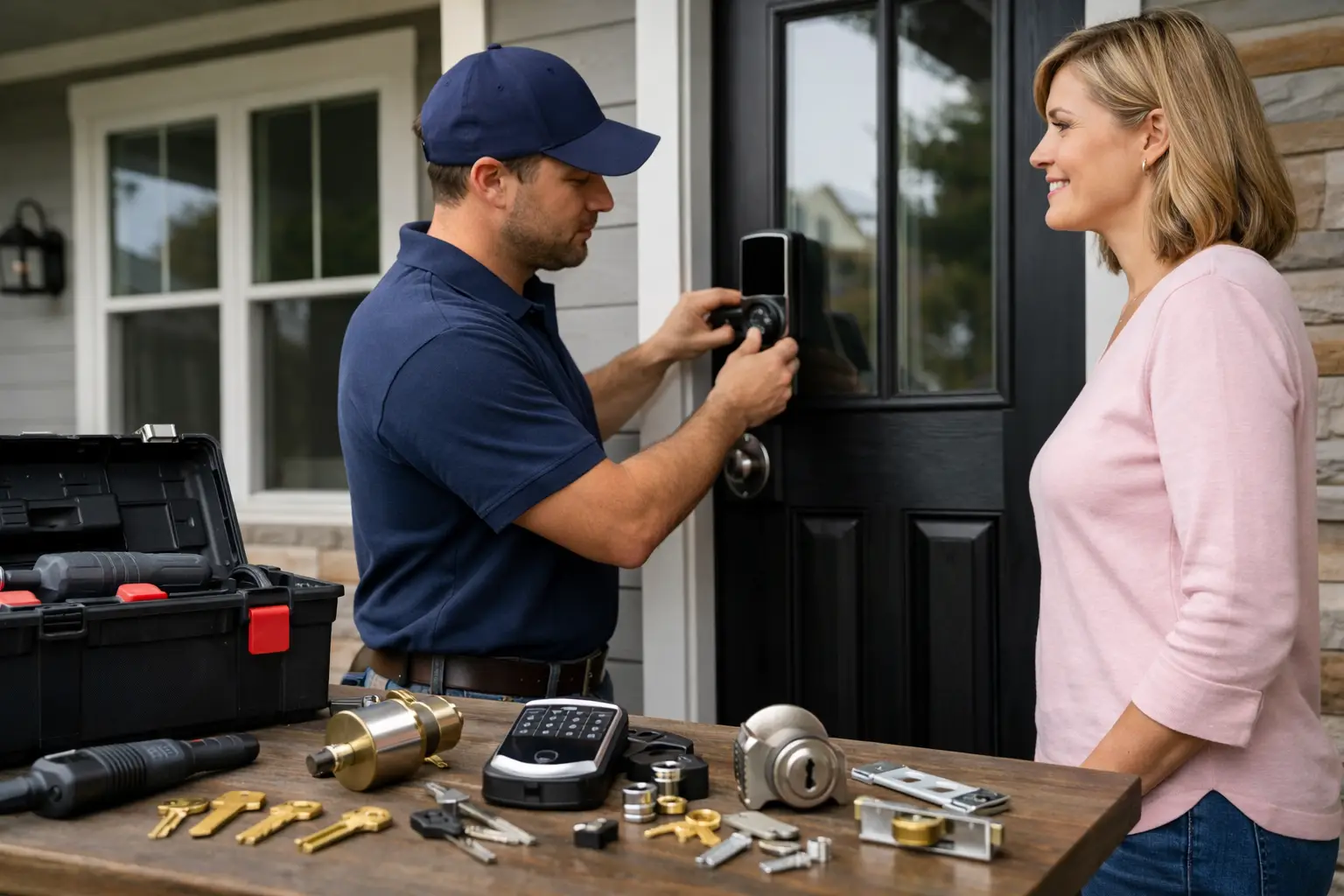
A front door can look solid while its lock, strike plate, or frame gives way under far less force than a homeowner expects. This residential locksmith security upgrade guide focuses on the points that matter most: who has keys, how your exterior doors are built, and whether your locks are working as intended. The goal is not to add hardware everywhere. It is to make practical improvements that fit your home, household, and daily routine.
For homeowners in Montgomery County, a professional on-site assessment can turn vague concerns into a clear plan. A qualified locksmith can inspect the door, frame, lock alignment, key control, and existing hardware together – because a stronger lock alone cannot correct a weak installation.
Start With the Doors People Actually Use
Most home security upgrades should begin at the front door, rear door, garage-entry door, and any side door that provides direct access to the house. These are the openings used most often by family members, visitors, contractors, and delivery personnel. They also experience the most wear.
Look closely at each exterior door. Does it close without being lifted, pushed, or pulled? Does the latch enter the strike cleanly? Is there movement in the knob, lever, deadbolt, or strike plate? A lock that sticks may be a door-alignment problem rather than a failed lock. Ignoring that distinction can lead to a replacement that still does not perform correctly.
The door itself matters as much as the lock. A quality deadbolt installed on a poorly secured frame has a limited benefit. The strike plate should be firmly attached, and the mounting screws should reach into the framing behind the jamb rather than only the decorative trim. A professional locksmith can reinforce this connection while confirming that the door still locks smoothly.
Choose the Right Deadbolt, Not Just a New One
For most hinged exterior doors, a properly installed single-cylinder deadbolt is a dependable starting point. It uses a key from the outside and a thumb turn from the inside. The bolt should extend fully into the frame when locked, and the hardware should sit flush against the door without binding.
Some doors require a different approach. A door with glass close to the interior thumb turn may need additional consideration, since broken glass can provide access to the turn piece. Double-cylinder locks are sometimes considered in these situations, but they create an exit concern because a key is required from the inside. This decision depends on the door layout, local requirements, household needs, and the ability of occupants to exit quickly during an emergency.
Ask your locksmith to assess the complete assembly: the deadbolt, latch, strike plate, hinges, frame, and door material. That produces a more meaningful upgrade than selecting hardware by appearance alone.
Rekey When Key Control Is Unclear
A lock can be mechanically sound and still leave a home exposed if too many unknown keys may exist. Rekeying changes the internal pin configuration so previous keys no longer operate the lock. It is often the right move after moving into a home, ending a tenant arrangement, losing a key, lending keys to service providers, or completing major renovations.
Rekeying is also useful when a household wants one key to operate several compatible exterior locks. That can reduce key clutter without reducing control. However, not every lock can be keyed alike, and older or damaged cylinders may be better candidates for replacement. A locksmith can identify what is compatible before work begins.
Keep key control simple. Decide who needs a physical key, where spare keys are stored, and how access is removed when circumstances change. Hiding a key outside may feel convenient, but it also gives unwanted visitors a predictable place to look. A managed key plan is more reliable than a hidden one.
Consider Smart Locks for Convenience and Accountability
Smart locks can be a strong fit for homeowners who want keypad codes, remote management, access schedules, or a record of lock activity. They are especially useful for households with teenagers, frequent guests, dog walkers, cleaners, or short-term contractors. Instead of making another physical key, the homeowner can create a code and remove it when it is no longer needed.
Convenience is not the only factor. A smart lock must fit the door correctly, operate the deadbolt without resistance, and have dependable power management. If the existing door is misaligned, a motorized lock may struggle or drain batteries faster. Installation should include checking the bolt movement with the door both open and closed.
Before choosing a smart lock, consider these practical questions: Do you want keypad-only access or app control as well? Is everyone in the household comfortable using it? Will you maintain backup physical-key access? Does the lock offer the level of account security and notification settings you expect? Technology works best when it supports a clear household routine instead of complicating one.
Do Not Overlook Secondary Entry Points
The rear door and garage-entry door are often less visible from the street, which makes their condition particularly important. These doors deserve the same level of attention as the front entrance. A deadbolt that is rarely used because it is difficult to lock is not providing consistent protection.
Sliding glass doors need a different inspection. Verify that the door locks correctly, sits properly in its track, and cannot be easily lifted or forced out of alignment. Additional track security may be appropriate, but it should not interfere with normal operation or emergency exit needs. French doors, patio doors, and doors with sidelights each have their own hardware and reinforcement considerations.
Windows should also be checked for working locks, especially ground-level windows and windows near doors. The best solution depends on the window style and whether it must serve as an emergency escape route. Hardware should never prevent a required exit from functioning as intended.
Get a Professional Home Security Assessment
Multi Locksmith LLC provides licensed, insured, and background checked technicians for lock upgrades, rekeying, and smart lock installation throughout Montgomery County.
📞 Call 240-706-4799Address Small Problems Before They Become Lockouts
A key that must be jiggled, a deadbolt that catches, or a handle that feels loose can signal wear, alignment issues, or internal damage. These are not cosmetic details. Continued use can wear down the key, damage the cylinder, or leave a homeowner unable to secure the door when needed.
Seasonal temperature and humidity changes can affect door alignment, particularly on wood doors. In other cases, loose hinges or a settling frame may be the cause. A locksmith can diagnose whether the appropriate repair is adjustment, hardware service, cylinder replacement, or a full lock replacement.
Avoid forcing a key or turning a resistant lock with excessive pressure. A broken key inside a cylinder often turns a minor repair into an urgent access problem. If a lock is not operating normally, schedule service while the door is still usable.
What a Professional Security Assessment Should Cover
A residential locksmith security upgrade should be tailored to the property, not based on a one-size-fits-all checklist. A professional assessment typically reviews the condition and operation of exterior locks, door alignment, strike plates, hinge security, key control, and any planned smart-lock integration.
It should also account for the people who live in the home. A family with young children may prioritize controlled keypad access. An older homeowner may prefer a simple, reliable mechanical setup with easy-to-use hardware. A property manager may need a rekeying process between occupants and consistent key organization across several homes.
Credentials matter when someone is working on your home’s entry points. Choose a locksmith who is licensed, insured, background-checked, and prepared to perform the work on-site. Clear recommendations should explain what problem is being addressed, what the hardware will do, and any limitations worth considering.
A Practical Upgrade Order for Most Homes
If several issues need attention, start by restoring reliable operation to every exterior door. Next, rekey or replace locks where key control is uncertain. Then strengthen weak door-and-frame connections and add smart access features only where they genuinely improve your routine.
This order prevents a common mistake: installing advanced hardware on a door that still has alignment, frame, or strike-plate problems. It also keeps the project focused on the entries that provide the greatest improvement first.
Your home does not need unnecessary hardware to be better protected. It needs dependable locks, properly secured doors, controlled access, and professional attention when something stops working as it should. For homeowners who want a clear assessment and mobile service in Rockville, Silver Spring, Bethesda, or throughout Montgomery County, Multi Locksmith LLC can help turn those priorities into a practical plan.