📅 August 8, 2026📄 Multi Locksmith LLC📍 Montgomery County, MD
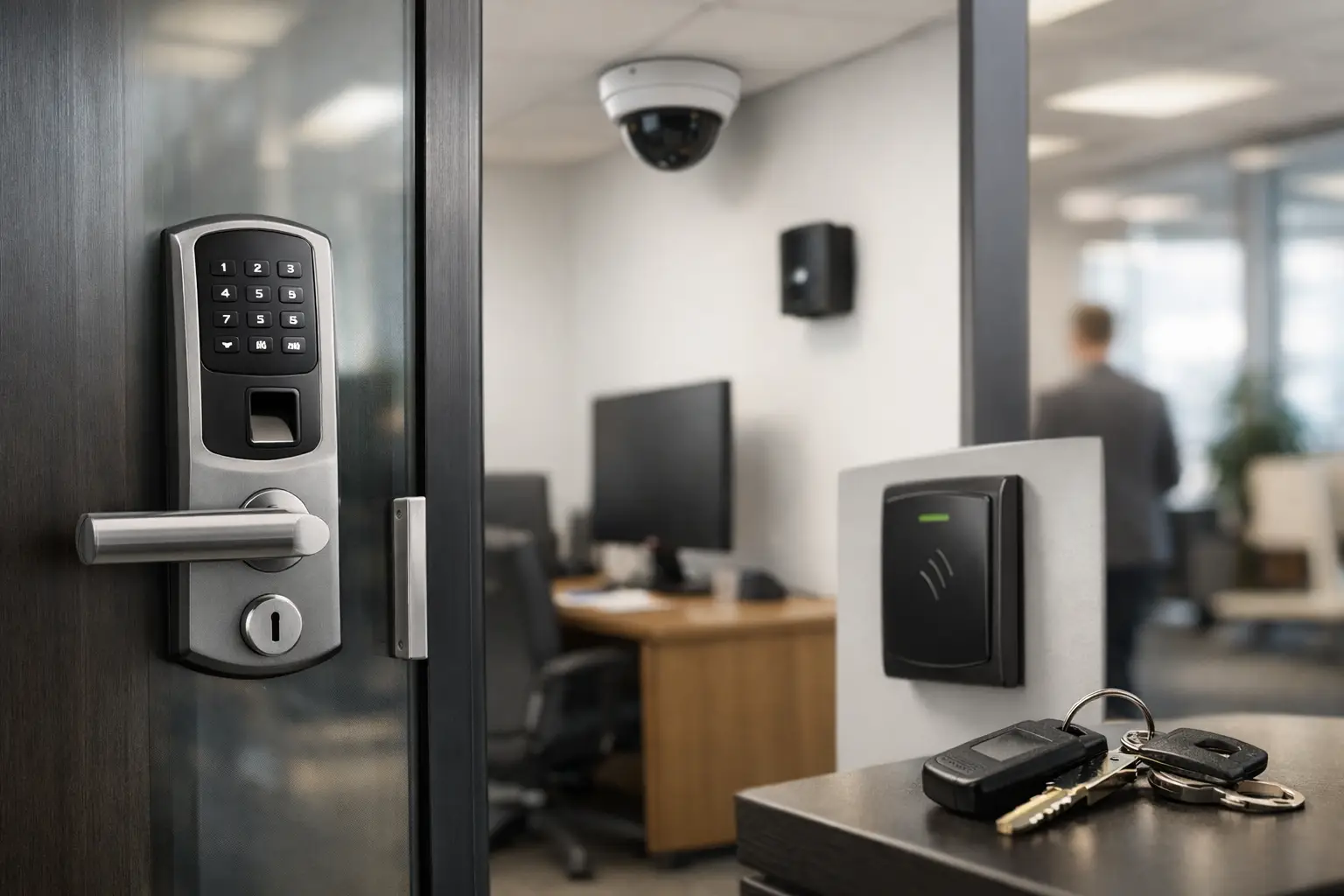
A reception door that latches poorly, a former employee’s key that was never recovered, or a rear entry with no controlled access can create a serious weakness long before a break-in occurs. The best office door security improvements address the whole opening – the door, frame, lock, credentials, exit hardware, and the people responsible for access. For office operators and property managers, the goal is not to make every door difficult to use. It is to make unauthorized entry harder while keeping normal operations orderly and accountable.
Start With the Doors That Create the Most Exposure
Not every office door needs the same level of protection. Begin with the entrances that lead from outside, doors connecting shared building areas to private suites, rear and side entries, records rooms, IT closets, and management offices. A locksmith inspection can identify issues that are easy to overlook, including loose strike plates, misaligned latches, weak door frames, worn closers, and hardware that no longer meets the needs of the business.Consider how each door is used. A front entrance may need convenient staff access during business hours and a different access method after hours. A supply room may only need access for a few employees. An emergency exit must allow fast egress from inside but should not become an unmonitored entry point from outside. Matching the protection level to the purpose of the door prevents wasted effort and reduces daily frustration.
7 Best Office Door Security Improvements to Consider
1. Replace worn or low-grade commercial locks
A door lock is only as reliable as its condition and its suitability for commercial traffic. Cylinders, latches, and deadbolts can wear down after years of constant use. Keys may turn roughly, the latch may fail to extend fully, or the lock may no longer resist common forms of forced entry as well as it should.Commercial-grade deadbolts and high-security lock systems provide a stronger starting point for exterior office doors and sensitive interior spaces. The right choice depends on the door material, occupancy needs, and existing hardware. A qualified locksmith can also confirm whether the lock is correctly installed, since even a quality lock can perform poorly if the strike and frame are weak.
2. Reinforce the strike plate and door frame
Many door failures occur at the frame, not at the lock cylinder. When force is applied to a door, a thin strike plate, short screws, split wood, or a damaged metal frame can give way before the lock does.Reinforcing the strike area with heavy-duty hardware and properly anchored screws improves resistance where it matters most. On doors with visible damage, the underlying cause should be corrected rather than covered up. Seasonal movement, door sag, and repeated slamming can all cause alignment problems that prevent a latch from engaging correctly.
3. Rekey after staffing or occupancy changes
If an employee leaves, a tenant moves out, a manager cannot account for issued keys, or a keyring is lost, rekeying is often the direct solution. Rekeying changes the internal configuration of a compatible lock so previous keys no longer operate it. It allows an office to regain control of access without replacing every piece of door hardware.This improvement is especially useful for offices with frequent staff turnover, shared suites, contractors, or changing tenants. Keep a documented key-control process after the work is complete. Know who has keys, which doors they open, and when keys are issued or returned. Physical keys can be dependable, but only when they are managed with discipline.
4. Install an electronic access control system
Electronic access control gives businesses more control than a traditional key system alone. Staff can enter with a code, card, fob, or approved mobile credential, depending on the setup. When access needs change, a credential can be removed without collecting and replacing keys throughout the office.This option works well for offices with multiple employees, varying schedules, restricted areas, or a need for entry records. It is not automatically the right answer for every small office. Electronic systems require thoughtful installation, reliable power planning, and clear procedures for new hires, departures, and credential administration. For a single low-traffic office, a properly managed high-security key system may be the more practical fit.
5. Use a master key system with clear boundaries
A master key system can simplify daily operations without giving every employee access to every room. For example, an individual employee may have a key for their office, a department manager may access several offices, and building leadership may retain access across designated doors.The design matters. A poorly planned system can create too much access and make future changes difficult. Before cutting keys, map the organization’s actual access needs, including cleaners, maintenance personnel, supervisors, and vendors. Limit the number of top-level keys, record every issued key, and revisit the system when the office layout or staffing changes.
6. Upgrade panic hardware and exit-door control
Exit doors need special attention because they serve two priorities at once: people must be able to leave quickly during an emergency, and the door should not invite unauthorized entry from outside. Panic bars and related exit hardware are designed to provide straightforward egress while maintaining controlled exterior access.A damaged or improperly adjusted panic bar can create operational and security problems. Doors may fail to latch, hardware may bind, or staff may prop the door open because it is difficult to use. Have exit hardware inspected and repaired by a commercial locksmith who understands the door’s function and applicable building requirements. Never add hardware that interferes with emergency egress.
Ready to Strengthen Your Office Door Security?
Multi Locksmith LLC provides licensed and insured commercial locksmith support throughout Montgomery County, including access control, panic hardware, master key systems, and lock repair.📞 Call 240-706-4799
7. Add door closers, alarms, and monitored entry points
A strong lock cannot help much if a door is routinely left ajar. Door closers help exterior and restricted-area doors return to a closed, latched position after someone passes through. Proper adjustment matters: a closer that shuts too aggressively can damage the door or frustrate employees, while one that closes too slowly can leave an opening unattended.For higher-risk entrances, a door-position alarm or monitored access point can alert designated staff when a door is held open or opened outside approved times. These measures are most useful when someone is responsible for responding to alerts. Technology without ownership can create a false sense of control.
Choose Improvements Based on Risk, Not Trends
The right office security plan depends on the building, employee count, hours of operation, type of business, and the value or sensitivity of what is behind each door. A medical office may prioritize restricted-record access. A warehouse office may focus on employee entrances and rear doors. A professional suite with a small staff may benefit most from rekeying, reinforced locks, and a well-planned key hierarchy.It also helps to separate immediate repairs from longer-term improvements. A door that does not latch, a broken deadbolt, or a missing strike screw deserves prompt attention. Access control, master key design, and broader hardware upgrades can then be planned around the office’s workflow. This approach addresses the current weakness without rushing into equipment that does not suit the property.
Work With a Qualified Commercial Locksmith
Office doors involve more than choosing a lock from a shelf. Door material, frame condition, fire-rated assemblies, existing exit hardware, and building rules can affect what should be installed. A professional commercial locksmith can inspect the opening, explain practical options, and complete the work on-site with accountability.For businesses in Rockville, Silver Spring, Bethesda, and throughout Montgomery County, Multi Locksmith LLC provides licensed, insured commercial locksmith support for lock repairs, rekeying, access control, panic hardware, and master key systems. A focused review of your office doors now can prevent an access problem from becoming a disruption later.

 A reception door that latches poorly, a former employee’s key that was never recovered, or a rear entry with no controlled access can create a serious weakness long before a break-in occurs. The best office door security improvements address the whole opening – the door, frame, lock, credentials, exit hardware, and the people responsible for access. For office operators and property managers, the goal is not to make every door difficult to use. It is to make unauthorized entry harder while keeping normal operations orderly and accountable.