📅 August 10, 2026📄 Multi Locksmith LLC📍 Montgomery County, MD
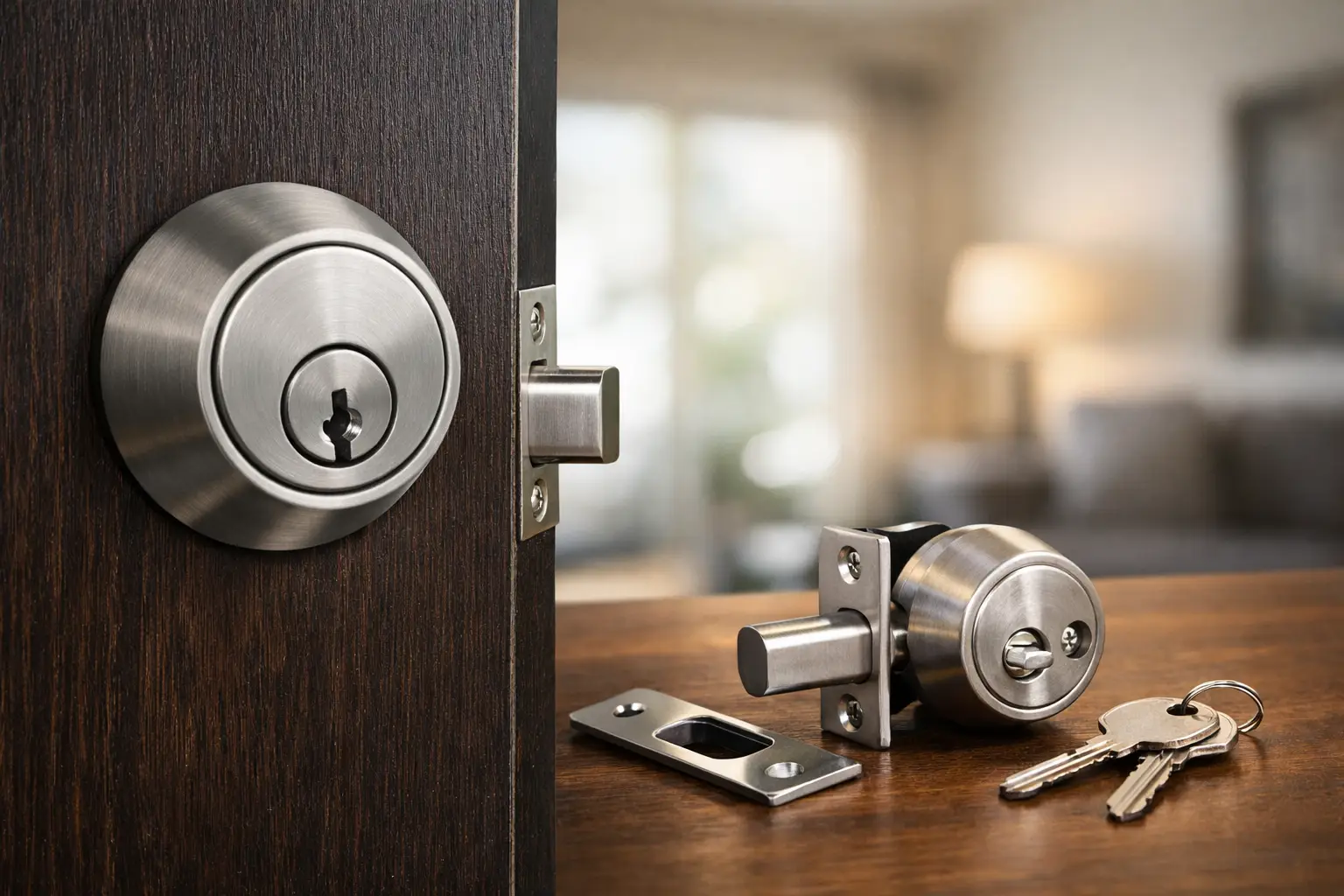
A deadbolt can look substantial on the door and still leave the entry vulnerable at its weakest point: the strike, the frame, the mounting screws, or the installation itself. This grade one deadbolt review focuses on what homeowners and property managers should expect from a Grade 1 deadbolt, what that rating does and does not prove, and how to make the full door assembly work together.For a busy home, rental property, office, or ground-level entry in Montgomery County, a Grade 1 deadbolt is often the right starting point when you want a serious mechanical lock rather than a cosmetic upgrade. But the label alone should not make the decision for you.
What a Grade 1 Deadbolt Rating Means
Deadbolt grades are commonly associated with ANSI/BHMA testing standards. BHMA, the Builders Hardware Manufacturers Association, evaluates lock hardware for performance under controlled testing. Grade 1 is the highest residential and light-commercial performance grade in the common three-grade system, followed by Grade 2 and Grade 3.A Grade 1 deadbolt is designed to withstand more demanding tests for operation, bolt strength, impact resistance, and durability than lower-grade options. The exact test criteria depend on the product standard and lock type, but the practical takeaway is straightforward: Grade 1 hardware is built for frequent use and stronger resistance to forced-entry attempts.That makes it a sensible choice for front doors, rear doors, doors leading from a garage into a home, and many small-business exterior doors. It can also be a strong fit for landlords and property managers who need dependable hardware that holds up across repeated tenant turnover and daily use.The grade is not a guarantee that every part of the entry is equally strong. A high-grade deadbolt installed in a weak frame does not perform like a high-grade door system.
Grade One Deadbolt Review: Where the Rating Helps Most
The clearest advantage of a Grade 1 deadbolt is its focus on long-term mechanical performance. Lower-grade locks may work acceptably on a lightly used interior door or a low-risk exterior application, but they can develop loose cylinders, sticky bolts, worn latches, or poor alignment sooner when they see daily traffic.A quality Grade 1 deadbolt should have a solid bolt throw, consistent key operation, and hardware that remains stable after repeated locking cycles. When the door is properly aligned, the bolt should extend fully into the strike without scraping, binding, or requiring you to lift the door to lock it.Resistance to kicking and prying also matters. The deadbolt itself carries part of that load, but the strike and doorjamb carry a great deal of it. Look beyond the exterior trim. A well-selected Grade 1 deadbolt should be paired with a reinforced strike plate and long screws that anchor into the wall framing rather than only the thin wood of the jamb.For homeowners, this is the difference between adding a better lock and improving the entry as a whole.
What Grade 1 Does Not Tell You
A Grade 1 label does not automatically mean a deadbolt is resistant to every form of bypass or attack. It does not tell you whether the keyway offers enhanced resistance to unauthorized key duplication, whether the cylinder has specialized pick-resistant features, or whether an exterior door has glass close enough for someone to reach the interior thumbturn.It also does not confirm compatibility with your door. Door thickness, backset, bore-hole size, existing damage, frame condition, and weather exposure all affect the result. A deadbolt that is excellent on one door may be the wrong setup for another.Smart deadbolts deserve a separate evaluation. Some smart locks use Grade 1 mechanical hardware, while others emphasize convenience features over heavy-duty physical construction. If remote access, audit trails, temporary codes, or managed access are priorities, compare both the lock’s mechanical rating and its electronic features. For a business, access control may be a better fit than relying on a smart deadbolt alone.
The Door and Frame Matter as Much as the Lock
Most entry-door failures happen around the lock, not necessarily through the lock cylinder. A split jamb, a shallow strike opening, short mounting screws, or a warped door can compromise an otherwise strong deadbolt.Before replacing a deadbolt, inspect the door edge and frame for cracks, soft wood, loose trim, visible gaps, or signs that the bolt is not entering the strike cleanly. If you see a shiny wear mark on the bolt or strike, the door may be out of alignment. Forcing the key or thumbturn can wear the lock over time and may eventually leave you unable to secure the door properly.A professional locksmith can assess whether the job calls for a new deadbolt, strike reinforcement, door adjustment, cylinder rekeying, or a broader repair. That diagnosis is especially valuable after a break-in attempt, a tenant change, a lost key, or construction work that has shifted the door frame.
Features Worth Looking For
When comparing Grade 1 deadbolts, start with the certification marking and then examine the hardware configuration. The best choice depends on the door and how the property is used.A single-cylinder deadbolt uses a key outside and a thumbturn inside. It is common on residential doors, but a door with nearby glass requires careful planning. A double-cylinder deadbolt requires a key from both sides, which can create an emergency exit concern. Local codes and the door’s role in the exit path should always guide this decision.Consider the bolt length and strike design, the quality of the cylinder, and whether the lock accepts a key system you already use. If you manage several doors, a compatible keying plan can reduce the number of keys in circulation while keeping access organized. For commercial spaces, the proper hardware may also involve panic hardware, door closers, and code-compliant exit requirements.Finish matters, too, although it should come after construction and fit. A finish that matches the existing handleset can improve curb appeal, but appearance should not outweigh reliable operation and proper reinforcement.
Installation Is the Deciding Step
Even the best Grade 1 deadbolt cannot compensate for careless drilling or an improperly aligned strike. The bolt must enter the frame fully, the lock body must sit flat against the door, and the mounting hardware must be tightened without crushing or warping the mechanism.For a replacement, measure the door thickness and backset before selecting hardware. Confirm that the existing bore holes are correctly located and that the door edge is not damaged around the latch opening. If the prior lock was loose, do not simply tighten a new deadbolt over enlarged or weakened holes.For new installations, placement matters. The deadbolt should be far enough from the lever or knob to avoid crowding the hardware, while remaining comfortable to operate. On older homes, doors and frames can have nonstandard dimensions or years of paint buildup that make a simple replacement less simple than it appears.Multi Locksmith LLC provides on-site deadbolt repair, replacement, rekeying, and security assessments for homeowners and businesses that need the work completed correctly. A licensed and insured locksmith can verify the fit, reinforce the strike area where appropriate, and make sure the lock operates smoothly before leaving.
When a Grade 1 Deadbolt Is Worth Choosing
Choose Grade 1 when the door is a primary exterior entry, the property sees frequent use, or you want a stronger mechanical foundation for a broader security plan. It is particularly appropriate for front doors, accessible rear entries, rental homes, offices, and doors where a Grade 3 lock has begun to feel loose or unreliable.A Grade 2 deadbolt can still be a reasonable option for some lower-use residential doors, depending on the door construction and location. The right answer is not always the highest grade on the shelf. A correctly installed lock that matches the door and frame is better than a premium lock forced into a poor setup.If your deadbolt sticks, spins, fails to extend completely, or no longer keeps the door firmly secured, treat it as a repair issue rather than an inconvenience. A dependable entry starts with a lock that works every time – and a frame strong enough to support it.
Need a Grade 1 Deadbolt Installed or Repaired?
Multi Locksmith LLC provides licensed and insured deadbolt installation, repair, and rekeying throughout Montgomery County, MD. Same-day service available.📞 Call 240-706-4799

 A deadbolt can look substantial on the door and still leave the entry vulnerable at its weakest point: the strike, the frame, the mounting screws, or the installation itself. This grade one deadbolt review focuses on what homeowners and property managers should expect from a Grade 1 deadbolt, what that rating does and does not prove, and how to make the full door assembly work together.For a busy home, rental property, office, or ground-level entry in Montgomery County, a Grade 1 deadbolt is often the right starting point when you want a serious mechanical lock rather than a cosmetic upgrade. But the label alone should not make the decision for you.