
High Security Locks Explained for Property Owners
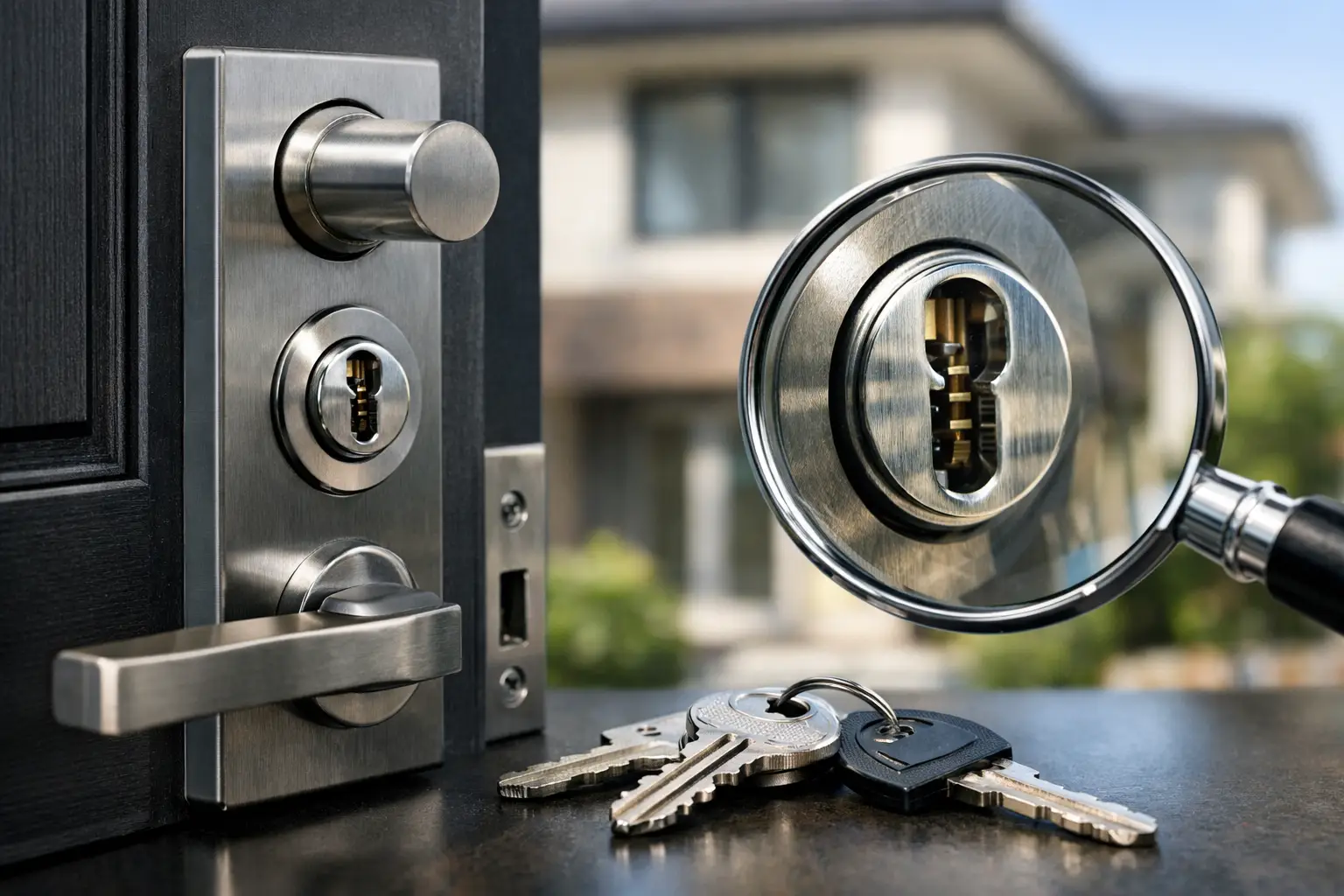
A standard lock may look solid on the door, yet its keyway, cylinder, or mounting hardware can still leave it vulnerable to common forced-entry methods. High security locks explained in plain terms means looking beyond the outside appearance of a deadbolt and understanding how the lock controls keys, resists attack, and works with the door as a complete security system.
For homeowners, property managers, and business owners, the goal is not simply to install a stronger-looking lock. It is to reduce realistic entry risks while keeping daily access reliable for the people who belong on the property. The right choice depends on the door, the building’s use, the number of users, and how much control you need over keys.
What Makes a Lock High Security?
A high-security lock is designed with features that make unauthorized entry and unauthorized key duplication more difficult than with a basic residential lock. It usually combines a restricted keyway, a more complex cylinder, hardened internal components, and protection against common physical attacks.
These locks are not magical or invincible. Given enough time, tools, and opportunity, any physical barrier can be attacked. Their value is in increasing the skill, effort, noise, and time required to defeat the lock. That added resistance can discourage opportunistic intrusion and gives occupants, neighbors, or alarm systems more time to respond.
The lock itself is only one part of the equation. A high-security cylinder installed in a weak door, loose strike plate, or damaged frame cannot deliver the protection it was designed to provide. Professional evaluation looks at the full opening: the lock, bolt, strike, screws, hinges, frame, and door condition.
High Security Locks Explained: The Features That Matter
Restricted keys and better key control
Key control is often the most practical reason to choose a high-security system. With many standard keys, a former employee, tenant, contractor, or visitor may be able to copy a key without the owner knowing. Restricted key systems are designed to limit who can authorize and obtain duplicates.
Depending on the system, duplicates may require authorization through a registered locksmith or a designated property representative. This creates a clearer record of who has access and helps managers avoid the uncertainty that comes with uncontrolled copies. For an office, retail space, or multi-unit property, that control can matter as much as the lock’s physical strength.
Resistance to picking and bumping
Traditional pin-tumbler locks can sometimes be manipulated by trained intruders using specialized methods. High-security cylinders typically add tighter tolerances, security pins, sidebars, rotating elements, or other internal mechanisms that make manipulation substantially more difficult.
Bump resistance is also a consideration. Bumping uses a specially cut key and impact to attempt to align internal pins momentarily. Better cylinders use designs intended to resist this technique. No lock should be described as completely pick-proof, but a well-designed high-security cylinder raises the level of expertise needed for manipulation.
Drill and pull resistance
Forced entry often targets the cylinder itself. Attackers may try drilling through critical components, pulling the cylinder, or breaking it to reach the locking mechanism. High-security models commonly use hardened steel inserts, anti-drill pins, reinforced housings, and protective hardware to resist these methods.
For exterior doors, the deadbolt and strike plate deserve equal attention. A long-throw deadbolt secured into structural framing with appropriate screws offers much better resistance than hardware held only by short screws in decorative trim. The correct installation is not an accessory to the lock – it is part of its performance.
Stronger construction and tested performance
Many quality locks are evaluated under recognized performance standards. A Grade 1 deadbolt, for example, is generally built for the highest level of residential and light commercial use among common ANSI/BHMA lock grades. Grade alone does not guarantee restricted keys or advanced cylinder protection, but it offers a useful starting point when comparing durability and forced-entry resistance.
A professional locksmith can explain the differences between a durable Grade 1 deadbolt and a complete high-security lock system. Sometimes a property needs both. Other times, a well-installed commercial-grade lock with managed keys is the more practical answer.
When Is a High-Security Lock Worth Considering?
High-security hardware makes particular sense when the consequences of unauthorized access are higher or when key management has become difficult. A homeowner may choose it after a move, a lost-key situation, a separation, or repeated concerns about who may have copies. It can also be a strong option for a door that leads from an attached garage into the home, a side entrance with limited visibility, or a property that has experienced attempted entry.
For businesses, the decision often centers on staff turnover and access accountability. Offices, medical practices, property management operations, retail spaces, and storage areas may have multiple employees, vendors, and service providers needing different levels of access. A restricted key system or master key system can establish order without issuing the same key to everyone.
Property managers may benefit when a building has frequent tenant changes or maintenance personnel who need access to specific areas. Rather than relying on a collection of unrelated keys and improvised labels, a planned system can identify which keys open which doors and who is authorized to hold them.
High security is not always necessary for every interior door. A janitorial closet, for instance, may need controlled access but not the same hardware as a front entrance. Matching protection to the door’s purpose helps avoid overbuilding one area while neglecting a more important entry point.
High-Security Locks and Smart Locks Are Not the Same Thing
Smart locks provide electronic convenience, such as keypad codes, mobile access, scheduled credentials, and activity records. High-security mechanical locks focus primarily on physical resistance and controlled key duplication. Some properties benefit from using both.
A business may use electronic access control on the main employee entrance while protecting a mechanical secondary entrance with a high-security cylinder. A homeowner may prefer a smart lock for family access but choose reinforced hardware and a quality deadbolt for the door itself. The right setup depends on how people enter, who needs access, and whether the property needs audit trails, remote management, or restricted physical keys.
Electronic features should not replace sound door hardware. Battery maintenance, correct programming, emergency access planning, and professional installation all affect reliability. Mechanical and electronic security work best when they are planned together.
Installation Can Make or Break the Upgrade
A high-security lock needs accurate door preparation and proper alignment. If the bolt does not enter the strike cleanly, the lock can bind, wear prematurely, or become difficult to operate. Misalignment may also tempt users to force the key or thumbturn, leading to avoidable damage.
The locksmith should check the door’s material, thickness, handing, frame condition, and existing bore holes before recommending hardware. Older doors sometimes need reinforcement or repair before a new lock can perform correctly. On commercial doors, fire-rated openings and panic hardware add further requirements that should be handled carefully.
Rekeying may be appropriate when the existing lock body is in good condition and key control is the main concern. Replacement is often the better path when the current hardware is worn, damaged, poorly installed, or does not support the desired cylinder and access plan. The best recommendation begins with an on-site assessment, not a one-size-fits-all answer.
Questions to Ask Before Choosing a System
Ask who currently has keys, who should be allowed to authorize duplicates, and whether different doors require different access levels. Consider the condition of the door and frame, not just the cylinder. If the property has multiple entrances, decide whether convenience calls for keyed-alike locks, a master key system, electronic credentials, or a combination of these options.
It is also wise to think about the future. A family may add caregivers or housekeepers. A business may expand staff or lease additional space. Choosing a system that can be managed and expanded prevents a simple key issue from becoming a larger access problem later.
For Montgomery County property owners, a licensed and insured locksmith can inspect the opening, explain the trade-offs clearly, and install hardware that fits the property rather than forcing a generic solution. Multi Locksmith LLC provides professional mobile service for homes and businesses that need stronger access control, reliable hardware, and accountable workmanship.
The most effective lock upgrade is the one that fits the real risks at your door, is installed correctly, and gives you confidence about exactly who can enter.
Considering a High-Security Upgrade?
Multi Locksmith LLC provides licensed and insured lock installation and key control systems throughout Montgomery County, MD. Same-day service available.
📞 Call 240-706-4799