📅 August 12, 2026📄 Multi Locksmith LLC📍 Montgomery County, MD
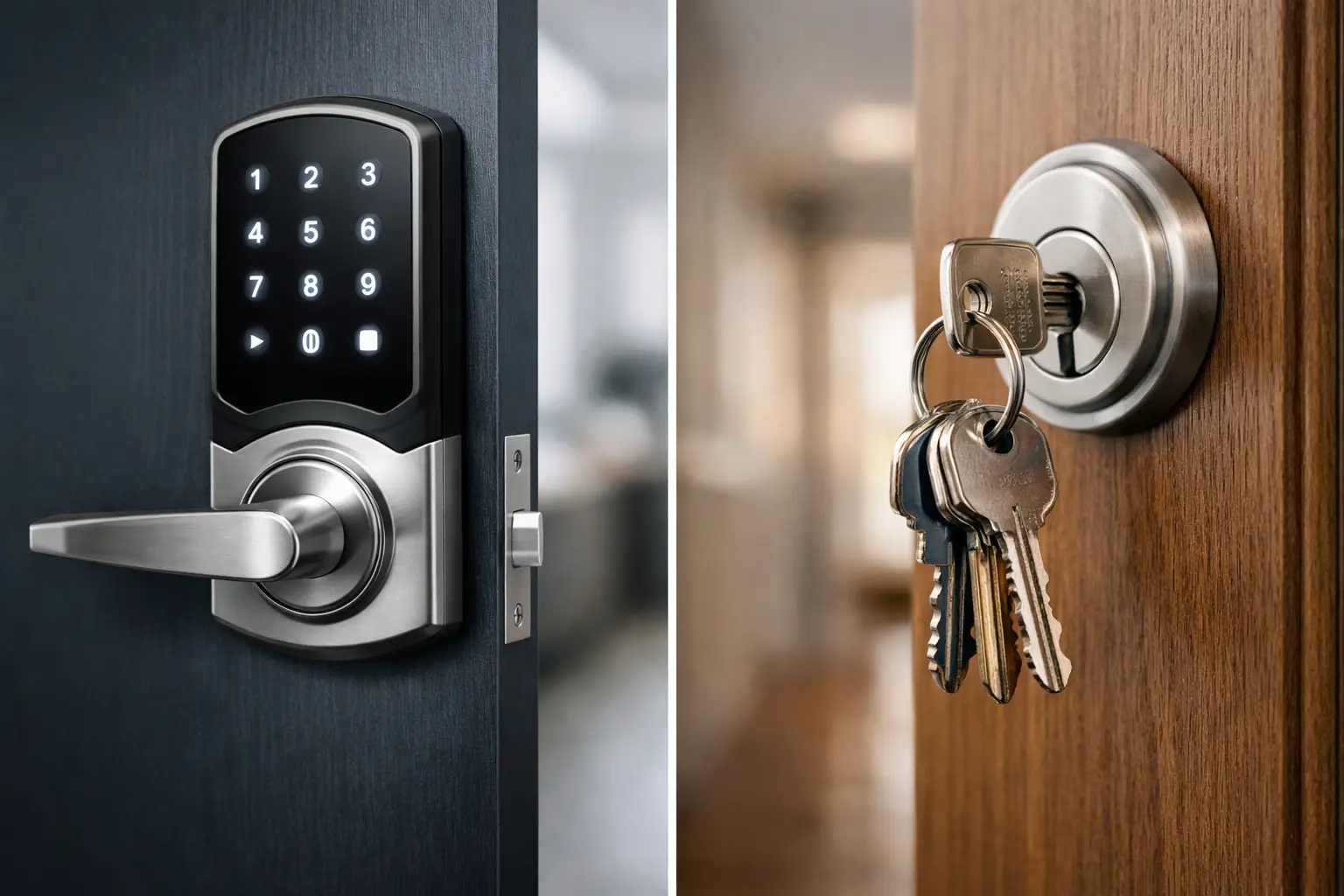
A front door key can disappear between the car and the kitchen. A keypad code can be shared too widely or forgotten at the worst moment. When considering keypad entry versus traditional keys, the right choice is less about choosing the newest hardware and more about matching access to the people, property, and routine you need to protect.For Montgomery County homeowners and business operators, both options can provide dependable day-to-day access when installed correctly. The difference is how each system handles convenience, control, maintenance, and the inevitable unexpected situation.
Keypad Entry Versus Traditional Keys: The Core Difference
Traditional keys rely on a physical key that matches the lock cylinder. Access is simple: insert the key, turn it, and enter. The system does not require a battery, a code, or a user setting. It is familiar, proven, and easy for most people to use.Keypad entry replaces or supplements the physical key with a PIN code. Depending on the lock, users may enter a code on a keypad, use a mobile app, or use both. Many keypad locks still include a mechanical keyway for backup access, while others are designed around electronic entry alone.That distinction matters. A keypad lock can give a property owner more control over who enters and when. A traditional lock gives users a straightforward mechanical method with fewer electronic components. Neither is automatically better in every situation.
When Keypad Entry Makes Sense
Keypad entry is particularly useful when several people need access but you do not want keys circulating indefinitely. A homeowner may want separate codes for family members, a dog walker, or a contractor. A property manager may need to update access after a tenant change without collecting every copy of a key. An office may want individual codes for staff members who arrive before or after regular hours.The practical benefit is control. Instead of handing someone a key that could be copied, lost, or retained after they no longer need access, you can change or remove a code. Certain electronic locks also provide access records, which can be useful for small offices, rental properties, and facilities with multiple authorized users.Keypads also help during routine lockout-prone moments. A resident going for a run, taking out trash, or walking a dog may prefer not to carry a house key. For families with older children, a managed code can be easier than relying on a key that may be misplaced.However, keypad locks require responsible setup. Generic codes such as 1234, birthdays, house numbers, and repeated patterns are easy to guess. Codes should be unique, changed when access changes, and never shared beyond the person who truly needs them. The lock itself should be installed on a solid door with properly aligned hardware. Electronic access cannot compensate for a weak strike plate, damaged frame, or poorly functioning deadbolt.
Battery and Backup Planning Matter
Most residential keypad locks operate on batteries. A low-battery warning is not something to ignore. Replace batteries on a regular schedule and use the type recommended by the manufacturer. If the lock has a mechanical key backup, keep that key available to a trusted person or in another planned location that does not create an easy target near the door.For business locations, battery maintenance should be assigned to a specific employee or incorporated into a regular building maintenance routine. A keypad that works inconsistently can create delays for staff and frustration for customers. A professional locksmith can verify whether the issue comes from batteries, alignment, the lock mechanism, wiring, or the door itself.
Why Traditional Keys Still Have a Strong Place
Traditional keyed locks remain a dependable choice for many homes and businesses. They are direct, familiar, and not dependent on battery power. For a homeowner with a limited number of occupants, a properly installed deadbolt and well-managed keys may meet the need without adding electronic components.Keys are also a sensible choice for exterior gates, storage areas, older doors, and locations exposed to weather where the selected hardware must be especially durable. The right lock type depends on the door, the surrounding conditions, and the level of use it receives.The challenge with traditional keys is accountability. When a key is lost, borrowed, copied, or not returned, you cannot assume access is still limited to the intended people. Rekeying the lock changes the internal configuration so existing keys no longer work. This is often the right response after a move, employee departure, tenant turnover, or missing key.For larger properties, a master key system can make physical key management more organized. Individual users can have keys for specific doors, while an authorized manager has broader access. This approach is effective when designed carefully, but it still depends on tracking who has each key and responding promptly when a key goes missing.
Security Is More Than the Entry Method
A keypad lock is not automatically stronger than a keyed deadbolt, and a keyed deadbolt is not automatically more secure than a keypad lock. Security depends on the full door opening: the lock grade, bolt length, strike plate, mounting screws, door material, frame condition, hinges, glass nearby, and quality of installation.A keypad installed on a door that does not latch correctly may not perform as intended. Likewise, an excellent mechanical lock can be undermined by a loose deadbolt, worn cylinder, or damaged frame. This is why a locksmith evaluates the complete setup rather than recommending hardware based only on convenience.For commercial properties, the decision may extend beyond a single keypad or key. Businesses with several entry points, employee turnover, restricted areas, or after-hours access needs may benefit from access control systems. These can provide managed credentials and clearer access rules than a collection of shared keys or one universal door code.Panic hardware is another consideration for commercial doors where occupants need a quick, code-compliant exit. Entry control and exit requirements must work together. The goal is to control access from the outside without creating difficulty for people leaving the building during an emergency.
Not Sure Which Entry System Fits Your Door?
Multi Locksmith LLC provides professional locksmith support throughout Montgomery County, including keypad lock installation, rekeying, and deadbolt service for homeowners, property managers, and businesses.📞 Call 240-706-4799
Choosing for Your Home, Office, or Rental Property
Start by looking at how many people require access and how often that group changes. If only a few household members use one exterior door, traditional keys may be the simplest solution. If you regularly grant temporary access to visitors or service providers, a keypad can reduce the need to distribute keys.Next, consider your comfort with maintenance. A keypad requires battery awareness, code management, and occasional troubleshooting. Traditional keys require key control, rekeying when circumstances change, and attention to wear in the lock cylinder. Both systems need occasional inspection, especially on frequently used doors.Then consider the consequences of a lost credential. With a key, the concern is whether someone can identify the property it opens and whether copies exist. With a code, the concern is who knows it and whether it has been reused or shared. The best solution is the one you will manage consistently.For landlords and property managers, a keypad can simplify turnover between occupants, but only when access codes are reset and documented every time. For offices, avoid relying on one shared code for the entire team. Individual codes or a professionally designed access system provide better control as staffing changes.
A Hybrid Setup Often Delivers the Best Balance
Many properties do not need to choose one method exclusively. A keypad deadbolt with a mechanical backup key can offer convenient everyday entry while preserving an alternate access method. A business may use managed electronic access at primary employee entrances while keeping high-quality keyed hardware on selected interior doors.The important point is to avoid treating backup access as an afterthought. Decide who holds backup keys, who has authority to change codes, and what happens if a lock stops responding. Clear access rules prevent a minor inconvenience from becoming a late-night lockout.
Get the Door and Lock Evaluated Together
Before replacing a lock, have the existing door checked for alignment, latch movement, frame condition, and hardware compatibility. A new keypad cannot correct a warped door, and a new key cylinder cannot solve a failing deadbolt mechanism. The right repair or replacement begins with an on-site assessment of the entire entry point.Multi Locksmith LLC provides professional locksmith support for homeowners, property managers, and businesses throughout Montgomery County, including keypad lock installation, rekeying, deadbolt service, and commercial access solutions. A licensed and insured locksmith can help you choose hardware that fits the door, the access needs, and the level of control you want.The best entry system is the one your household or team can use confidently, maintain responsibly, and depend on when it matters. Whether that means a carefully managed keypad, traditional keys, or a combination of both, the goal is simple: reliable access for authorized people and stronger control over everyone else.

 A front door key can disappear between the car and the kitchen. A keypad code can be shared too widely or forgotten at the worst moment. When considering keypad entry versus traditional keys, the right choice is less about choosing the newest hardware and more about matching access to the people, property, and routine you need to protect.For Montgomery County homeowners and business operators, both options can provide dependable day-to-day access when installed correctly. The difference is how each system handles convenience, control, maintenance, and the inevitable unexpected situation.