
Can a Locksmith Open Apartments? What to Expect
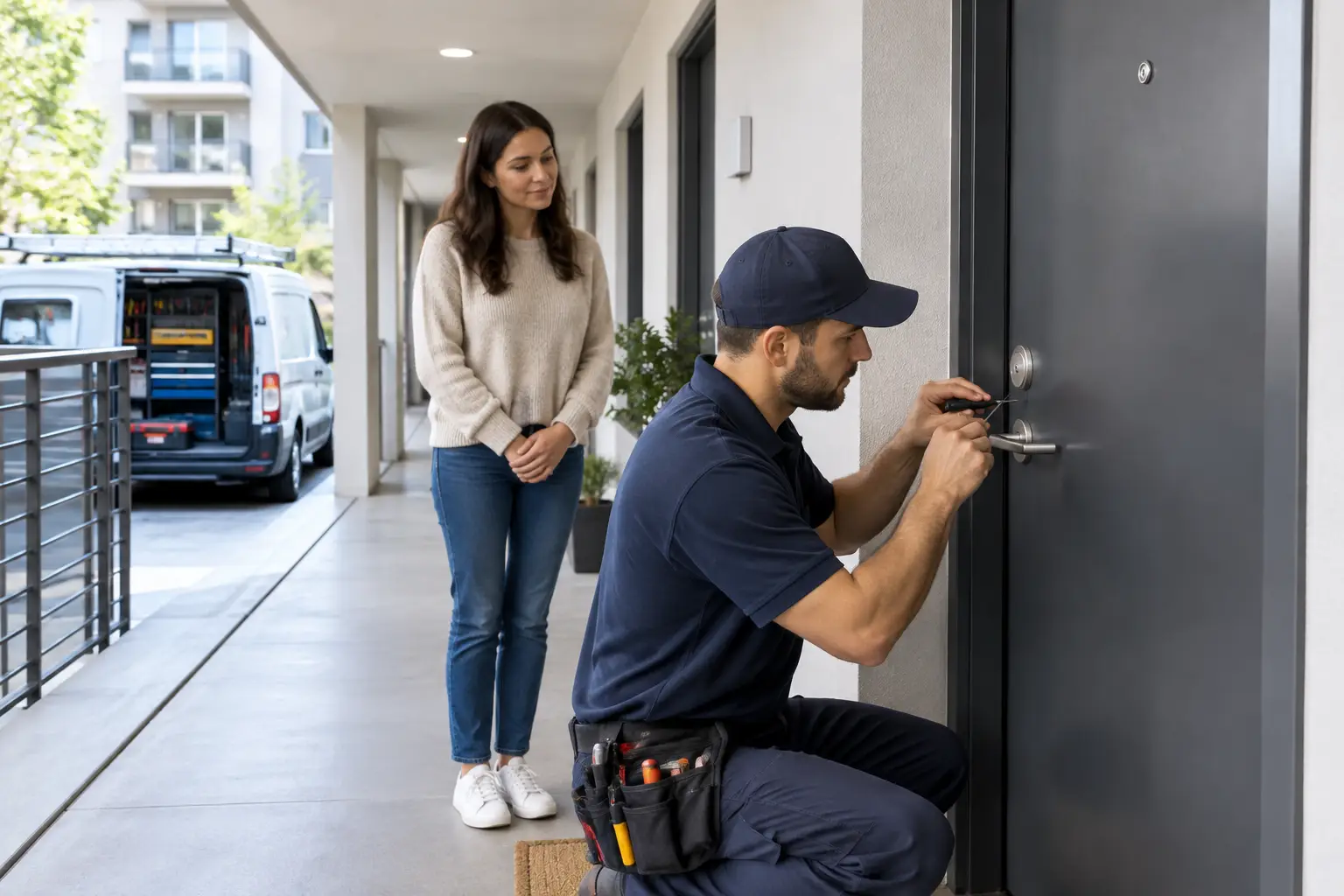
A locked apartment door creates an immediate problem, especially when your keys are inside, your lock has failed, or you are trying to get back to a child, pet, medication, or essential belongings. Can a locksmith open apartments? In many cases, yes – but a trusted professional must first confirm that the person requesting entry is authorized to enter the unit.
For tenants, landlords, and property managers in Montgomery County, the priority is not simply getting a door open. It is restoring access while protecting the residents, the property, and everyone else in the building. A licensed, insured locksmith approaches apartment lockouts with that responsibility in mind.
Can a Locksmith Open Apartments Legally?
A locksmith can typically help open an apartment when the customer can establish a legitimate right to enter. That may be the current tenant, the property owner, an authorized property manager, or someone specifically approved by the resident or management company.
Authorization matters because apartment buildings have shared entrances, neighboring residents, and private individual units. A professional locksmith should never treat a request for apartment access as routine without asking the right questions. Verification protects you from unauthorized entry and helps preserve the security of the entire property.
Proof of occupancy can vary by situation. A photo ID with the apartment address is often helpful. If your ID still shows a previous address, a lease, utility account, renter’s insurance document, or confirmation from the landlord or property manager may establish occupancy. When documentation is locked inside the apartment, a locksmith may use other reasonable ways to confirm authorization, including communication with building management.
A professional may decline the job if authorization cannot be verified. That is not an inconvenience or lack of service. It is the responsible decision when someone’s home security is involved.
What Happens During an Apartment Lockout?
The process usually starts with a brief assessment of the situation. The locksmith will ask who lives in the unit, whether you are the tenant or owner, what type of lock is installed, and whether the property has any management rules for emergency entry.
After confirming authorization, the technician examines the door, lock, frame, and hardware. Many apartment doors use standard keyed knobs, deadbolts, smart locks, restricted keyways, or commercial-grade hardware. The right approach depends on the equipment, its condition, and whether there is an existing malfunction.
The goal is to restore access with as little disruption as the lock and circumstances allow. If a lock is worn, damaged, improperly aligned, or no longer functioning reliably, simply regaining entry may not solve the underlying issue. The locksmith can explain whether repair, rekeying, or lock replacement makes better sense for the property’s security needs.
For renters, management approval may be required before changing hardware. For property managers, it is often useful to document the service call and update key control records after a tenant lockout, lost key report, or move-out.
Building Entry and Unit Entry Are Different Issues
A tenant may need assistance at a building entrance, an apartment door, or both. Multi-family buildings often use controlled common-area access, such as electronic fobs, coded entry, intercom systems, or restricted keys. Access to the main building does not automatically prove permission to enter a specific apartment.
That distinction is especially important after hours. A locksmith may need to coordinate with an on-call property manager before work can begin on a unit door. While that can add time, it helps keep the building’s access policies intact and protects residents from unauthorized entry.
When a Landlord or Property Manager Should Call
Property managers face apartment access issues that go beyond a forgotten key. A tenant may report a broken deadbolt, a key that no longer turns, a malfunctioning smart lock, or damage after an attempted break-in. Management may also need to regain control of a unit after a lawful turnover or address a lost master key concern.
In these situations, a qualified locksmith can assess the immediate access problem while considering the wider key system. Rekeying may be appropriate when keys are unaccounted for, while a hardware repair may resolve a mechanical issue without changing the building’s keying plan. Buildings with master key systems require added care so that any work preserves authorized access patterns.
For larger properties, consistency matters. Using a professional locksmith who understands apartment hardware, documentation, and property-management authorization can reduce confusion during urgent calls and planned maintenance alike.
Common Apartment Lockout Situations
Apartment lockouts rarely happen at convenient times. A door can close behind you while taking out trash. Keys may be misplaced during a move. A deadbolt can stick after months of wear, or a smart lock battery can fail when you least expect it.
The right response depends on the reason you are locked out. If keys are inside and you can verify residency, a locksmith may be able to help promptly. If the key is lost, the tenant and property manager should consider whether rekeying is needed to prevent an unknown person from using the missing key later.
If a child, vulnerable adult, or pet is in immediate danger inside the apartment, contact emergency services first. A locksmith can address the door hardware, but emergency responders should handle an urgent threat to life or health.
Do not attempt to force the door, remove hardware, or use improvised methods to get inside. Apartment doors and frames can be damaged quickly, and damage may create a larger security concern for you and your neighbors. It can also complicate your lease obligations and delay a professional repair.
Locked Out of Your Apartment?
Multi Locksmith LLC provides licensed, insured, and background-checked lockout service throughout Montgomery County.
📞 Call 240-706-4799Choosing a Locksmith for an Apartment Door
Apartment access is a security-sensitive service. Look for a locksmith who is licensed, insured, background-checked, and prepared to verify authorization before beginning work. A mobile locksmith should arrive with the diagnostic tools and replacement hardware needed to evaluate common residential and multi-family door problems on-site.
Experience with apartment properties also matters. The technician should understand how deadbolts, lever sets, smart locks, restricted key systems, and master key arrangements can affect the work. They should communicate clearly about what they find, what can be repaired, and what requires management authorization.
For residents in Rockville, Silver Spring, Bethesda, Gaithersburg, Germantown, and nearby Montgomery County communities, Multi Locksmith LLC provides professional mobile locksmith assistance for residential lockouts, lock repairs, rekeying, and security upgrades. Every request is handled with the same focus on verified access, accountable service, and protection of the property.
After You Regain Entry
Once you are back inside, take a moment to address what caused the lockout. If the key was lost, notify property management and ask whether the unit should be rekeyed. If the lock was difficult to operate before the lockout, arrange for an inspection rather than waiting for another failure.
It can also help to confirm that your contact information is current with the leasing office and that you understand the building’s after-hours access procedure. Property managers can reduce future disruptions by keeping clear records of authorized contacts, key policies, and lock changes.
An apartment lockout is stressful, but it does not have to turn into a security problem. Work with a verified professional, provide the documentation needed to confirm your right to enter, and use the moment to make sure your door hardware is dependable for the next time you come home.