
10 Best Ways to Avoid Lockouts at Home, Work, or Car
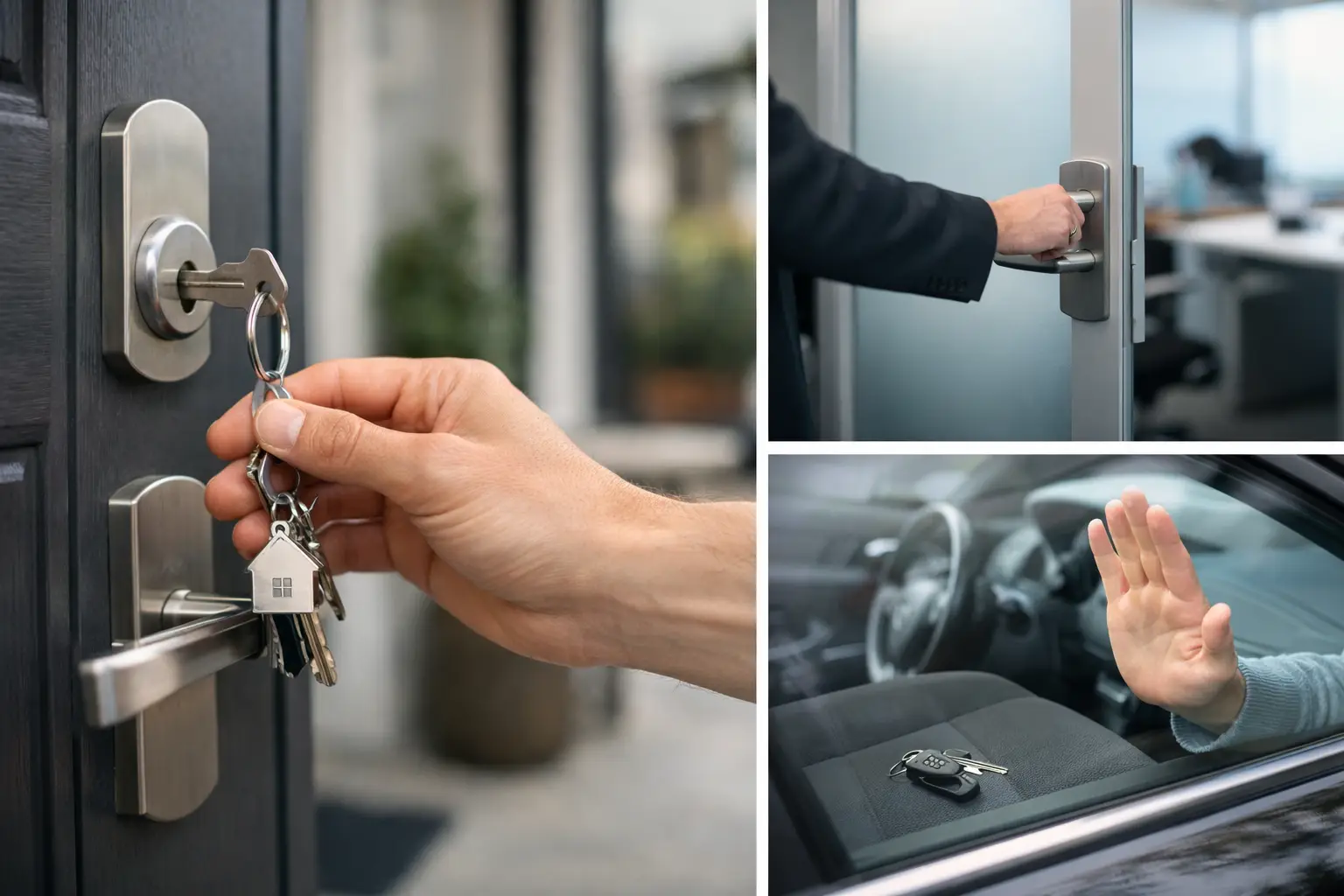
A lockout rarely happens because someone is careless. It usually happens during a rushed school morning, a late return from work, a grocery run, or a busy day managing a property. The best ways to avoid lockouts are not complicated, but they do require a few reliable routines, properly working hardware, and a backup plan that fits your home, business, or vehicle.
For Montgomery County homeowners, drivers, and business operators, prevention starts with reducing the small points of failure that turn an ordinary day into an urgent situation. A key can break, a battery can die, a door can latch behind you, or a remote can disappear in a crowded parking lot. Planning for those moments protects your time, your access, and your peace of mind.
1. Build a key routine you can repeat
Most residential and vehicle lockouts begin when keys are placed somewhere temporary. A jacket pocket, kitchen counter, cup holder, or desk drawer may work once, but it is not a dependable system.
Choose one consistent place for keys when you are home and one consistent carry method when you leave. Many people do well with a designated entry-area hook or tray and a key ring that stays attached to a bag, belt loop, or purse. The goal is not to create more steps. It is to make the right step automatic.
Before closing a vehicle door or pulling a home door shut, make a brief habit of confirming that the key or fob is in your hand, pocket, or bag. That two-second check is especially useful when unloading children, groceries, equipment, or deliveries.
2. Keep a controlled backup key plan
A spare key can prevent an emergency call, but only when it is stored responsibly. Hiding a key under an obvious object near the front door creates a security concern and may give an intruder easy access. Instead, leave a backup with a trusted nearby relative, neighbor, or property manager who is available when you need them.
For drivers, a spare mechanical key or programmed vehicle key can be useful, depending on the make and model. Do not assume that an uncut metal key or an unprogrammed fob will start the vehicle. Many modern cars require a correctly programmed transponder or remote system. A professional locksmith can help confirm what type of backup your vehicle actually needs.
If you manage rental homes, offices, or multiple commercial units, document who holds backup keys and when keys are issued or returned. A clear chain of control prevents confusion when staff changes or tenants move out.
3. Check doors before they lock behind you
Self-locking hardware is convenient, but it can create trouble when someone steps outside for a moment. This is common with interior garage doors, side doors, apartment doors, and business rear entrances.
Know how each door on your property behaves. Some locks engage automatically when the door closes, while others require a key or thumbturn. If a door locks automatically, keep your key with you every time you step outside, even if you expect to be gone for only a minute.
Property managers should also inspect common-entry and maintenance doors. A door that closes too quickly, a latch that catches inconsistently, or a damaged closer can leave residents or staff stranded outside. These are maintenance issues worth addressing before they become an after-hours problem.
4. Maintain keys, locks, and door hardware
A lockout is not always caused by a missing key. Worn keys can stop turning properly, damaged locks can bind, and misaligned doors can put pressure on the latch. Forcing a key when it does not turn can bend or break it, often creating a more complicated access issue.
Pay attention to early warning signs: a key that must be jiggled, a deadbolt that sticks, a knob that feels loose, or a door that needs to be pushed or pulled to lock. These are signals that the lock, strike plate, hinges, or door alignment may need professional attention.
Avoid using a heavily worn copy as your everyday key. Have a clean duplicate made from a key that still works smoothly, or have the lock assessed if multiple copies are giving you trouble. A licensed and insured locksmith can identify whether the issue is the key, cylinder, latch, or door hardware instead of guessing at a quick fix.
5. Treat smart locks like electronic equipment
Smart locks can reduce certain lockout risks because they may allow keypad codes, phone access, or remote management. They are particularly useful for households with teenagers, short-term access needs, and business teams that regularly add or remove users.
They also have trade-offs. Batteries need attention, codes must be managed carefully, and not every smart lock works well with every door or access routine. A keypad is helpful only if users remember their code, and phone-based access is less useful when a phone is lost, damaged, or out of power.
Keep the lock’s backup access method available and learn how it works before there is a problem. Replace batteries on a schedule rather than waiting for a warning signal. For commercial spaces, remove former employees’ codes promptly and avoid sharing one code among an entire team. Individual codes create clearer accountability.
6. Protect your vehicle keys and fobs
Car keys have changed considerably. A traditional key may only need cutting, while a modern fob can include remote entry, a transponder chip, push-button start functions, and emergency key access. Replacing or programming the wrong type of key can leave you without a working backup.
Keep your primary fob away from the edge of a counter, open bag, or loose coat pocket where it can fall unnoticed. When traveling, place it in the same compartment every time. If you use a valet, repair shop, or car wash, confirm you have the correct key before leaving the location.
A weak fob battery can also create confusion. If the vehicle stops recognizing the fob consistently, address it early. Your owner’s manual may describe an emergency starting position, but vehicle systems vary. A qualified automotive locksmith can diagnose key, fob, programming, ignition, and door-lock issues on-site when needed.
7. Create an office lockout procedure
Business lockouts can affect staff, customers, deliveries, and daily operations. The most effective prevention plan is usually simple: assign keyholders, record access responsibilities, and establish a clear after-hours procedure.
At least two authorized people should know how to access the building when the primary manager is unavailable. This does not mean distributing keys freely. It means setting controlled access with documented responsibility. For larger properties, a master key system or electronic access control setup may reduce the number of physical keys in circulation while keeping access organized.
Review what happens when an employee leaves, a contractor finishes work, or a key goes missing. Rekeying affected locks may be the right response when key control has been compromised. Businesses with public exits should also have panic hardware inspected regularly so occupants can exit properly during an emergency.
8. Prepare for children, guests, and caregivers
Households with young children often face a different kind of lockout: a child locks a door from inside, someone steps out briefly while the door closes, or a caregiver is unfamiliar with the lock. Clear instructions can prevent unnecessary stress.
Show trusted caregivers how exterior locks, garage access, keypad codes, and alarm-related door functions work. Keep emergency contacts accessible and make sure children old enough to use a key understand when they should and should not open a door. If a lock is difficult for a family member to operate, changing the hardware may be more practical than expecting everyone to adapt.
Locked Out? We Can Help Right Now
Multi Locksmith LLC provides licensed, insured, and background-checked technicians for fast lockout assistance at home, work, or your vehicle throughout Montgomery County.
📞 Call 240-706-47999. Do not force entry when access fails
When you are locked out, it is tempting to pry a door, break a window, use a coat hanger, or force the ignition. Those methods can damage doors, weatherstripping, locks, window frames, airbags, and vehicle electronics. They can also create a larger repair issue after access is restored.
If your backup plan is unavailable, contact a verified local locksmith with the tools and training to handle the specific situation. Multi Locksmith LLC provides mobile residential, commercial, automotive, and emergency locksmith support throughout Montgomery County, with professional service for the moments when prevention is not enough.
10. Review your plan after every close call
A near-lockout is useful information. If you almost left keys inside the house, could not find the spare fob, or discovered a sticking deadbolt, adjust the system while the details are fresh. One small change – a better key location, a new backup arrangement, or a lock repair – can prevent the next incident.
The most dependable prevention plan is the one you can follow on your busiest day. Set up your key routine, test your backup access, and address hardware problems before they interrupt your home, vehicle, or business.