
🚪 Panic Bars
Panic Bars: When Your Business Needs Attention
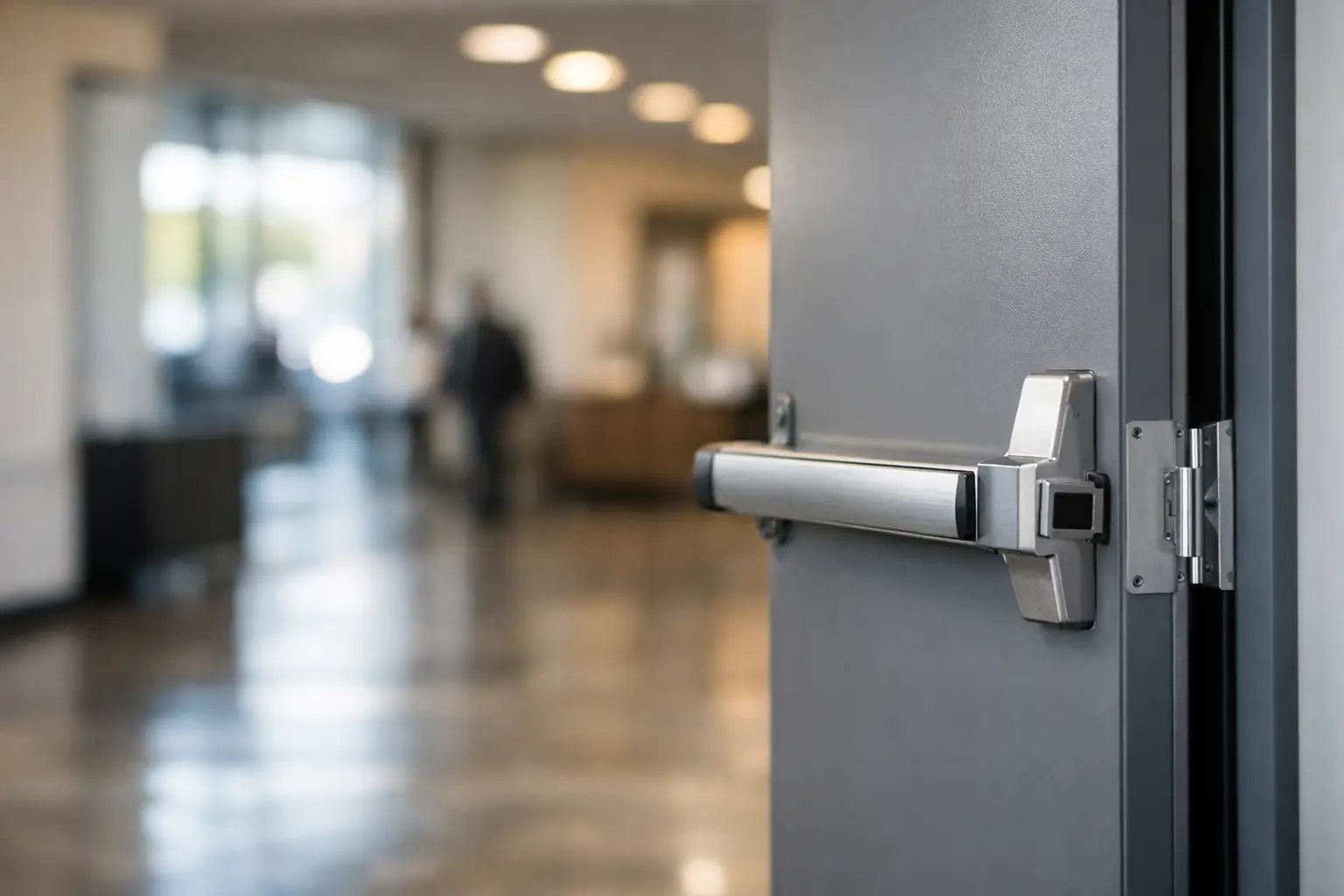 A crowded office, a busy restaurant, or a warehouse shift change can turn one exit door into a critical point of movement within seconds. Panic bars give people a direct, familiar way to open that door with a push, without needing to find a knob, turn a lever, or use a key. For commercial property owners and managers, that simple action is a major part of keeping exit routes functional when they are needed most.Panic hardware is not a one-size-fits-all add-on. The door type, occupancy, fire rating, existing access system, and local code requirements can all affect what belongs on the opening. A professional assessment helps ensure the device works reliably, fits the door correctly, and supports the building’s required means of egress.
What Panic Bars Do
A panic bar, also called an exit device, releases a latched door when pressure is applied across the bar or push pad. Unlike a standard lockset, it is designed to be operated by body pressure. That matters when many people are moving at once, when visibility is reduced, or when someone is stressed and needs to leave quickly.The outside of the door can remain controlled through a key cylinder, lever trim, credential reader, or other authorized-entry method. Inside, the exit device must allow occupants to leave as intended. This balance gives a business control over who enters while preserving a clear route out.Not every commercial door requires panic hardware. Requirements can depend on factors such as the building’s occupancy classification, occupant load, door location, and whether the opening is part of a fire-rated assembly. A retail storefront, medical office, school, place of assembly, and industrial facility may have very different needs. The local authority having jurisdiction makes the final determination, so assumptions based on another building can create problems.Common Types of Panic Bars
The right device depends on the door and how the property operates. A professional locksmith can explain the options in plain language and recommend hardware that matches the opening rather than forcing a generic solution.Rim exit devices
A rim device mounts on the interior face of the door and latches into a strike on the frame. It is common on single exterior doors because it is durable, visible, and practical for frequent use. Many businesses choose this style for rear exits, storefronts, and employee entrances.Vertical rod exit devices
Vertical rod devices secure the door at the top and bottom rather than at the side frame. They are often used on pairs of doors where a center mullion would interfere with wide openings. Surface vertical rods are visible along the door, while concealed vertical rod hardware is installed inside the door for a cleaner appearance.Concealed hardware can look better, but repairs may require more labor if internal parts wear out or the door has been altered. For high-traffic openings, choosing quality hardware and planning for regular service is usually more practical than selecting based on appearance alone.Mortise exit devices
Mortise devices use a lock body installed inside the door edge. They are frequently found on commercial doors that need a more integrated appearance or specific trim options. Because the door preparation is more involved, replacement should be handled carefully to preserve alignment and door integrity.Alarmed and delayed egress devices
Some locations need to discourage unauthorized use of an exit without blocking lawful egress. An alarmed exit device can sound when the bar is pressed, alerting staff that a door has been opened. Delayed egress systems may be appropriate in certain controlled settings, but they involve strict code and operational considerations.These solutions should never be treated as a shortcut for a supervision or access problem. The hardware, signage, electrical components, and emergency release functions must be evaluated together.Signs Your Panic Bars Need Service
Exit hardware often receives little attention until it stops working. That is risky because even small issues can become a failed latch, a door that will not close, or a bar that sticks at the wrong moment. Building staff should test exit doors routinely and report changes promptly.Call for professional service when you notice any of the following:- The push bar binds, feels loose, or does not retract the latch every time.
- The door must be pushed, pulled, or lifted before the device will release.
- The latch does not engage fully when the door closes.
- The door slams, drags on the threshold, or leaves a visible gap at the frame.
- An alarm, access reader, or exterior trim no longer works as intended.