
Best Door Reinforcement Options for Stronger Entry
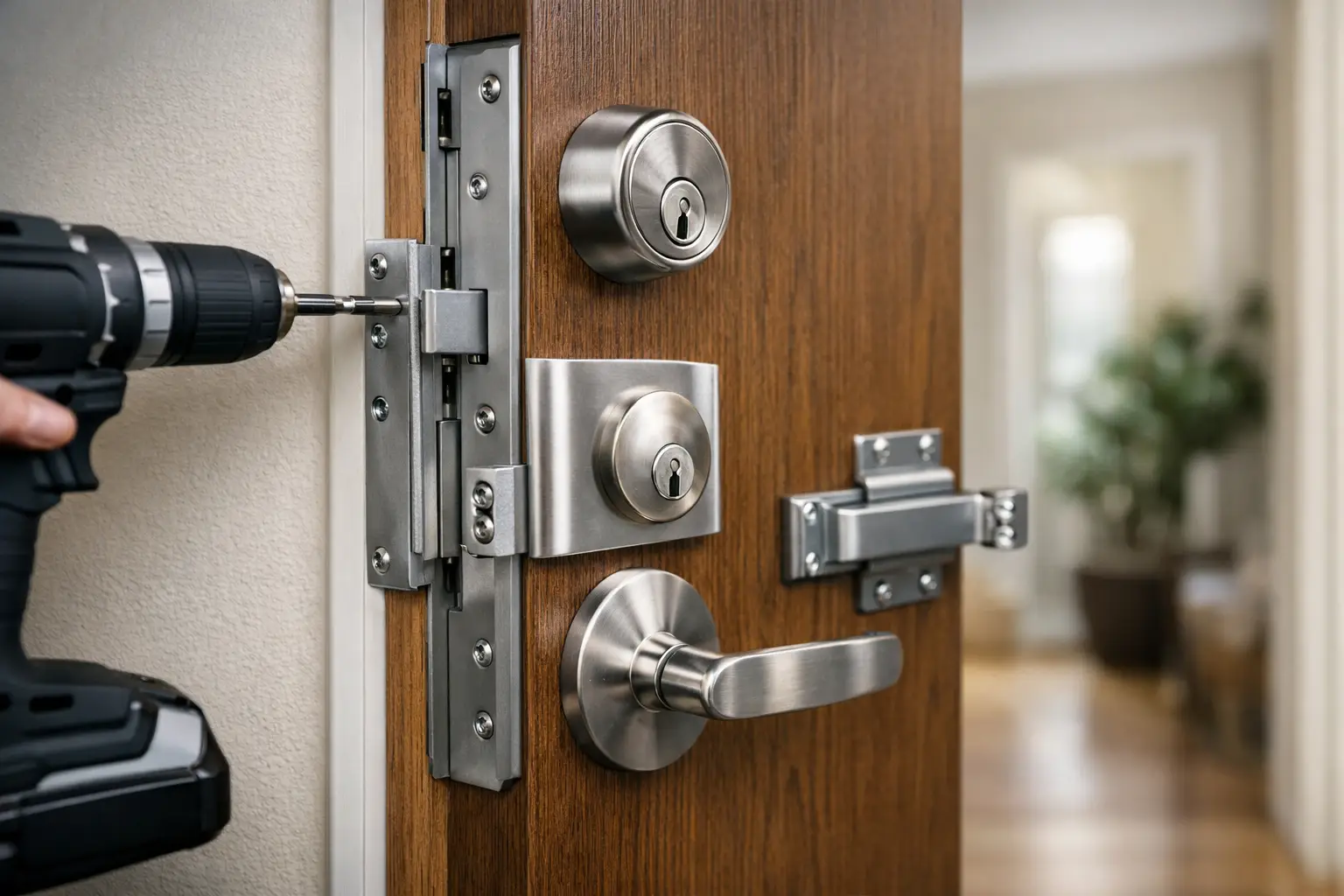
A forced entry often does not begin with a failed lock. It begins where the lock meets the frame, where hinges attach to the jamb, or where a weakened door gives way under pressure. The best door reinforcement options address those vulnerable points as a complete system, helping homeowners and business operators protect the entry rather than relying on one piece of hardware alone.
For properties in Montgomery County, the right solution depends on the door material, frame condition, lock type, and how the entrance is used each day. A front door, a rental-unit door, a rear service entrance, and a commercial office door may all need different upgrades. A professional locksmith can identify the weak link and recommend reinforcement that works with the existing door instead of creating a false sense of security.
Start With the Door Frame and Strike Plate
The strike plate is the metal piece mounted on the frame that receives the deadbolt. Many standard strike plates are small and secured with short screws that only grip the thin trim or jamb material. During a forced-entry attempt, that area can split before a quality deadbolt has a chance to perform as intended.
A heavy-duty strike plate or security strike box spreads force over a larger section of the frame. Installed with long screws that reach the structural framing behind the jamb, it gives the deadbolt a much stronger anchor point. This is one of the most effective upgrades for a typical residential door because it reinforces the area most often targeted during a kick-in attempt.
Installation quality matters here. If the frame is cracked, rotted, misaligned, or loosely mounted, simply adding a stronger plate may not solve the underlying problem. The door must close properly, the bolt must fully enter the strike opening, and the hardware must be fitted without binding.
Reinforce the Lock Side of the Door
A door reinforcement plate, sometimes called a wraparound plate, strengthens the section of the door surrounding the lock and deadbolt. It can be especially useful on wood doors that have been drilled, repaired, split, or weakened by previous hardware installations. The plate helps prevent the lock area from breaking apart when force is applied near the latch or deadbolt.
This option is often paired with a properly installed deadbolt. A single-cylinder deadbolt is a common choice for many homes, while business doors may require commercial-grade hardware suited to traffic volume and building requirements. The correct lock depends on the door’s location, occupancy needs, and whether emergency exit hardware is required.
Replacing a lock without strengthening a damaged door can leave the entry vulnerable. Likewise, installing a reinforcement plate over an already failing door is not always the right repair. If the door has severe warping, extensive cracking, or structural damage, replacement may be the more dependable choice.
Upgrade Hinge Security on Outward-Swinging Doors
Door hinges deserve close attention when they are exposed from the outside. If a door swings outward and its hinge pins are accessible, removing those pins may allow someone to defeat the entry without attacking the lock side at all.
Security hinges, non-removable hinge pins, and hinge bolts help prevent this type of attack. Hinge bolts work by interlocking the door and frame when the door is closed, so the door remains secured even if a hinge pin is removed. This is a practical reinforcement for exterior utility doors, side entrances, and certain commercial doors.
Not every outward-swinging door needs the same hinge solution. The number of hinges, weight of the door, frame construction, and clearance around the door all affect what can be installed. A qualified assessment helps ensure that upgraded hinges do not interfere with proper operation.
Consider a Door Jamb Reinforcement Kit
A jamb reinforcement kit typically includes a long metal plate that covers a larger vertical section of the frame around the deadbolt and latch. Rather than concentrating force on one small strike plate, it distributes pressure along the jamb. This makes it a strong option for doors that need more than a basic strike plate upgrade.
These kits can work well for residential exterior doors, especially when paired with long structural screws and a solid deadbolt. They are also useful when a frame has minor wear around the latch area but is otherwise in good condition. Proper measurements are essential because doors, jamb depths, and lock spacing vary.
For a door that has already been forced open, do not assume new hardware alone will restore security. The frame, trim, fasteners, lock alignment, and door edge should all be inspected. Repairs should restore the door’s strength, not simply cover visible damage.
Choose the Right Reinforcement for Sliding and Double Doors
Traditional hinged doors are not the only entries that need attention. Sliding patio doors require protection against lifting, prying, and forced movement along the track. A secondary locking device, reinforced track components, and an anti-lift solution can significantly improve security when selected for the specific door system.
Double doors need special attention at the meeting point between the two panels. The inactive door should have strong top and bottom bolts that engage securely with the frame. The active door’s lock must also connect to reinforced hardware, not just a thin surface-mounted plate. If the astragal, the vertical piece between double doors, is loose or damaged, it may need repair or replacement before new lock hardware is installed.
Glass near a door lock introduces another consideration. Reinforcing the frame and lock side remains valuable, but the overall security plan should account for how close the glazing is to the hardware. A locksmith can help match the locking approach to the door’s layout and intended use.
Best Door Reinforcement Options for Businesses
Commercial entrances face different demands than residential doors. High daily traffic, employee access needs, delivery schedules, and emergency egress requirements can all affect the best hardware choice. A rear door that is rarely used after hours may need reinforced locking points, while a main entrance may benefit more from access control combined with commercial-grade door hardware.
Panic hardware must allow occupants to exit quickly while securing the door from the exterior. This means reinforcement must be compatible with the existing exit device and the door’s fire-rating requirements where applicable. Improper modifications can create operational problems or conflict with building requirements.
For offices, retail spaces, and managed properties, reinforcement also supports better key control. A master key system, restricted keyway, or electronic access system can complement physical door upgrades by limiting who can enter and documenting access activity when the system supports it.
Get a Professional Door Reinforcement Assessment
Multi Locksmith LLC provides licensed, insured, and background-checked technicians for strike plate upgrades, door jamb reinforcement, and hinge security installation throughout Montgomery County.
📞 Call 240-706-4799How to Decide What Your Door Actually Needs
The best choice begins with an honest inspection of the full opening. Look at the door material, frame condition, deadbolt throw, strike plate size, hinge exposure, gaps around the door, and signs of prior repairs. A solid steel door with a weak wood frame still has a weak point. A premium deadbolt installed into a shallow strike opening is also limited by the surrounding structure.
Think about the door’s purpose as well. Your primary front entry may need a balance of appearance, convenience, and protection. A basement, garage-to-home, or rear entry may benefit from more visible hardware if it provides stronger reinforcement. For a commercial property, daily use and code-compliant exit needs should guide the decision.
Avoid relying on surface-level fixes such as decorative hardware or added chain locks as the main line of defense. These products may provide a small layer of control while someone is inside, but they do not replace properly installed deadbolts, reinforced strikes, secure hinges, and a sound frame.
Professional Installation Protects the Entire Entry
Door reinforcement is only as effective as its installation. Incorrect screw placement, poor alignment, incompatible hardware, and concealed frame damage can reduce the value of even high-quality components. A licensed and insured locksmith can evaluate the opening, explain the trade-offs, and complete the work with the door’s operation and security in mind.
Multi Locksmith LLC provides on-site locksmith support for homeowners, property managers, and businesses that need stronger entry protection or repairs after door damage. A professional evaluation can identify whether a targeted strike plate upgrade is sufficient or whether the door, jamb, hinges, and lock hardware need a more complete approach.
A stronger door is built one connection at a time. When the lock, frame, hinges, and door itself work together, your entry is better prepared to protect the people and property behind it.