
How to Rekey House Locks After Moving In
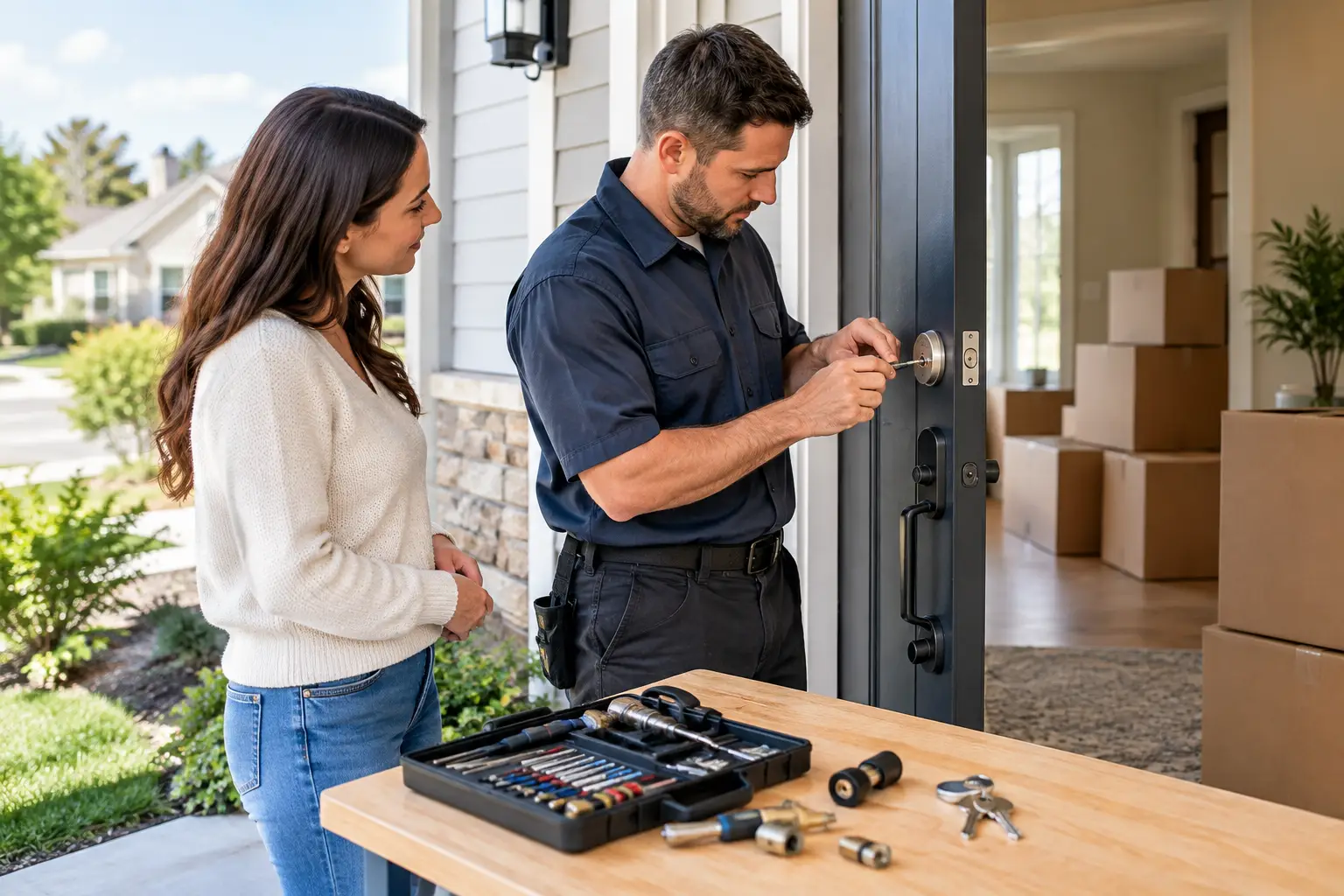
The keys handed over at closing may look complete, but they do not tell you who had copies before you arrived. Former owners, contractors, relatives, dog walkers, and neighbors may still have access. Learning how to rekey house locks helps you take control of that access without necessarily replacing every lock on the door.
Rekeying changes the internal pins inside a compatible lock cylinder so the old key no longer operates it. The lock hardware remains in place, but it works with a newly cut key. For homeowners, that can be a practical way to reset entry access after moving, losing keys, ending a roommate arrangement, or recovering a key that was never returned.
What Rekeying a House Lock Actually Does
A traditional pin-tumbler lock opens when the cuts on a key lift small internal pins to the correct height. During a rekey, those pins are replaced or rearranged to match a different key pattern. Once the cylinder is reassembled, the prior key should no longer turn the lock.
This is different from changing a lock. Changing a lock means removing the existing hardware and installing new hardware. Rekeying preserves the exterior lockset, deadbolt, and door preparation when those parts are in good working condition.
That distinction matters because rekeying solves an access-control problem, not every lock problem. If a deadbolt binds, the latch does not align with the strike plate, the cylinder is damaged, or the hardware shows wear, a rekey alone will not correct it. A professional locksmith can inspect the full assembly and tell you whether the issue is internal key control, mechanical repair, or replacement.
When Rekeying Is the Right Choice
Rekeying is usually a strong option after a home purchase, after a key is lost or stolen, or when someone who previously had permission to enter should no longer have it. It also makes sense when you want one key to operate several compatible exterior doors.
For a rental property, rekeying between occupants is a straightforward way to restore key control while keeping serviceable hardware in place. Property managers should also consider garage-entry doors, side gates, storage rooms, mailbox locks, and common-area doors when reviewing who has access.
There are situations where new hardware is the better decision. Consider replacement if the lock is severely corroded, repeatedly sticks, has visible damage, lacks a functioning deadbolt, or no longer fits the security needs of the property. A high-traffic front door may also benefit from a more durable lockset rather than repeated repairs.
Before You Rekey: Check the Door and Your Keys
Before taking anything apart, confirm that the lock is compatible with rekeying. Most standard residential keyed knobs, levers, and deadbolts can be rekeyed, but some lower-grade cylinders, electronic locks, and proprietary key systems require a different approach. The brand, keyway, and condition of the cylinder all matter.
Test the door first. Open and close it several times, then lock and unlock it from both sides. If the key only works when you pull or push on the door, the alignment is likely the problem. Rekeying the cylinder will not fix a strike plate that is out of position or a door that has shifted with seasonal movement.
You should also identify every lock that needs attention. Homeowners often focus on the front door and forget the rear entry, garage service door, basement exterior door, or door between an attached garage and the house. Any exterior-access door deserves the same review.
How to Rekey House Locks Yourself
A do-it-yourself rekey can work well when you have a compatible kit, the correct original key, and confidence handling small mechanical parts. Kits are typically designed for a specific lock brand and keyway. Using a kit that does not match your cylinder can lead to a lock that will not operate correctly.
Gather the correct rekey kit, the new keys included with it, a plug follower, a small screwdriver, a pinning tool or tweezers, and a clean work surface. Work over a light-colored towel or tray so tiny pins and springs do not disappear if dropped.
The basic process follows these steps:
- Remove the lock cylinder from the knob, lever, or deadbolt according to the hardware design.
- Insert the current working key and carefully remove the cylinder plug with a plug follower supporting the pins and springs.
- Read the new key cuts using the kit’s chart, then place the matching bottom pins into the plug chambers.
- Reinstall the plug slowly, reassemble the hardware, and test the new key several times before closing the door.
The key must remain in the plug while you remove it. If the plug turns without the key in place, the upper pins and springs can spill into the cylinder body. At that point, reassembly becomes much harder and may require professional service.
After reassembling the lock, test it while the door is open. Verify that the new key turns smoothly from both sides where applicable and that the old key does not operate the cylinder. Then test the deadbolt or latch with the door closed to make sure it enters the strike plate without force.
Common Rekeying Mistakes to Avoid
The most common mistake is attempting to rekey a lock without the existing working key. Some lock types can still be serviced, but the process often requires additional tools and experience. Forcing the cylinder or trying to improvise can damage the lock and leave the door unsecured.
Another problem is mixing pins from different systems. Pins may look similar but can vary by manufacturer and keyway. A lock may partially turn on the bench yet bind once installed if the wrong pins are used or one is set at the wrong depth.
Homeowners also sometimes overlook key duplication control. Once a lock has been rekeyed, keep track of every issued key and avoid leaving extras in predictable exterior locations. If several family members need access, consider how keys will be managed before creating duplicates.
Finally, do not confuse a smooth key turn with a properly functioning door. The deadbolt should extend fully into the strike plate without lifting the door, pushing the frame, or forcing the key. Resistance can indicate a door-alignment issue that should be corrected before it causes damage to the lock.
Need Your House Locks Rekeyed?
Multi Locksmith LLC provides licensed, insured, and background-checked residential locksmith service throughout Montgomery County.
📞 Call 240-706-4799When to Call a Professional Locksmith
Professional help is the practical choice when there is no working key, the lock is damaged, several doors need to be keyed alike, or the home uses a mix of brands and lock types. It is also the right call when you want a careful security review rather than a single-cylinder adjustment.
A licensed and insured locksmith can rekey compatible locks on site, identify hidden mechanical problems, and help coordinate exterior doors under one key when the hardware allows it. This can be particularly helpful after a move, when you are already managing contractors, deliveries, and a long list of household details.
For Montgomery County homeowners, Multi Locksmith LLC provides mobile residential locksmith service throughout communities such as Rockville, Silver Spring, Bethesda, Gaithersburg, and Germantown. A trained technician can assess the existing hardware before work begins, so you are not left guessing whether a rekey will solve the issue.
Rekeying and Smart Lock Considerations
If you are planning to install a smart lock, review the physical key cylinder as part of the decision. Many smart deadbolts retain a key override, while others use a different access method. A mechanical backup can be useful, but it should be included in the same access plan as every other exterior entry.
Smart access does not automatically eliminate the need to inspect door alignment, strike engagement, and the condition of the deadbolt. The electronic features only work as well as the physical hardware supporting them. When upgrading, make sure the lock operates smoothly by hand before relying on keypad codes or phone-based access.
A rekey is a small project with a meaningful purpose: it lets you decide exactly which keys can enter your home. If you have the right equipment and a healthy, compatible lock, a careful DIY approach can work. When access history is uncertain or the hardware needs a closer look, a qualified local locksmith can restore control without turning a simple security update into a larger repair.