
Olney Home Security Checklist for Every Door
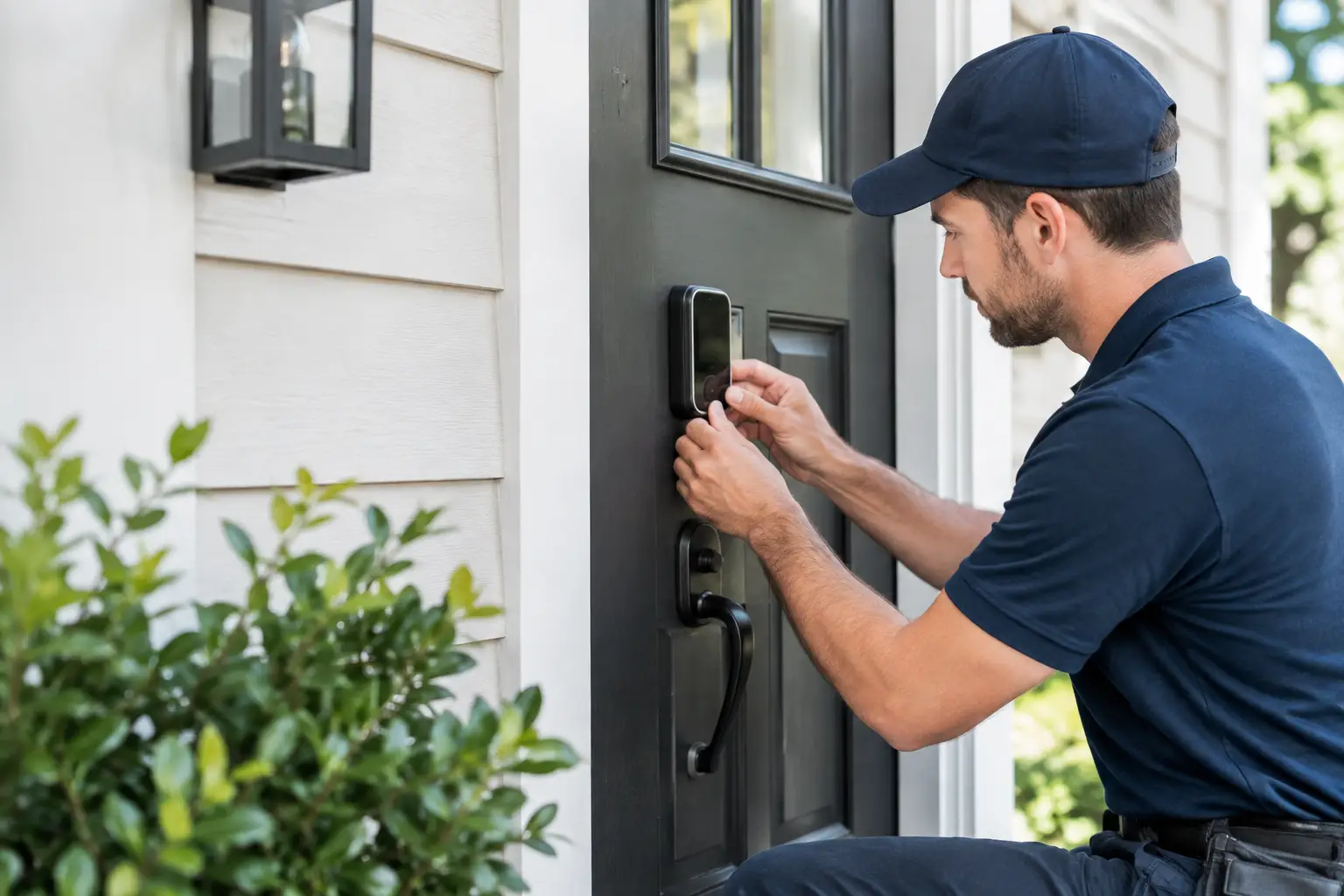
A front door can look secure from the sidewalk and still have a loose deadbolt, a worn strike plate, or an old key circulating outside the household. This Olney home security checklist helps homeowners spot the gaps that matter most before a lockout, break-in attempt, move, or tenant change turns a small issue into an urgent call.
The goal is not to add every available device to your home. It is to make each entry point harder to defeat, easier for your family to use correctly, and simpler to control over time. Start at the perimeter, then work your way through doors, keys, and daily routines.
Start Your Olney Home Security Checklist at the Perimeter
Walk around the property during daylight, then repeat the walk after dark. Look at the home as a visitor would: Which doors are easy to approach unseen? Are shrubs blocking windows or entrances? Can you clearly see someone standing at the front, side, or rear door?
Exterior lighting is one of the most practical first checks. Entry doors, walkways, garages, and side gates should be visible when someone arrives after dark. Motion-activated lighting can be useful near less-traveled sides of the house, while consistent lighting near primary entrances helps household members find keys and inspect the area before unlocking the door.
Pay attention to items that make upper windows or second-story access easier. Ladders, stacked patio furniture, and unsecured tools should not be left in convenient locations. This is not about making a home look fortified. It is about removing simple opportunities and keeping the property orderly.
Inspect Every Exterior Door, Not Just the Front Door
Most homeowners focus on the front entrance, but side doors, garage-entry doors, basement doors, patio doors, and doors connecting an attached garage to the house deserve the same attention. A strong lock cannot compensate for a weak door frame or poorly installed hardware.
Open and close each exterior door slowly. It should latch without being lifted, pushed hard, or slammed. If the door rubs the frame, shifts when locked, or has visible gaps around the edges, the alignment may be affecting how well the deadbolt engages. Seasonal settling, humidity, loose hinges, and worn weatherstripping can all contribute to this problem.
Check for these four conditions at each entry:
- A deadbolt that extends fully into the frame and turns without sticking
- A reinforced strike plate secured with long screws that reach solid framing
- Hinges that are tight, especially when they sit on the exterior side of the door
- A solid door and frame with no splitting, rot, loose trim, or damaged hardware
A basic locking knob is not a replacement for a properly installed deadbolt. For primary exterior doors, the deadbolt should be the main security lock. If a lock is difficult to operate, do not ignore it just because it still turns. Sticking hardware can become a failed lock at the worst possible time.
Check Sliding Doors and Garage Entries Carefully
Sliding glass doors need more than the factory latch. Confirm that the door closes fully and cannot be lifted easily out of its track. A properly fitted secondary security bar or pin can limit movement when the door is closed. Inspect the track for debris and wear, because a door that does not sit correctly may not lock as intended.
The door between an attached garage and the home is often overlooked because it is inside the garage. Treat it as an exterior entry point. Verify that it has reliable deadbolt protection and that family members do not leave it unlocked for convenience. Also test the garage door remote and keypad access. If a remote has been lost or a previous resident may still have access, reset or reprogram the system.
Take Control of Keys and Access
A lock can be in excellent condition while key control remains a weak point. Ask a direct question: Who can currently enter this home without asking permission? Include former owners, prior tenants, contractors, dog walkers, cleaners, neighbors, relatives, and anyone who may have received a spare key years ago.
If you cannot confidently account for every key, rekeying is often the sensible next step. Rekeying changes the lock so old keys no longer work while allowing compatible existing hardware to remain in place. It is especially useful after moving into a home, ending a roommate arrangement, recovering from a lost key, or completing a renovation with multiple workers on site.
Avoid hiding spare keys under mats, planters, decorative rocks, or other familiar places. If a trusted neighbor or family member needs access, provide a controlled spare directly or use a properly managed electronic entry option. The best arrangement depends on your household, but every method should have clear rules for who has access and when.
Review Smart Locks With the Same Care as Mechanical Locks
Smart locks can make daily access easier for households that manage visitors, caregivers, service providers, or teenagers coming home at different times. They can also create confusion if codes are shared casually or the lock is installed without checking the door alignment first.
Review all active codes and remove any that are no longer needed. Use different codes for different users when the system allows it, rather than sharing one household code broadly. Replace batteries on schedule, keep a working backup entry method, and make sure everyone who relies on the lock understands how it operates during a power outage or connectivity problem.
A smart lock is not automatically the right choice for every door. A properly fitted mechanical deadbolt may be the better answer for a low-traffic entry or a household that prefers a straightforward key system. The priority is dependable access control, not technology for its own sake.
Secure Windows and Less Obvious Openings
Windows should close and lock fully, particularly on the ground floor and near decks, porches, or stairways. Check that locks are not loose, painted shut, or difficult to engage. A window that has been left slightly open for ventilation can be appropriate when someone is home and monitoring the area, but it should not become an overnight habit on accessible levels.
Do not forget basement windows, utility doors, and any door leading to a storage area. These locations may receive less attention, which is exactly why hardware problems can go unnoticed. If a window lock is damaged or the frame shows signs of deterioration, address the underlying condition instead of relying on a temporary workaround.
Get a Professional Home Security Inspection
Multi Locksmith LLC provides licensed, insured, and background-checked technicians for door, lock, and smart lock security upgrades throughout Olney and Montgomery County.
📞 Call 240-706-4799Build Daily Habits That Support Your Hardware
Home security is partly hardware and partly routine. A dependable routine reduces the chance that a good lock is left unused. Before leaving the house or going to bed, confirm that exterior doors are locked, garage access is closed, ground-level windows are secured, and keys are where they belong.
When traveling, avoid leaving a visible pattern of mail, packages, or lights that suggests nobody is home. Ask a trusted person to check the property when appropriate. Do not announce travel plans publicly while away, particularly when posts reveal that the home is empty.
Teach children and other household members not to open the door to unexpected visitors without checking first. If someone claims to be a contractor, utility worker, or delivery driver, verify the purpose of the visit through an established contact method rather than relying only on a badge or uniform.
Know When a Professional Inspection Makes Sense
Some concerns are easy to identify, but the right repair is not always obvious. A door that sticks may need hinge adjustment, frame reinforcement, lock servicing, or replacement hardware. Repeated key breakage, a deadbolt that does not extend fully, visible door-frame damage, or a lock that turns without securing the door all deserve professional attention.
After a move, lost key, attempted forced entry, eviction, or change in household access, prompt action helps restore control. A licensed and insured mobile locksmith can assess the condition of the door, frame, and hardware on site, then recommend a practical repair or upgrade based on how the entry is actually used. For Olney homeowners, Multi Locksmith LLC provides 24/7 locksmith support when an access issue cannot wait.
Revisit this checklist at least once a year and any time your household, keys, or entry hardware changes. The most effective home security plan is usually not complicated – it is a set of working locks, controlled access, and small routines that remain consistent long after the first inspection.