
Best Commercial Key Management Tools for Offices
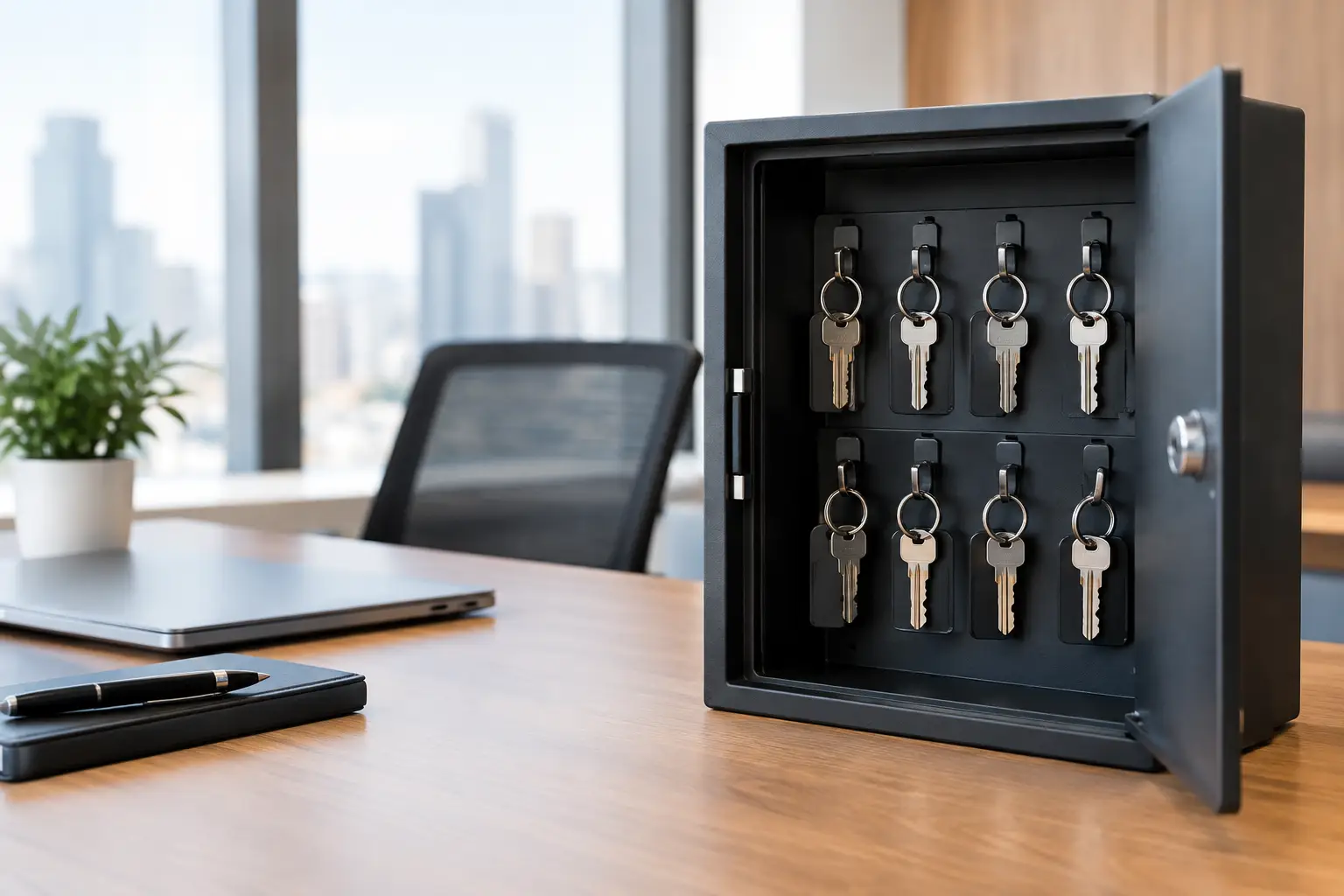
A missing office key is rarely just a missing key. It may open a supply room, tenant suite, rear entrance, equipment closet, or records area. The best commercial key management tools give business owners and property managers control over who has access, what each key can open, and what happens when an employee, vendor, or tenant relationship changes.
For most Montgomery County businesses, the right answer is not one product. It is a planned system that matches the building, daily operations, staff turnover, and level of access required. A professional locksmith can help turn a confusing collection of keys into an organized security plan that supports the way your business actually operates.
What Commercial Key Management Is Designed to Solve
Commercial key management is the process of controlling physical keys, access permissions, and the locks connected to them. Its purpose is simple: authorized people should be able to enter the areas they need, while everyone else is kept out.
Without a defined system, keys tend to multiply. A manager gives a spare to a new employee. A contractor receives a temporary key but does not return it. A former tenant may still have a copy. Over time, no one can say with confidence how many keys are in circulation or which doors they open.
A properly designed system creates layers of access. Front-desk staff may have a key for public-facing spaces, maintenance personnel may reach utility areas, and managers may hold a higher-level key for multiple doors. This improves accountability without making everyday operations harder.
The Best Commercial Key Management Tools to Consider
The best commercial key management tools depend on whether your business needs straightforward mechanical control, detailed tracking, electronic access, or a combination of all three. The following options solve different problems and often work best together.
Master Key Systems
A master key system is one of the most practical tools for offices, retail spaces, medical practices, apartment buildings, warehouses, and multi-room facilities. Individual keys open specific doors, while a master key can open a selected group of doors. A grand master key can be configured to operate multiple groups when a larger property requires it.
For example, each office tenant may have a key that opens only its own suite. The property manager can carry a master key for common access points and approved maintenance areas. This reduces the number of keys on a key ring while keeping access separated.
The critical detail is planning. A master key system should be designed around real access roles, not just the current occupants. If every key is given broad access for convenience, the system loses much of its value. A locksmith can map doors, departments, common areas, and future expansion before pinning the cylinders.
Restricted Keyways and Controlled Key Duplication
Standard keys can often be copied without the property owner knowing. Restricted keyways add an important level of control by limiting duplication to authorized channels. Depending on the system selected, a business may require documented authorization before another key is made.
This is especially useful for businesses with employee turnover, shared commercial buildings, private records, or sensitive inventory. It does not eliminate the need to collect keys when someone leaves, but it makes unauthorized copying much harder and gives management a clearer process to follow.
Restricted key systems are also a strong choice when rekeying has become a repeated concern. Rather than replacing all door hardware, a locksmith can often rekey compatible cylinders and issue a controlled set of keys under a documented hierarchy.
Electronic Key Cabinets
Electronic key cabinets are designed for facilities where keys are checked in and out frequently. Instead of hanging keys on an unmonitored board, authorized users access a secured cabinet with a code, credential, or other approved sign-in method. The system records who removed a key and when it was returned.
This tool can be valuable for property management teams, fleet operations, maintenance departments, schools, dealerships, and organizations with rotating staff. It creates an audit trail that a basic key box cannot provide.
Electronic cabinets are not necessary for every small office. They require clear user procedures and a person responsible for reviewing the records. But when multiple people handle keys throughout the day, the visibility they provide can quickly justify their role in a larger security plan.
Key Tags, Logs, and Numbering Systems
A simple key control log remains useful, particularly for smaller commercial properties. Every issued key should have an identifier, but the identifier should not reveal the door or building address to someone who finds it. A numbered tag tied to a separate access record is a smarter approach than marking a key with a suite number.
Your log should identify the key number, the person assigned to it, the date it was issued, the approved access level, and the return date when applicable. Digital records can work well, but only if the designated manager keeps them current.
This may sound basic, yet it is one of the most overlooked commercial security practices. A master key system is only as controlled as the records supporting it.
Electronic Access Control
For doors that experience heavy traffic or require frequent access changes, electronic access control may be more practical than issuing additional keys. Employees can use cards, fobs, mobile credentials, or codes, depending on the system. Access can be assigned by role and adjusted when staffing changes.
Electronic access control is particularly helpful at employee entrances, shared commercial doors, management offices, and areas where entry records matter. It can reduce the routine burden of collecting and reissuing physical keys.
There are trade-offs. Electronic systems need professional installation, ongoing administration, and a plan for power interruptions or credential problems. They also do not replace every mechanical lock in a building. Many commercial properties use electronic access at primary doors while maintaining restricted mechanical keys for interior rooms, emergency exits, and other specific applications.
How to Choose the Right System for Your Property
Start with the doors, not the products. Walk through the property and identify which areas are public, staff-only, management-only, tenant-controlled, or used by outside vendors. Then consider how often access changes and who is responsible for approving it.
A small professional office may need restricted keys and a clearly documented key log. A mixed-use property with several suites may benefit from a master key hierarchy combined with controlled duplication. A facility with multiple shifts, vehicles, or maintenance staff may need an electronic key cabinet and access control at key entrances.
It is also wise to think ahead. If your team grows, a system built around a handful of current employees can become difficult to manage. Designating access levels by job function gives you a cleaner way to add, remove, or change access later.
Get a Professional Key Management Consultation
Multi Locksmith LLC provides licensed, insured, and background-checked technicians for master key systems, restricted keyways, and access control for offices throughout Montgomery County.
📞 Call 240-706-4799Common Mistakes That Weaken Key Control
The most common problem is issuing keys without documenting them. A close second is using one key for too many doors because it feels convenient. Both practices make it difficult to respond when a key is lost or when an employee leaves.
Another mistake is treating all locks as interchangeable. Commercial doors may require different hardware based on traffic, fire-code requirements, door construction, and the role of the opening. Exit doors with panic hardware, for example, need a different approach from an interior storage room.
Finally, avoid delaying action after a missing key or an unreturned key. The appropriate response may be as limited as changing one cylinder, or it may involve rekeying a broader section of the system. The right scope depends on what that key could access and whether unauthorized copies are possible.
Professional Installation Makes the System Work
A key management plan is more than handing out labeled keys. It requires accurate records, correctly configured cylinders, durable commercial-grade hardware, and clear rules for employees and vendors. Poorly planned keying can create operational problems that are difficult to correct once many keys have been issued.
Multi Locksmith LLC helps local businesses evaluate commercial doors, build master key systems, rekey locks, install access control, and strengthen key accountability with professional on-site service. For property managers and business owners, working with a licensed and insured locksmith provides a clear point of accountability when access needs change.
The right system should make your building easier to manage, not harder. Start by knowing exactly who has access today, then build a process that keeps that answer clear tomorrow.