
Clarksburg Storefront Lock Maintenance Checklist
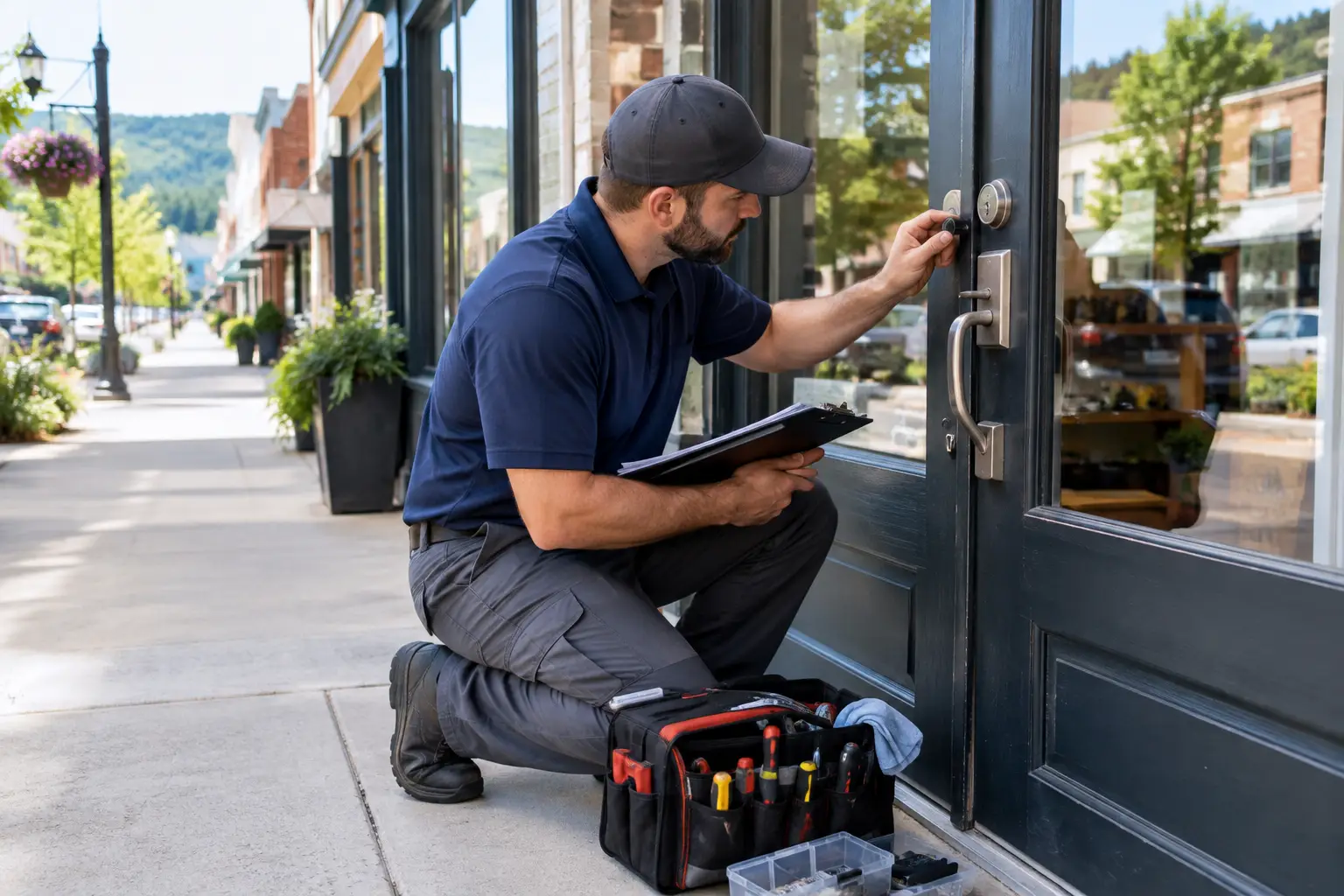
A storefront lock rarely fails at a convenient time. It fails during an early opening, after a long shift, or when an employee is trying to secure the building before leaving. Consistent Clarksburg storefront lock maintenance helps business owners avoid those disruptions while protecting staff, inventory, equipment, and daily operations.
For a retail shop, office, restaurant, salon, or service business, the entry door is used far more often than a typical residential door. That constant traffic places wear on cylinders, latches, door closers, hinges, strike plates, and panic hardware. A lock can still turn while developing a problem, which is why preventive attention matters.
Why Storefront Locks Wear Down Faster
Commercial entry doors deal with repeated use, changing weather, deliveries, customer traffic, and occasional hard handling. Over time, small alignment problems can turn into a lockout, a door that will not secure properly, or a key that breaks inside the cylinder.
The lock itself is not always the source of the trouble. A sagging door, loose hinge, failing closer, or shifted strike plate can place pressure on the latch. Employees may start forcing the key or pulling harder on the door to make it lock. That temporary workaround often accelerates wear and can damage components that could have been adjusted earlier.
Clarksburg businesses also experience seasonal temperature and moisture changes that can affect door movement. Metal storefront frames and doors may expand or contract enough to change how the latch meets the strike. Wood doors can swell or shift. If locking requires lifting the door, pushing it inward, or pulling it toward you, the door and hardware need professional attention.
Warning Signs Your Storefront Needs Service
A well-maintained commercial lock should operate without force. Keys should insert smoothly, turn predictably, and come out easily. The door should latch and lock without slamming, pulling, or repeated attempts.
Pay attention when an employee reports that a key sticks, turns roughly, or only works from a certain angle. A key that suddenly feels different is not something to ignore. Dirt inside the cylinder, worn pins, an incorrect lubricant, or internal wear may be involved. Continuing to use force increases the chance of a broken key and an unplanned service call.
Other warning signs include a loose lock face, a moving lever or handle, a deadbolt that does not fully extend, scrape marks around the strike plate, or a latch that catches only when the door is pushed into position. Doors that close too quickly, do not close fully, or drift open after being released also deserve attention. These issues affect both security and the life of the locking hardware.
For doors with panic bars, check that the bar returns fully after each use and releases the latch without sticking. Panic hardware must operate reliably for occupant egress, so delayed repairs are not a good option.
A Practical Maintenance Routine for Business Owners
Routine inspection does not require taking locks apart. The goal is to identify changes early and keep the area around the door clean and functional. Assign a manager or trusted employee to perform a brief monthly check, especially on doors used for opening and closing.
Start by opening and closing the door several times. Watch whether it swings freely, latches consistently, and sits squarely in the frame. Then test the key from the exterior and the interior thumbturn or lever where applicable. Do not force anything. If an issue appears, document which door is affected, what the key does, and whether the problem occurs at certain times of day.
Keep the threshold and door track free of debris. Dirt, leaves, packaging material, and small stones can prevent a door from closing correctly. Check visible screws on handles, escutcheons, and strike plates for looseness, but avoid overtightening hardware or removing lock components without the proper tools.
Use only a locksmith-approved lock lubricant when lubrication is needed. Household oils and general-purpose sprays can attract dust and gum up a cylinder over time. A professional can recommend the right product for the lock type and apply it without contaminating other components.
Keys Are Part of Lock Maintenance
Many storefront lock issues begin with keys rather than the lock body. Bent, worn, copied-too-many-times, or poorly cut keys can damage internal pins and make an otherwise functional lock feel unreliable.
Inspect employee keys periodically. Retire keys that show visible wear, cracks, bends, or rough edges. If a key requires jiggling, do not keep using it as a backup. Have it evaluated and replaced before it creates a problem at the door.
Key control is equally important. When employees leave, change roles, or lose keys, a business should know exactly which doors were accessible and whether rekeying is appropriate. Rekeying allows a qualified locksmith to change the internal key configuration so prior keys no longer operate the lock, without necessarily replacing all of the existing hardware.
For businesses with several offices, storage areas, employee entrances, or restricted spaces, a master key system can provide controlled access without giving every employee the same level of entry. The right system depends on the property layout, staff roles, and how frequently access changes.
When the Problem Is Door Alignment, Not the Lock
Replacing a lock will not correct a door that is out of alignment. In fact, installing new hardware on a misaligned door can lead to another failure sooner than expected. The technician should evaluate the entire opening: hinges, closer, frame, strike, latch, handle, and locking cylinder.
A common example is a deadbolt that will not extend unless someone pulls the door tightly. The cylinder may be in good condition, but the bolt is not lining up with the strike. Another example is a latch that catches only after the door is slammed. That can indicate a closer adjustment, hinge wear, or frame movement.
This is why commercial lock maintenance should be diagnostic, not just reactive. The right repair may be an adjustment, a strike plate correction, a closer service, or replacement of worn hardware. It depends on the age of the door, the traffic level, and the condition of the existing components.
Get a Professional Storefront Lock Inspection
Multi Locksmith LLC provides licensed, insured, and background-checked technicians for storefront lock maintenance, repair, and commercial security service throughout Clarksburg and Montgomery County.
📞 Call 240-706-4799Do Not Delay After a Break-In Attempt
Visible damage around a lock, frame, handle, or door edge requires prompt professional service, even if the door still locks. A forced-entry attempt can weaken hardware and leave a business vulnerable to a second attempt. It can also cause hidden alignment damage that gets worse with normal use.
A locksmith can inspect the lock and surrounding door hardware, identify whether rekeying or replacement is needed, and recommend practical improvements such as reinforced strike hardware, commercial-grade deadbolts, access control, or upgraded panic hardware where appropriate. The best response is based on the condition of the opening and the way the business operates, not a one-size-fits-all product recommendation.
Choose Professional Commercial Service
Storefront doors are a critical security point, and commercial hardware deserves trained attention. A licensed and insured locksmith can service the lock while looking at the full door system, help maintain key control, and respond when an urgent issue interrupts business.
For Clarksburg business owners, Multi Locksmith LLC provides mobile commercial locksmith support for scheduled maintenance and urgent door or lock problems. A professional inspection is especially worthwhile before busy seasons, after staff turnover, following tenant changes, or whenever a door starts showing early signs of wear.
A storefront should not require force, workarounds, or luck at the end of the day. Addressing small changes in how a door closes or a key turns can help keep your business accessible to the right people and properly secured after hours.