
Exit Device Hardware for Reliable Emergency Egress
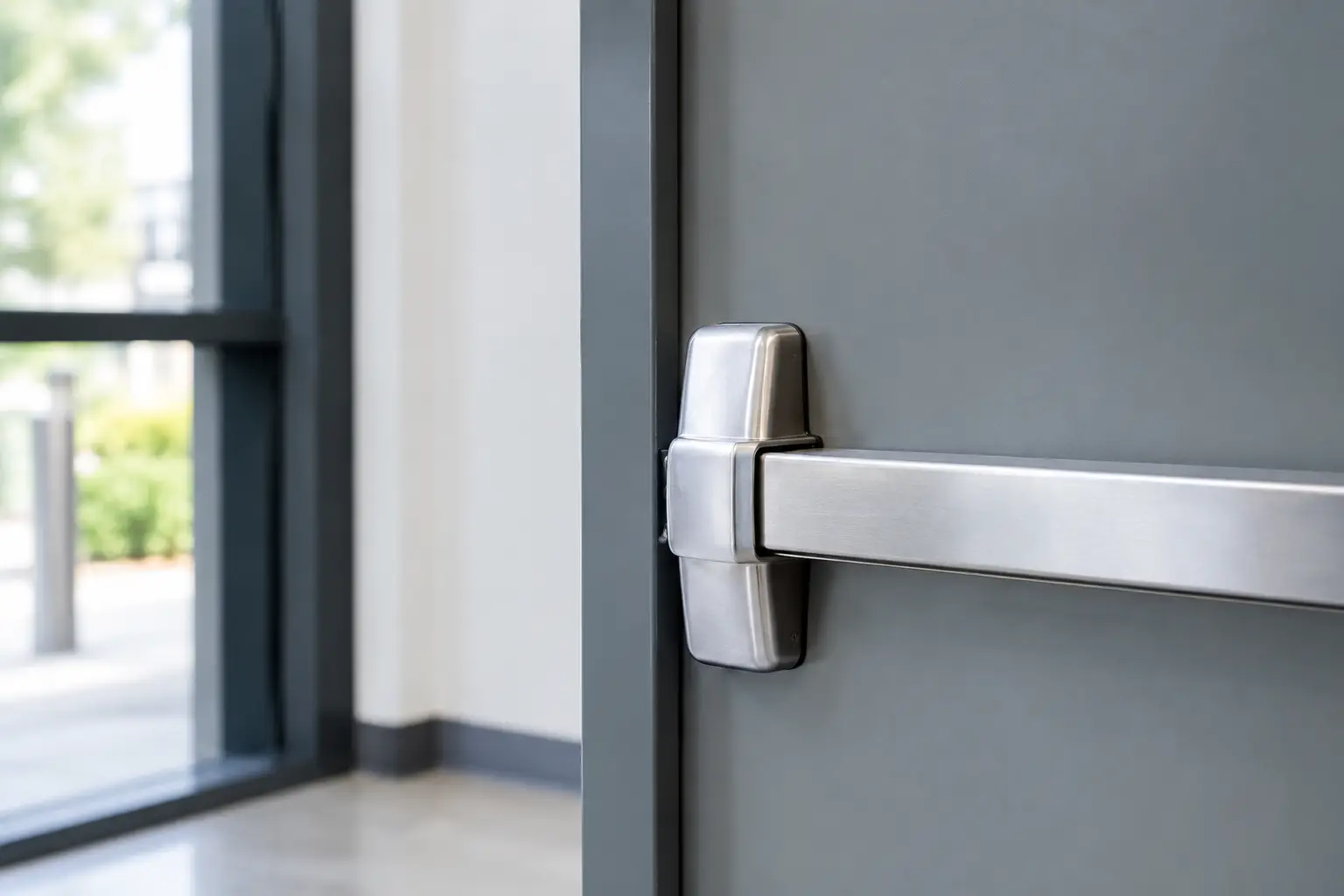
A rear exit that sticks, a panic bar that takes two hands to push, or a door that will not latch after closing is more than an inconvenience. Exit device hardware is a critical part of a commercial building’s emergency egress plan, and it must work predictably when people need it most. For business owners and property managers, that means choosing the right device, installing it correctly, and addressing wear before a door becomes unreliable.
What Exit Device Hardware Does
Exit device hardware, often called panic hardware or a panic bar, allows occupants to release a latched door by pushing on a horizontal bar or touchpad. The motion must be simple and intuitive. Someone leaving the building should not need a key, special knowledge, or fine motor control to operate the opening.
These devices are commonly installed on exterior doors serving offices, retail spaces, medical facilities, schools, warehouses, apartment common areas, and other commercial properties. They are especially important where occupancy levels, building use, or door location require emergency exit hardware.
The device is only one part of the opening. A dependable emergency exit also depends on the door, frame, hinges, closer, strike, latch alignment, weather conditions, and any connected access control components. A new panic bar will not solve a door that is sagging, binding against the frame, or misaligned at the latch point.
Common Types of Exit Devices
The correct device depends on the door construction, how the opening is used, security requirements, and applicable code requirements. A professional site evaluation helps avoid installing hardware that looks appropriate but performs poorly in daily use.
Rim Exit Devices
A rim exit device mounts on the interior face of the door and latches into a strike on the frame. It is one of the most common options for single doors and pairs of doors with a removable mullion. Rim devices are practical for many aluminum storefront, hollow metal, and wood commercial doors.
Because the latch is visible at the door edge, rim devices are often easier to inspect and service than more concealed configurations. They can also work well when a property needs exterior trim for controlled entry from outside.
Mortise Exit Devices
A mortise exit device uses a lock body installed inside the door. This option can provide a clean appearance and may be selected for certain higher-use commercial openings. Installation requires precise door preparation, so the condition and construction of the door matter.
Mortise devices are not automatically better for every entrance. If the door has limited space, existing damage, or incompatible preparation, another configuration may be more reliable and less disruptive to install.
Surface Vertical Rod Devices
Surface vertical rod devices secure the door at the top and bottom using rods mounted on the door face. They are frequently used on pairs of doors when there is no center mullion. The rods add visible hardware, but they can be a sensible solution for wide openings and specific door layouts.
The trade-off is maintenance. Top and bottom latches must align correctly, and the rods can be affected by door movement, loose fasteners, floor conditions, or impact damage. A door that closes unevenly may fail to latch at one point even when the panic bar itself feels normal.
Concealed Vertical Rod Devices
Concealed vertical rod hardware places much of the mechanism inside the door for a cleaner appearance. It is common in professional office settings and doors where aesthetics matter. However, diagnosis and repair can be more involved because critical components are not visible from the surface.
When concealed hardware begins to malfunction, forcing the bar or repeatedly slamming the door can worsen the damage. Prompt service is usually the better response.
Choosing Hardware for the Whole Door Opening
Selecting exit hardware is not simply a matter of measuring the door and mounting a bar. The opening must be evaluated as a system. A professional locksmith will consider whether the door is fire-rated, whether it is single or paired, the swing direction, the door material, existing lock preparation, the closer’s operation, and the type of access needed from the exterior.
For example, a busy employee entrance may need controlled access from the outside while allowing immediate free egress from the inside. A retail back door may need an alarmed exit device to discourage unauthorized use while preserving a usable emergency exit. A building with credential access may require electrified trim or other compatible hardware that works with its access control setup.
These details cannot be handled with a one-size-fits-all approach. Fire-rated openings and doors subject to local building or fire requirements may have specific limitations on modifications and replacement components. The authority having jurisdiction has the final say on compliance, so hardware changes should respect the door’s listings and the building’s requirements.
Signs Your Panic Hardware Needs Attention
Exit devices tend to give warning signs before they fail completely. A prompt inspection can prevent a stressful lockout, a security gap, or an emergency egress concern.
Watch for a bar that feels loose, sticks partway through its travel, requires excessive pressure, or does not return fully after being pressed. Other warning signs include a latch that fails to retract, a door that will not stay closed, scraping at the frame, missing end caps, loose rods, broken exterior trim, and a closer that slams or leaves the door partially open.
Do not overlook changes that seem minor. Seasonal shifts, heavy use, delivery traffic, and repeated door impacts can move an opening out of alignment over time. A small latch issue can eventually turn into a door that will not secure or release as intended.
Why Professional Installation Matters
Panic hardware is life-safety hardware, not a general-purpose door handle. Improper mounting height, incorrect backset, inaccurate strike placement, damaged fasteners, or incompatible components can affect how the device functions. On paired doors, coordination between both leaves is particularly important.
Professional installation also focuses on the door’s everyday operation. The device should release the latch consistently, the door should close and latch without being pushed or pulled into position, and exterior access should match the property’s security plan. If access control is involved, the egress side must still work as intended during normal use and under applicable emergency conditions.
For Montgomery County businesses, Multi Locksmith LLC provides mobile commercial locksmith support for panic bar installation, repair, adjustments, and related door hardware concerns. A licensed and insured professional can assess the full opening on-site rather than treating the panic bar as an isolated part.
Get a Professional Exit Device Inspection
Multi Locksmith LLC provides licensed, insured, and background-checked technicians for panic hardware installation, repair, and code-compliance service throughout Montgomery County.
📞 Call 240-706-4799Maintenance That Helps Prevent Failure
Exit devices benefit from routine attention, especially at high-traffic entrances. Staff can perform simple visual checks: confirm the door closes fully, press the bar to verify it retracts the latch, and look for loose parts or unusual resistance. Any issue should be reported rather than worked around.
Avoid painting over moving parts, hanging items from the bar, or using wedges to hold an exit door open. These shortcuts can damage hardware, interfere with latching, and create security concerns. Cleaning should be limited to methods appropriate for the manufacturer’s finish and moving components.
Periodic professional service is valuable because it addresses issues that are easy to miss. This may include tightening hardware, adjusting the strike and closer, correcting door alignment, inspecting rods and latches, and verifying the operation of connected trim or access controls. The needed frequency depends on traffic, weather exposure, and the type of building.
When to Request Immediate Service
Arrange prompt professional help if an exit door will not open from the inside, will not latch when closed, has been damaged by impact, or has hardware that is visibly loose or broken. If the opening is part of a required exit route, treat the problem with urgency and follow your property’s emergency procedures.
A door that is propped open because it will not latch also deserves quick attention. It may leave a business exposed after hours, invite unauthorized entry, and signal a larger alignment or hardware problem. Temporary workarounds rarely correct the cause.
The best time to inspect emergency exit hardware is before an employee, customer, or tenant has to depend on it. A properly fitted, well-maintained exit device protects the people using the building while helping the property operate with confidence every day.