
Is Keyless Entry Safer for Your Home or Business?
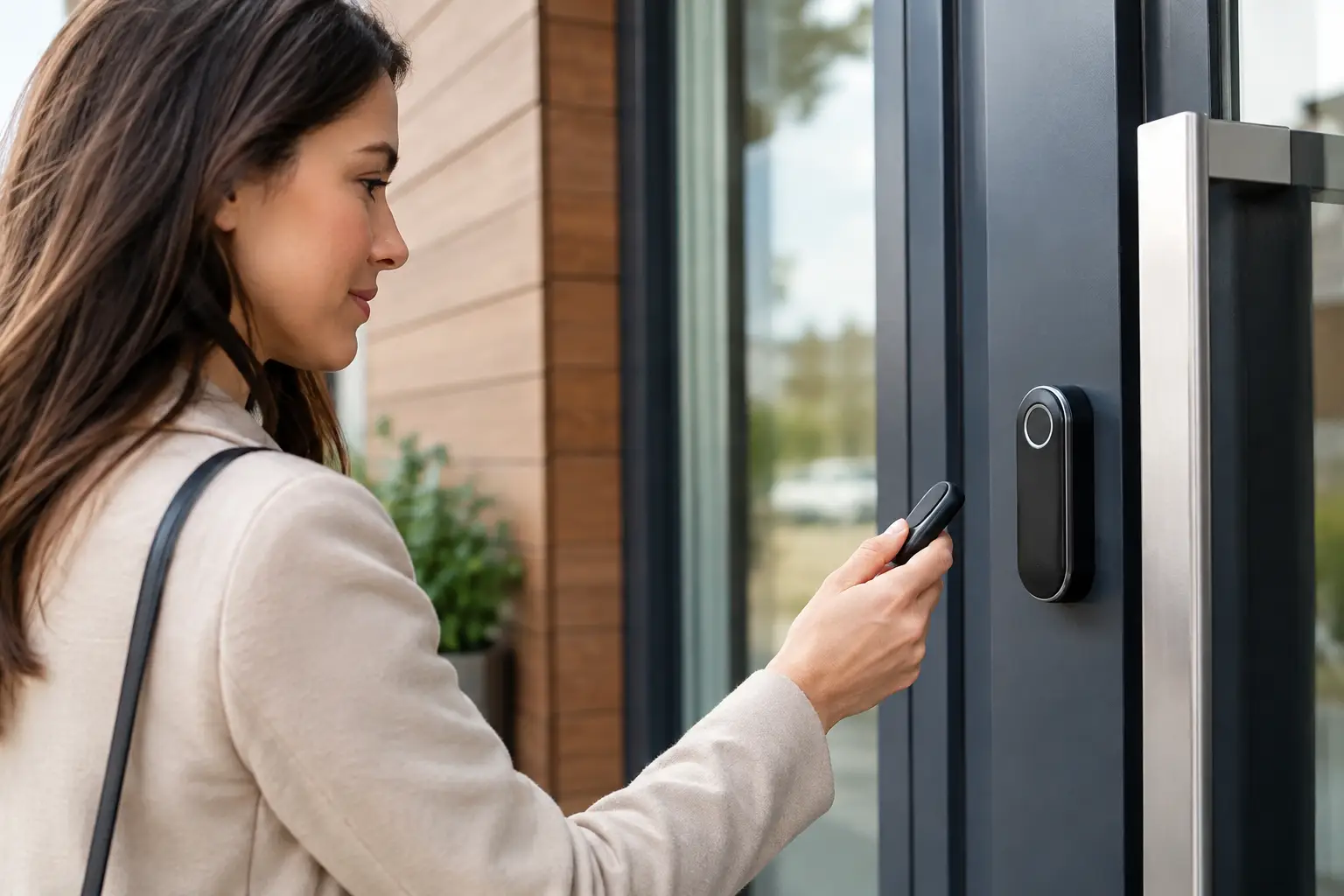
A lost house key can be copied, passed around, or found by someone who knows exactly where it fits. A traditional key also leaves no record of who entered or when. That is why many Montgomery County homeowners, property managers, and business owners ask: is keyless entry safer than a standard lock?
Often, it can be. Keyless entry gives you more control over access, especially when it is professionally installed and managed. But it is not automatically the better choice in every situation. A weak smart lock, reused code, neglected battery, or poorly configured access system can create problems that a quality mechanical deadbolt would not.
The better question is not whether keyless entry is universally better. It is whether the right keyless system, paired with strong physical hardware and good access habits, will better protect your specific property or vehicle.
Is Keyless Entry Safer Than Traditional Keys?
For many homes and businesses, keyless entry offers stronger day-to-day control. Instead of handing out physical keys, you can assign codes, mobile credentials, key fobs, or access cards to the people who need entry. When a tenant moves out, an employee leaves, or a contractor finishes work, you can remove access without collecting every key or changing the entire lock.
That control matters. Physical keys are easy to duplicate without the owner’s knowledge. With a keypad lock or electronic access system, you can change a code or deactivate a credential promptly. Many systems also provide activity logs, allowing an owner or manager to see which credential was used and at what time.
Still, electronic convenience is not the same as complete protection. A keyless lock is only one part of the entry door. If the door frame is weak, the strike plate has short screws, the deadbolt is worn, or the lock is installed incorrectly, the electronic features cannot compensate for those physical vulnerabilities.
Where keyless entry has an advantage
Keyless systems are particularly useful when access changes frequently. Rental properties, offices, medical practices, retail spaces, and homes with cleaners, caregivers, dog walkers, or visiting family members can benefit from individual, temporary, or scheduled credentials.
A homeowner can give a contractor a code that works only during a planned service window. A property manager can remove a former tenant’s credential immediately. A business can avoid circulating one shared key among several employees. These are practical improvements that reduce uncertainty over who still has access.
For vehicles, keyless remotes and proximity fobs add convenience, but their security depends on the vehicle’s system and the way the fob is stored. Modern vehicle keys contain transponder technology that helps prevent unauthorized starting. However, a fob left near an exterior door or inside an unattended vehicle can create unnecessary exposure.
Where traditional locks still perform well
A properly installed high-quality deadbolt remains a dependable security measure. It does not need a battery, Wi-Fi connection, app update, or cellular signal. For a simple residence with very limited access needs, a mechanical lock that is maintained, rekeyed when needed, and paired with solid door hardware may be the right fit.
Many properties are best served by a combined approach: a durable mechanical deadbolt or electronic deadbolt with a key override, reinforced hardware, and a controlled method for granting access. The goal is not to replace proven physical protection with technology. It is to use technology where it improves control.
The Risks That Come With Keyless Entry
Keyless entry systems have different risks than traditional locks. Knowing those risks helps you choose and use the system more responsibly.
The most common issue is weak credential management. A simple code such as a birthday, street number, or repeating pattern is easier to guess. Sharing one code with everyone in a household or workplace also removes accountability. If that code is disclosed, there is no way to know who shared it.
Battery failure is another concern. Most electronic locks provide warnings before the battery is depleted, but those warnings only help if someone responds to them. Choose a lock with an emergency power option or mechanical backup, and replace batteries on a regular schedule rather than waiting for an alert.
Connected locks also require attention to account security. Use a unique, strong password for the associated app and turn on multi-factor authentication when available. Keep the lock firmware and mobile app current. Do not give full administrator access to every user who needs to enter the building.
Vehicle proximity systems face their own concern: relay theft. Criminals may use equipment to extend the signal from a nearby key fob, making a vehicle believe the fob is closer than it is. Keeping fobs farther from exterior walls and using a signal-blocking storage pouch when appropriate can reduce that risk. Drivers should also confirm the vehicle has actually locked instead of relying only on an audible response.
Choosing a Keyless Lock That Supports Real Security
Not all keyless locks are built for the same purpose. A residential keypad lock may be appropriate for a home entry, while a busy office, apartment building, or restricted area may need commercial-grade access control, credential tracking, and more durable hardware.
Start with the door itself. Exterior doors should be solid, aligned correctly, and equipped with a properly installed deadbolt or commercial locking device. The strike plate should be reinforced and secured into the framing, not just the trim. If a door binds, fails to latch consistently, or has a damaged frame, solve that issue before relying on new electronic hardware.
Then consider how people will use the door. A household may prefer keypad codes for family members and temporary codes for visitors. A business may need cards, fobs, or mobile credentials that can be assigned by employee and removed when roles change. For emergency exits, panic hardware and local code requirements must guide the solution. Access control should never interfere with a quick exit during an emergency.
Professional installation is valuable because alignment, handing, door preparation, wiring, and configuration affect performance. A lock that is forced into a misaligned door can drain batteries, damage components, and fail to secure consistently. A trained locksmith can also identify whether rekeying, deadbolt replacement, door reinforcement, or access control is the more suitable recommendation.
Get a Professional Keyless Entry Assessment
Multi Locksmith LLC provides licensed, insured, and background-checked technicians for keyless entry selection, installation, and security assessments throughout Montgomery County.
📞 Call 240-706-4799Habits That Make Keyless Entry More Reliable
The system is only as strong as the way it is managed. Use separate codes or credentials for each regular user whenever possible. That makes it easier to remove access for one person without disrupting everyone else.
Avoid writing codes near the door, storing them in unsecured notes, or sharing them through casual group messages. Change codes after a move, staffing change, relationship change, or any time you are unsure who may know the current code. For short-term visitors and service providers, use a temporary credential rather than your primary household or business code.
Check the door after installation and periodically afterward. Confirm that it latches fully, locks without resistance, and cannot be pushed open when locked. Test backup entry options before an urgent situation arises. For businesses, review user access on a set schedule so former employees, vendors, and temporary workers do not retain credentials longer than necessary.
When a Professional Assessment Makes Sense
If you have had a break-in attempt, lost control of who has keys or codes, moved into a new property, or need to manage access for multiple people, a locksmith assessment can provide clarity. The answer may be a keypad deadbolt, a rekey, stronger door hardware, a commercial access control system, or a combination of measures.
Multi Locksmith LLC helps homeowners, drivers, and businesses across Montgomery County evaluate physical locks, smart lock installation, rekeying needs, and access control options on-site. A professional recommendation should account for the door, the building’s daily traffic, your backup-entry needs, and the level of access control you actually need.
Keyless entry works best when it gives you clear control without adding avoidable complications. Choose proven hardware, protect credentials carefully, maintain the door around the lock, and make sure you have a dependable backup plan before you need one.