
How to Secure Storefront Doors Against Break-Ins
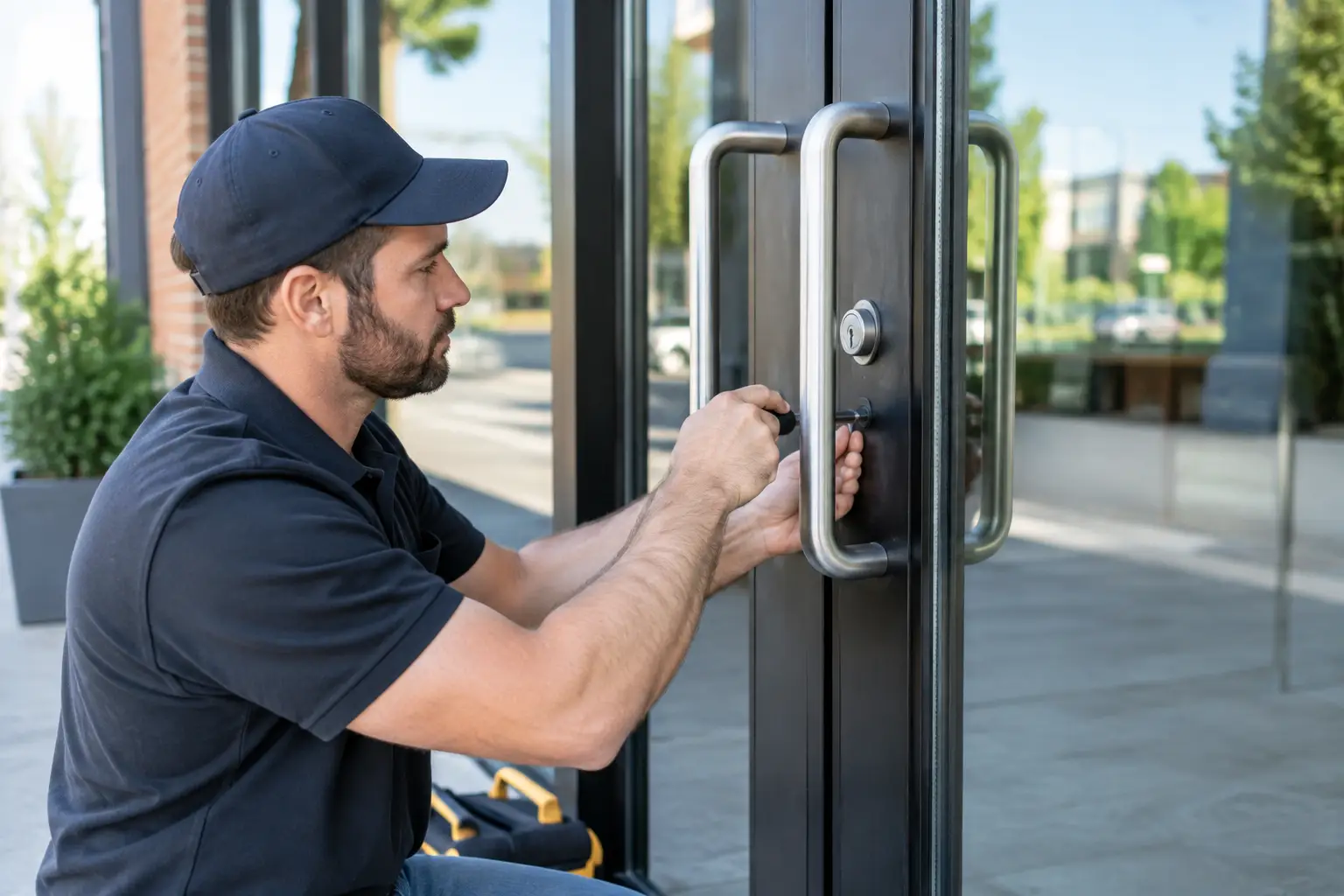
A storefront door is more than an entry point. It is often the first barrier between your inventory, equipment, records, and an attempted break-in. Learning how to secure storefront doors starts with looking beyond the lock itself. Glass, frames, hinges, closing hardware, key control, and employee routines must work together to protect the property when your business is closed.
For Montgomery County business owners and property managers, the right setup depends on the door type, the building layout, the value of what is inside, and who needs access. A retail shop with aluminum-framed glass doors has different needs than a medical office, warehouse, or restaurant with a rear service entrance. The goal is not to add hardware at random. It is to identify the weak point and correct it with professional-grade protection.
Start With the Door, Frame, and Glass
A strong lock cannot compensate for a weak door or frame. Before replacing hardware, inspect how the door sits in the opening. Look for loose frames, bent metal, damaged wood, cracked glass, rusted hinge screws, or gaps that allow a pry tool to reach the latch. These conditions can turn a minor attempt into a successful forced entry.
Commercial aluminum storefront doors are common because they are attractive and practical, but their narrow frames require hardware designed for that specific application. A locksmith can inspect whether the strike, lock body, and door closer are properly aligned. Misalignment is not just an inconvenience when locking up. It puts stress on the lock and may prevent the latch or deadbolt from fully engaging.
Glass deserves equal attention. If the door has large panes near the locking hardware, consider whether a person could break the glass and reach the inside thumbturn or release mechanism. Depending on the building and lease requirements, protective glass film, reinforced glazing, or a different lock configuration may be appropriate. These choices should preserve emergency egress while reducing easy access from outside.
How to Secure Storefront Doors With Better Locks
The right commercial lock is chosen for the door, not simply for its appearance. Many storefront doors use mortise cylinder locks, narrow-stile deadlatches, deadbolts, or hook-bolt hardware. Each serves a purpose, and the best option depends on whether the door is used heavily during business hours, whether it has a glass panel, and whether employees must exit quickly.
A deadlatch is often a strong choice for a frequently used aluminum-framed entry door because it resists slipping or shimming when installed correctly. A deadbolt can add protection where the door is secured after hours, though it must be compatible with the door and local fire code requirements. On double doors, the inactive leaf needs reliable securing hardware as well. Otherwise, the gap between the doors can become the point an intruder targets.
Do not overlook the cylinder. Standard cylinders may be appropriate for some businesses, but high-security restricted key systems provide stronger key control. Restricted keys are harder to duplicate without authorization, which helps when staff turnover is frequent or multiple tenants have occupied the space over time.
Rekeying is a practical response when keys have been lost, employees leave, contractors have had access, or a business takes over a new location. It changes the key combination without requiring replacement of every compatible lock. When hardware is worn, damaged, or poorly matched to the opening, replacement is usually the more dependable long-term decision.
Reinforce the Hardware Around the Lock
Forced entry commonly damages the area around the lock before the lock itself fails. The strike plate, frame reinforcement, mounting screws, and latch engagement all matter. A heavy-duty strike properly anchored into the building structure can make a significant difference compared with a thin plate held by short screws.
For outward-swinging doors, exposed hinges need attention. Non-removable hinge pins or security hinges prevent an intruder from defeating the door by removing hinge pins from the exterior. For inward-swinging doors, the focus is usually on the lock side, frame strength, and resistance to prying.
Door closers are another overlooked component. A closer that slams, drags, or fails to close completely can leave a door unsecured even when employees believe they locked it. Regular adjustment helps the door close, latch, and align correctly. If a closer has leaked, is damaged, or cannot control the door reliably, it should be repaired or replaced by a qualified professional.
Protect Rear and Side Entrances
The front door gets the most attention because it is visible, but rear and side doors are often more vulnerable. They may be hidden from the street, used inconsistently, or neglected until there is a problem. Walk the perimeter after dark and view the building as someone looking for privacy, weak lighting, or an easy point of entry.
Service doors should have commercial-grade locking hardware, a reinforced strike area, dependable hinges, and adequate exterior lighting. Keep boxes, dumpsters, and stored materials away from the door when possible. They can block sightlines and give someone cover while attempting to force the lock.
If a rear entrance is used by delivery personnel or several employees, access control can reduce the number of physical keys in circulation. A keypad, card credential, fob, or mobile credential can be issued to authorized users and removed when access is no longer needed. For businesses with multiple areas, access can be limited by door, time of day, or employee role.
Use Access Control and Panic Hardware Correctly
Access control gives business owners more visibility and control, but it should be planned around daily operations. A single-entry office may only need credential access at the main employee door. A larger facility may benefit from multiple controlled doors, audit trails, scheduled access, and a master key system for mechanical backup.
The system should never interfere with required exit routes. Doors serving as emergency exits often need panic hardware that allows people to leave quickly with a single push. Panic bars, exit devices, and electrified access components must be selected and installed so they meet the building’s use and applicable code requirements.
This is one area where a quick hardware swap can create serious problems. A licensed, insured commercial locksmith can assess the door function, recommend compatible hardware, and ensure the locking and exit sides work as intended.
Get a Professional Storefront Security Assessment
Multi Locksmith LLC provides licensed, insured, and background-checked technicians for storefront lock upgrades, access control, and commercial security service throughout Montgomery County.
📞 Call 240-706-4799Control Keys and Closing Procedures
Even the best storefront hardware can be undermined by loose key control. Keep an up-to-date record of who has keys, access cards, alarm credentials, and codes. Collect them promptly when roles change. Avoid hiding spare keys outside the building or leaving them with people who no longer need access.
A consistent closing routine also prevents accidental vulnerabilities. The employee closing the business should confirm that all exterior doors are shut and latched, not merely pulled closed. They should check that rear entrances, storage rooms, and offices are secured, and report sticking locks or doors that require extra force to close.
For teams with several closing employees, assign responsibility clearly. A simple written checklist can prevent assumptions, particularly during busy seasons, staff changes, or late-night shifts.
Schedule Maintenance Before a Failure
Commercial doors operate hundreds or thousands of times each month. Locks wear, cylinders loosen, strikes move out of alignment, and closers lose adjustment gradually. Small issues often appear first as a key that turns roughly, a latch that needs to be lifted into place, or a door that will not close without a hard pull.
Addressing these warning signs early can prevent a lockout, damaged hardware, or a door left unsecured after closing. A professional inspection is especially worthwhile after an attempted break-in, tenant turnover, construction work near the entrance, or any incident that bends the frame or damages glass.
Multi Locksmith LLC provides mobile commercial locksmith service for businesses throughout Rockville and nearby Montgomery County communities. A trained technician can evaluate the entire opening, not just the visible lock, and recommend a practical solution that fits the way your business operates.
Your storefront door should close securely, allow authorized people in, let occupants exit properly, and give you confidence when the lights go off. When something feels loose, sticks, or no longer works as expected, treating it as an early warning can protect your business from a much larger disruption.