
Biometric Access Systems for Smarter Entry
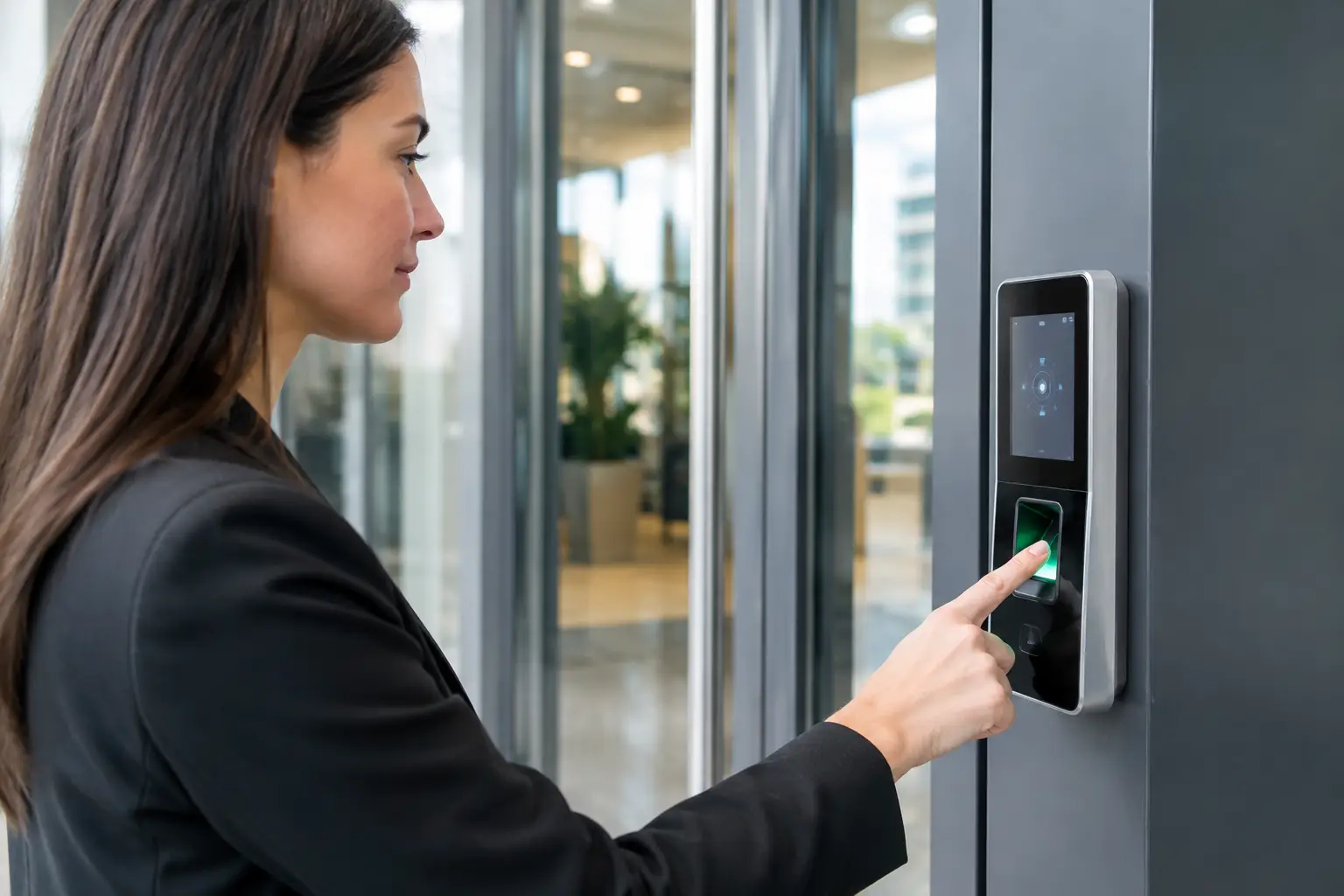
A key copied without permission can circulate for years. A keypad code can be texted, guessed, or left behind when an employee moves on. Biometric access systems address that weak point by tying entry to a person rather than to something they carry or memorize. For homeowners and businesses that need clearer control over who enters, that can be a meaningful upgrade.
Biometric entry is not the right answer for every door or every property. It needs the right hardware, a reliable installation, and a plan for power loss, staff changes, and visitor access. When those details are handled professionally, biometric technology can strengthen day-to-day security without making the building harder to use.
What a Biometric Reader Actually Does
A biometric reader verifies a physical characteristic, most commonly a fingerprint. Depending on the system, it may also use facial recognition, an iris scan, or palm recognition. Instead of storing a simple image of that characteristic, quality systems typically convert it into encrypted reference data used to compare future attempts.
When someone presents their fingerprint or other credential at the reader, the system compares it with authorized records. A match tells the connected lock, electric strike, magnetic lock, or access control panel to release the door. No match means the door remains secured.
For a property manager or business owner, the practical benefit is accountability. Authorized users can be enrolled or removed without collecting physical keys from every person who may have received one. Many systems also maintain an event record, helping management review which credential opened a protected door and when.
Where Biometric Access Systems Fit Best
Biometric access systems are especially useful where the same limited group needs regular entry and the consequences of shared credentials are high. An office suite with sensitive files, a staff-only medical area, a server room, a private inventory space, or a multi-tenant building’s restricted amenities may be strong candidates.
At a residence, a biometric lock can work well on a primary entry or a door connecting the home to a garage. It may be convenient for households where family members frequently arrive without keys, or for owners who want to avoid distributing codes to recurring service providers. A homeowner should still think carefully about who needs access and whether a fingerprint is truly more practical than a mobile credential or code for that person.
Not every exterior opening needs a biometric reader. A low-traffic storage closet, a gate used by delivery personnel, or a door exposed to heavy weather may be better served by another access method. The best system matches the door’s purpose, traffic level, environment, and security priority.
The Benefits Go Beyond Convenience
The biggest advantage is that fingerprints and facial characteristics are not casually handed from one person to another. That reduces the common problem of a code being shared beyond the intended group. It also removes the need for many users to carry a physical credential for a single controlled door.
Biometrics can also make access changes more manageable. When an employee leaves, a manager can remove that person’s authorization rather than wondering whether a key was copied or a code was saved elsewhere. In systems with reporting, entry activity can support better oversight after an incident or a question about access.
For busy homes, the benefit may be simpler: fewer lockouts caused by forgotten keys. Still, convenience should never be the only consideration. A properly selected lock must offer dependable mechanical security, correct door alignment, and a backup entry method that the owner understands.
Important Trade-Offs Before You Install
A biometric system is not magic, and honest planning matters. Readers can struggle with wet, dirty, injured, or worn fingerprints. Outdoor conditions, direct sun, cold temperatures, and poor placement can affect some devices. Facial recognition units need thoughtful positioning and lighting, while fingerprint readers need to be kept clean.
There is also a privacy question. Employees and residents should know what information is being collected, who administers it, how long it is retained, and how it is protected. Businesses should establish a written access policy before enrollment begins. For some workplaces, using a biometric reader alongside a card or mobile credential gives people a practical alternative while maintaining controlled entry.
Power and connectivity require equal attention. Electrified access hardware can behave differently during an outage depending on how it is configured. The system should be designed so that people can exit safely at all times, especially on doors subject to life-safety requirements. A battery backup, mechanical override, or properly planned alternate credential may be necessary depending on the door and hardware.
Finally, biometric enrollment takes administration. Someone must be authorized to add users, remove former users, review reports, and respond when a reader stops recognizing a valid person. A system that is technically capable but poorly managed can create delays and frustration for everyone who relies on it.
Choosing the Right Setup for Your Property
Start with the door, not the device. Is it a wood, hollow metal, aluminum storefront, or glass door? Does it already have a deadbolt, panic hardware, closer, electric strike, or other access control equipment? The answers determine which lock and reader configuration can be installed securely and operate reliably.
Next, define who needs access. A small office may need only a fingerprint reader and a limited number of enrolled users. A larger property may need multiple doors, scheduled permissions, visitor credentials, and centralized oversight. A property manager with several tenants may need separate access groups so one organization cannot enter another’s restricted area.
Think through exceptions as well. Who can enter if a reader is damaged? How will a cleaning crew, contractor, or emergency responder gain authorized access? What happens when a user has an injury that prevents fingerprint recognition? These are not reasons to avoid biometric technology. They are reasons to install it as part of a complete access plan.
For commercial openings, the lock hardware must be compatible with the access control equipment. A reader alone does not secure a door. The quality of the strike, lock, door frame, wiring, door closer, and installation all affect whether the system performs as intended. Improperly aligned doors can cause repeated failures that look like a reader problem but are actually a hardware issue.
Ready to Upgrade to Biometric Access Control?
Multi Locksmith LLC provides licensed, insured, and background-checked access control installation throughout Montgomery County.
📞 Call 240-706-4799Professional Installation Protects the Entire System
A biometric reader is only as dependable as the door it controls. Proper installation includes evaluating the existing locking hardware, checking door alignment, routing and protecting wiring, mounting components at a usable height, and testing normal access, denied access, exit operation, and backup entry.
Commercial properties also need special care around panic hardware and required egress. Security should control entry without trapping people inside. A qualified locksmith can assess the physical door hardware alongside the electronic components, helping avoid a setup that appears convenient but creates operational or safety concerns.
For homes and businesses in Rockville and across Montgomery County, working with a licensed and insured locksmith provides an added layer of accountability. Multi Locksmith LLC can evaluate the opening on-site, recommend practical access options, and install compatible hardware with the security of the whole door in mind.
Keep Access Control Working After Installation
Enrollment should be deliberate. Use clear names for each user, avoid generic shared profiles, and remove permissions promptly when roles change. Test the reader with each enrolled person before relying on it as the only entry method.
Basic maintenance is simple but worthwhile. Keep the reader surface clean according to the manufacturer’s guidance, inspect the door for sagging or latch misalignment, and periodically test backup access methods. For business systems, review access activity and user permissions on a regular schedule rather than waiting for a security issue.
The strongest access control plan is the one people can follow consistently. A well-installed biometric reader, appropriate backup access, sound door hardware, and responsible administration can give a property owner greater confidence every time that door closes.