
Business Security Hardware Guide for Offices
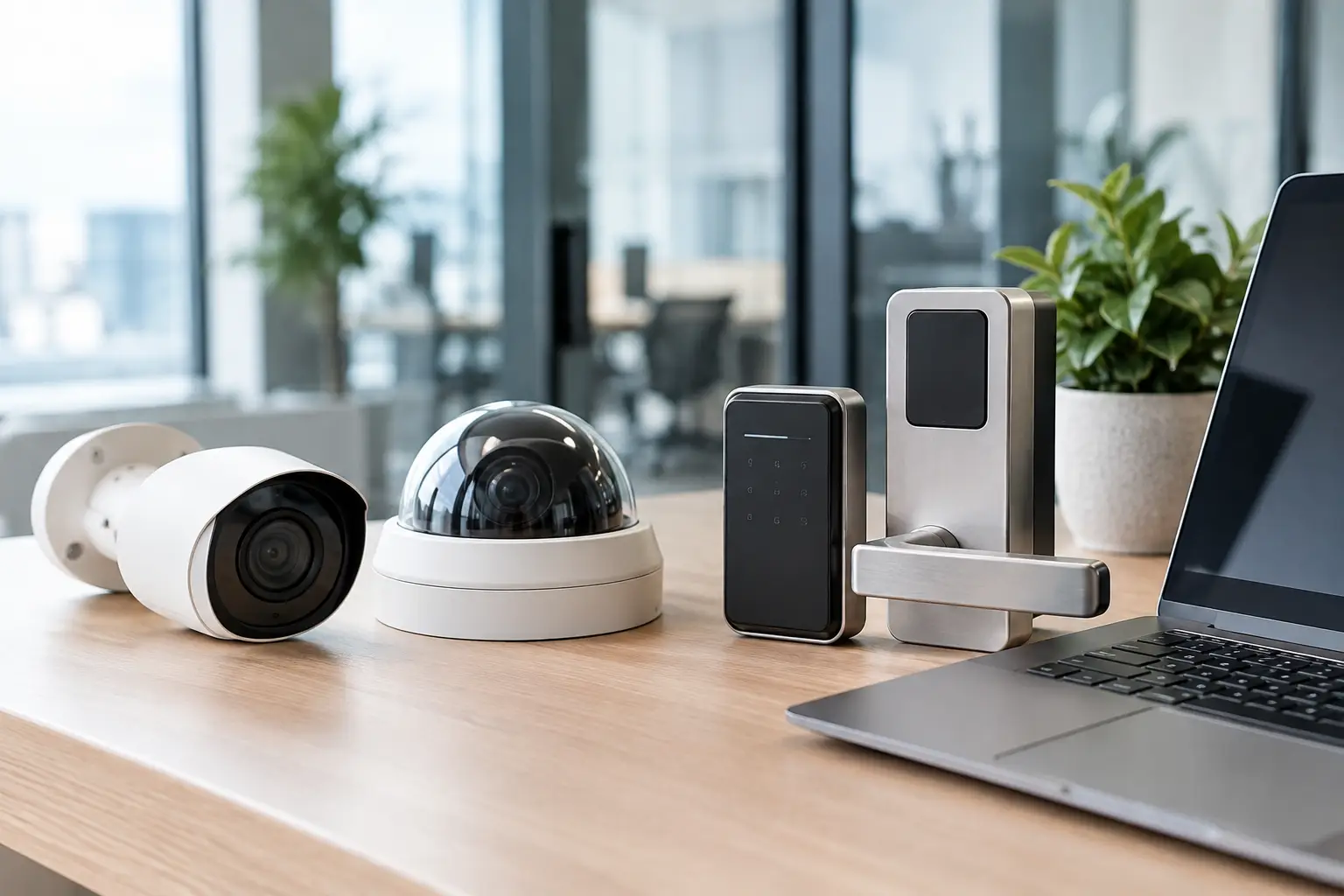
A business door is more than an entry point. It can protect employee-only areas, confidential records, inventory, equipment, and the continuity of daily operations. This business security hardware guide explains how to choose the right physical security components for your building without relying on guesswork or one-size-fits-all recommendations.
For many Montgomery County businesses, the best approach is not simply installing a stronger lock. It is building a practical system around how your people enter, where visitors go, which doors must allow a quick exit, and who needs access after hours. A professional locksmith can evaluate those details on site and recommend hardware that works together.
Start With the Door, Frame, and Daily Use
Security hardware can only perform as well as the door and frame supporting it. A commercial-grade lock installed on a damaged frame, loose hinges, or a misaligned door may still leave the opening vulnerable and frustrating to use. Before choosing new hardware, inspect the complete opening.
Look for doors that drag, fail to latch consistently, have visible gaps, or require employees to force them closed. These are more than maintenance concerns. A door that does not close and latch properly can defeat an access control system, leave a restricted area unsecured, or create an emergency exit problem.
The level of traffic also matters. A rear employee entrance used dozens of times each day needs different hardware than a storage-room door opened only by a manager. High-use openings benefit from commercial-grade components designed to withstand repeated cycles. Lower-traffic interior doors may need controlled key access but not the same level of reinforcement.
Business Security Hardware Guide: The Core Components
Most commercial properties rely on several layers of hardware rather than one device. The right combination depends on the building layout, the value of what is being protected, and the number of people who use each entrance.
Commercial Locks and Deadbolts
Commercial lever locks, mortise locks, and cylindrical locks are common choices for offices, retail locations, medical practices, and property-managed buildings. The appropriate option depends on the door construction and the amount of daily use. A professional evaluation helps ensure the lock function matches the opening. For example, a storeroom door should not be set up like a public restroom or a main exit.
Deadbolts can add another layer of protection on certain exterior doors, especially where access is limited to a small number of authorized users. However, they are not appropriate for every commercial opening. Doors used for required egress need hardware that allows occupants to exit without keys, special knowledge, or unnecessary delay.
Access Control Systems
Electronic access control is often the most practical upgrade for businesses with changing staff, multiple entry points, or a need for better accountability. Instead of collecting keys from a departing employee and wondering whether copies were made, an authorized manager can remove that person’s credential from the system.
Credentials may include key cards, fobs, mobile credentials, or keypad codes. The best choice depends on the staff workflow. Keypads are convenient for a small, stable team, but codes should be changed when staffing changes. Cards and fobs provide more individual control, while mobile access can reduce the need to carry an additional item.
Access control also requires reliable door hardware. An electronic lock, electric strike, or magnetic locking arrangement must be selected and installed with the door’s use and exit requirements in mind. This is not a place for an improvised installation. Proper wiring, hardware alignment, and egress operation are essential.
Panic Hardware and Exit Devices
Panic bars and other exit devices are designed for doors that must allow occupants to leave quickly. They are common in restaurants, assembly areas, retail spaces, schools, and buildings with public traffic, but requirements can vary by occupancy and local code.
A panic device should release with a simple push from inside while remaining secure from the exterior. It must also be compatible with the door, frame, locking hardware, and any electronic access system. Adding a lock or modification that interferes with exit operation can create a serious liability concern. When an exit door needs repair or an upgrade, have a qualified commercial locksmith assess the full opening rather than replacing only one part.
Door Closers, Hinges, and Reinforcement
Door closers are frequently overlooked until a door starts slamming, drifting open, or failing to latch. Yet they play a central role in keeping controlled doors closed after each use. A properly adjusted closer helps an access-controlled door latch reliably and reduces wear on the frame and lock.
Heavy-duty hinges, continuous hinges, latch guards, strike reinforcement, and frame repair may also be necessary where a door receives hard use or shows signs of forced-entry attempts. These components do not replace a quality lock. They help ensure the entire door assembly resists attack rather than shifting pressure to its weakest point.
Choose Access Levels Before Choosing Keys
Business owners often begin by asking which lock is strongest. A more useful first question is: who needs to enter each area, and when? Mapping access by role prevents unnecessary key distribution and identifies openings that should be electronically controlled.
A small office may only need separate access for the front door, office suite, and records room. A larger operation may need departments, supervisors, vendors, cleaning crews, and property management to have different permissions. If too many people carry the same key, accountability becomes difficult. If every door requires a different key, daily work becomes inefficient.
A master key system can balance these needs. Individual keys can operate only assigned doors, while management keys open selected groups of doors. The system should be planned carefully from the start. Poorly managed master keying can create confusion, and uncontrolled key duplication can weaken the purpose of the system.
For higher-turnover environments, electronic access may offer better long-term control. It allows permissions to be changed without rekeying every affected door. Still, mechanical keys remain useful for certain areas and backup access. The practical solution is often a combination of both.
Do Not Treat Every Door the Same
Exterior entrances, rear delivery doors, private offices, server rooms, supply closets, and tenant spaces have different risks. Applying the same lock to all of them may waste effort in some places and leave important areas under-protected in others.
Consider the door’s exposure, visibility, traffic level, and what lies behind it. A rear entrance hidden from public view may need stronger reinforcement and controlled access. A front door may benefit from access control during business hours and a reliable locking schedule after closing. Interior rooms containing sensitive files or valuable equipment may need restricted credentials even when the rest of the office is open.
Property managers should also consider shared areas. Common doors need dependable hardware that can handle frequent use, while tenant doors require a clear plan for rekeying between occupancies. Keeping accurate records of issued keys and access credentials makes transitions far more manageable.
Need Commercial Security Hardware for Your Office?
Multi Locksmith LLC provides licensed, insured, and background-checked commercial locksmith service throughout Montgomery County.
📞 Call 240-706-4799Know When Repair Is Better Than Replacement
Not every security issue requires entirely new hardware. A lock may be worth repairing if the problem is limited to worn internal parts, a loose trim plate, poor alignment, or a failing closer. Repair can restore proper operation when the existing commercial hardware is still appropriate for the door and building use.
Replacement is often the better choice when hardware is outdated, repeatedly failing, incompatible with needed access control, or no longer suitable for the level of risk. A professional should explain the reason for the recommendation in plain language, including what the new hardware changes and how it will affect employees.
After a break-in attempt, employee departure involving unreturned keys, or occupancy change, do not delay evaluating affected locks. Rekeying, lock replacement, door repair, or access credential removal may be needed immediately to restore control of the property.
Work With a Qualified Commercial Locksmith
Commercial hardware has to work reliably under daily pressure, and the details matter. Incorrect backset measurements, poorly installed strikes, wrong lock functions, and improperly adjusted closers can turn a security upgrade into an ongoing operational problem.
Multi Locksmith LLC provides licensed, insured, and background-checked mobile locksmith support for businesses throughout Montgomery County, including Rockville, Silver Spring, Bethesda, Gaithersburg, and Germantown. On-site service allows a technician to inspect the actual door conditions, identify weak points, and recommend hardware that fits the building instead of a generic package.
The right hardware should make access easier to manage, keep restricted spaces controlled, and allow people to exit properly when needed. Start with the doors your business relies on most, then build a clear plan for the rest of the property with a trusted professional who can install and service the system when it matters.