
School Panic Bars: What Every Facility Needs
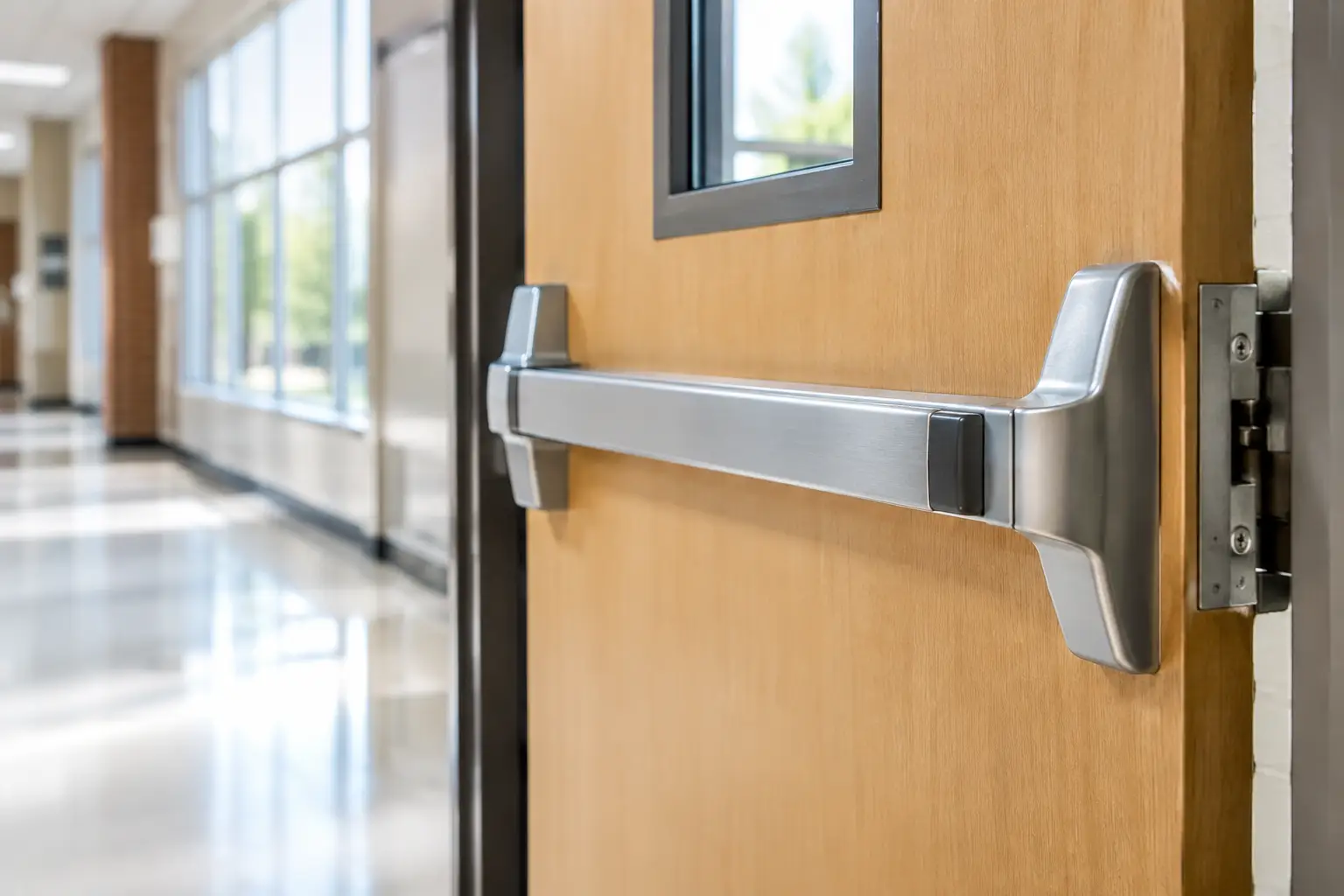
A school door can look perfectly normal during a routine walkthrough and still fail when it matters most. If a crowded hallway needs to exit quickly, the door must release with a simple push – without a key, special instruction, or force. That is the purpose of school panic bars: dependable exit hardware that helps students, staff, and visitors leave a building quickly during an emergency.
For school administrators, facility managers, and property teams, panic hardware is not a minor door accessory. It is a critical part of the building’s emergency exit plan. The right equipment, correctly installed and maintained, supports orderly evacuation while helping control access from the outside.
Why School Panic Bars Matter
Panic bars, also called exit devices or crash bars, are designed to unlatch a door when pressure is applied to the operating bar or push pad. A person does not need to grasp a knob, turn a lever, or locate a lock. That simple operation can make a meaningful difference when people are moving quickly, visibility is limited, or stress is high.
In a school setting, exit doors may be used by hundreds of people each day. Gymnasiums, cafeterias, auditoriums, hallways, stairwells, and exterior exits can all experience heavy traffic. Hardware must withstand repeated use while continuing to release reliably from the egress side.
The need is not limited to large campuses. Private schools, childcare centers, tutoring facilities, religious schools, and education offices also need doors that support clear emergency egress. Local requirements can vary depending on the building type, occupancy, door location, and the authority having jurisdiction. A professional assessment helps determine what hardware is appropriate for each opening.
Where Panic Hardware Is Most Needed
Not every door in a school uses the same type of hardware. A classroom door, for example, has different security and occupancy needs than a rear exit door leading from a cafeteria. The correct choice depends on how the door is used, how many people may use it, and whether it is part of a required exit route.
Exterior doors serving assembly areas are often a primary concern. Doors near gyms, cafeterias, multipurpose rooms, and auditoriums may need to handle large groups leaving at once. Rear exits and side exits also deserve close attention because they are sometimes used less frequently, allowing alignment problems or weather-related wear to go unnoticed.
Stairwell doors require special planning as well. They must provide the intended path of egress while working with the building’s access-control and fire-alarm systems where applicable. A hardware change that appears straightforward can create an operational problem if it is not planned around the full door assembly and life-safety requirements.
Choosing the Right Type of Exit Device
A panic bar should be selected for the door, not simply chosen from a catalog. Door material, width, height, frame condition, traffic level, and locking needs all affect the right solution.
Rim Exit Devices
A rim exit device mounts on the surface of the door and latches into a strike on the frame. It is a common choice for single exterior doors and can be practical when the door and frame are in good condition. It offers straightforward operation and can work well for many school exit openings.
Vertical Rod Devices
Vertical rod hardware secures the door at the top and bottom rather than only at the side. It is often used on pairs of doors where a center post is not desirable or where a wide opening is needed for movement of students, equipment, or deliveries. These systems need careful adjustment because top and bottom latching components must align correctly.
Mortise Exit Devices
Mortise devices are installed within the door edge and may be chosen for certain door configurations or appearance requirements. They can offer a clean look, but installation is more involved and should be completed by a qualified professional who understands the door construction and compatible trim.
Alarmed and Electrified Exit Devices
Some school exits need to remain available for emergency egress while discouraging unauthorized use. Alarmed exit devices can alert staff when a door is opened. Electrified hardware can also work with access control, credential readers, or monitored systems when designed and installed correctly.
These options involve trade-offs. Increased access control can improve monitoring, but it must never interfere with the ability to exit from the inside. The goal is controlled entry and free egress, not a door that creates confusion during an emergency.
Installation Is About More Than the Bar
A panic bar can only perform as well as the door it is attached to. Before installation, a locksmith should inspect the entire opening: the door, hinges, frame, closer, latch area, weatherstripping, threshold, and existing locks. A sagging door or misaligned frame can prevent even high-quality hardware from latching or releasing properly.
Door closers are especially important. If a closer shuts too aggressively, it may make the door difficult for younger students or visitors to use. If it closes too slowly or fails to latch, the door may not secure after someone exits. The closer and exit device need to operate together as one system.
Professional installation also avoids common problems such as drilling in the wrong location, using incompatible trim, blocking a required opening, or adding hardware that conflicts with fire-rated door requirements. For schools in Rockville, Silver Spring, Bethesda, and throughout Montgomery County, an on-site evaluation is often the most reliable way to identify the right solution before work begins.
Signs Your School Panic Bars Need Attention
Exit hardware should be checked routinely, especially on doors exposed to frequent use or changing weather. Staff members are often the first to notice a problem, but they may not know which symptoms indicate a serious hardware concern.
Watch for doors that require an unusually hard push to open, bars that stick or fail to return, latches that scrape the strike, loose mounting screws, rattling vertical rods, or doors that do not close and latch consistently. A delayed-release alarm, damaged trim, or a door that opens from the outside when it should remain secured also deserves prompt attention.
Do not assume a door is functional because it opens once during a quick test. Panic hardware should release consistently, and the door should close and latch properly after each use. Repeated testing can reveal issues that are not obvious during a single inspection.
Get a Professional School Panic Bar Inspection
Multi Locksmith LLC provides licensed, insured, and background-checked technicians for panic hardware installation, repair, and code-compliance service for schools and facilities throughout Montgomery County.
📞 Call 240-706-4799A Practical Inspection Routine for School Exit Doors
Facility staff do not need to disassemble hardware to perform useful routine checks. A simple walk-through can identify concerns before they become urgent. Test the bar with normal pressure, confirm the door opens freely, and make sure it closes and latches when released.
Also check that exit routes are clear. Storage carts, furniture, decorations, temporary signs, and delivery items can create obstacles around doors even when the hardware itself works correctly. The route to the door and the area immediately outside it both matter during an evacuation.
A more detailed inspection should be handled by a licensed, insured locksmith or qualified door hardware professional. This is particularly important after a break-in attempt, renovation, access-control upgrade, door replacement, or seasonal changes that affect alignment. Documenting service and repairs also gives school administrators a clearer maintenance history for each critical opening.
Avoid Quick Fixes That Create Bigger Problems
Tape, improvised wedges, altered strikes, and mismatched replacement parts can turn a minor door issue into a serious egress concern. They may make a door appear to work temporarily while hiding the underlying cause, such as worn hinges, a warped door, incorrect latch alignment, or a failing closer.
It is also risky to add extra locks, chains, or security devices to an exit door without professional guidance. Schools often need stronger access control, particularly at secondary entrances, but any added security must be evaluated alongside emergency exit requirements. A dependable solution protects the building without compromising the people inside it.
Multi Locksmith LLC provides professional panic bar installation, repair, and exit-door hardware support for commercial and institutional properties. As a licensed and insured local locksmith, the focus is on diagnosing the full door issue, recommending compatible hardware, and completing work on-site with accountability.
A school’s emergency exits should not become an afterthought until a bar sticks or a door fails an inspection. Regular attention to panic hardware gives administrators one less uncertainty to manage – and gives every person in the building a clearer path out when seconds matter.