
Panic Bars Versus Exit Alarms for Your Building
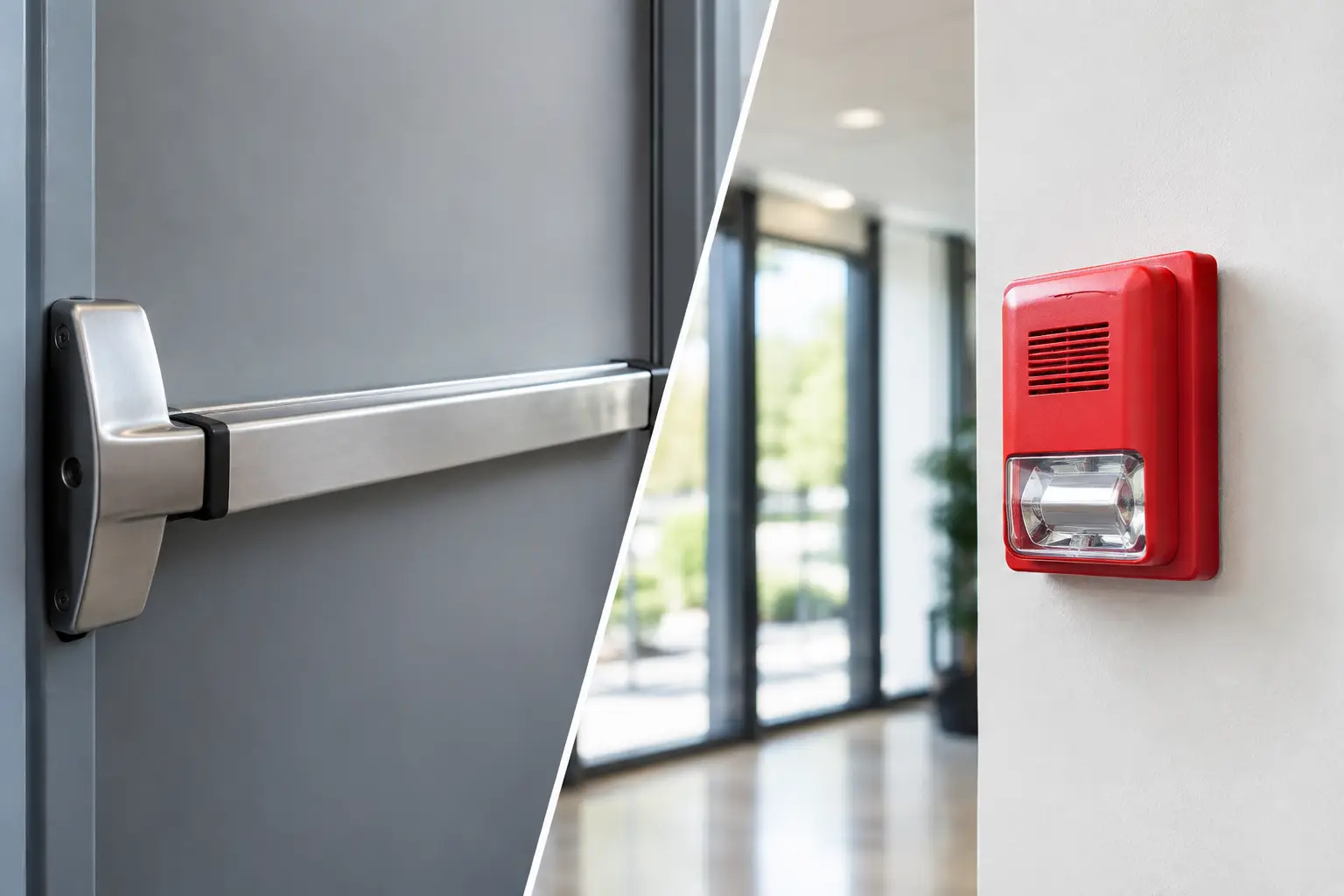
A rear employee door that opens too easily can become a security concern. A rear door that does not open quickly during an emergency can become a much more serious problem. That is why the choice between panic bars versus exit alarms deserves more attention than simply selecting a door handle. The right setup must let occupants leave without delay while helping the property control unauthorized use.
For Montgomery County business owners, office managers, school administrators, and property managers, the answer is rarely one device for every opening. Door location, occupancy, fire rating, access needs, and local code requirements all affect the recommendation. A professional inspection identifies what the door must do before hardware is installed or replaced.
What a Panic Bar Does
A panic bar, also called exit device or panic hardware, is designed for fast, intuitive exit. Pressing the horizontal bar releases the latch, allowing the door to open in the direction of travel. Someone does not need to turn a knob, locate a key, or understand a complicated release mechanism.
Panic hardware is commonly used on commercial doors with higher occupant loads, including retail spaces, offices, assembly areas, schools, houses of worship, and public-facing facilities. It is especially useful where people may need to exit quickly or where visitors are unfamiliar with the building.
The key benefit is simple: the device provides immediate egress with a broad push surface that is easy to operate under stress. It can also work with many commercial door configurations, including rim devices, vertical rod devices, and mortise exit devices. The correct style depends on the door construction, frame, locking points, and whether the opening requires fire-rated hardware.
A panic bar is not automatically an alarmed device. In its basic form, it releases the door but may not notify anyone that the door has been opened. That distinction matters for doors near stockrooms, employee-only corridors, loading areas, and other locations where an unauthorized exit could create a security issue.
What an Exit Alarm Does
An exit alarm adds an audible notification when an exit door is opened. Its purpose is deterrence and awareness. When someone pushes the bar or operates the release device, the alarm sounds, alerting staff that the door has been used.
Some alarmed exit devices are built directly into panic hardware. Others are standalone alarm units paired with compatible exit hardware. In either case, the door should still allow lawful emergency egress. The alarm is intended to discourage improper use, not trap people inside.
Exit alarms are often a practical fit for secondary exits, delivery doors, stairwell doors, employee exits, and doors where management needs to know when someone leaves. For example, a retail store may use an alarmed exit device on a side door to discourage merchandise loss and unauthorized entry attempts while preserving a clear exit route for occupants.
Many models can be armed, disarmed, or monitored through access control components. That can be useful when staff regularly need to use an exit for deliveries or scheduled operations. However, an alarmed door requires clear procedures. Employees must know who can disarm it, how to reset it after activation, and what to do when the device signals a problem.
Panic Bars Versus Exit Alarms: The Main Difference
The most useful way to compare panic bars versus exit alarms is to separate egress from notification. A panic bar focuses on releasing the door quickly. An exit alarm focuses on alerting people when the door is opened. In many commercial applications, these functions are combined in one properly selected device.
Choose panic hardware when the primary concern is dependable, code-conscious exiting. Choose alarmed exit hardware when the door also needs a visible and audible deterrent against unauthorized use. A standard panic bar may be the better fit for a main exit that sees frequent normal traffic. An alarmed device may be better for a side exit that should remain closed except during an emergency or authorized operation.
Neither option is a substitute for a full door assessment. The device has to match the door, frame, latch, hinges, closer, occupancy, and fire rating. A door can have quality exit hardware and still perform poorly if it drags, has a misaligned strike, closes too fast, or is blocked by furniture and equipment.
When a Panic Bar Is the Better Choice
A standard panic bar is often appropriate where regular entry and exit are expected. Think of a busy office suite, a customer-facing business exit, or a common-area door where an alarm would create unnecessary disruption.
It may also be the right choice when the building already has other security measures in place, such as staff supervision, cameras, controlled exterior access, or a monitored access control system. In these settings, the priority is reliable exit operation without adding an alarm event each time the door is used.
The device style still matters. Rim exit devices are common on single doors, while vertical rod devices can secure paired doors. Mortise devices may suit openings that require a cleaner appearance or specific locking arrangements. A licensed commercial locksmith can determine whether the existing door can accept the new hardware or needs repairs first.
When an Exit Alarm Makes More Sense
Exit alarms are valuable when a door should allow emergency exit but should not become an informal shortcut. They are frequently used at employee-only exits, loading-area doors, back corridors, and doors near inventory or restricted work areas.
The sound of the alarm can discourage casual misuse because the person opening the door knows the action will be noticed immediately. It can also help staff respond quickly if a child, visitor, or unauthorized person uses an exit unexpectedly.
Still, an alarm is not the right answer for every door. If the door is used many times a day for legitimate operations, repeated alarm activation can lead to frustration and poor compliance. In that case, scheduled access control, a properly managed credential system, or a different traffic pattern may be more effective than relying on staff to silence and reset an alarm throughout the day.
Get a Professional Exit Hardware Consultation
Multi Locksmith LLC provides licensed, insured, and background-checked technicians for panic bar and exit alarm installation, repair, and code-compliance service throughout Montgomery County.
📞 Call 240-706-4799Code, Fire Doors, and Door Condition Matter
Commercial exit hardware decisions should never be based on appearance alone. Building and fire requirements can depend on the type of occupancy, occupant load, door location, and the authority having jurisdiction. Requirements can also change when a space is renovated, repurposed, or inspected after a tenant change.
Fire-rated openings require additional attention. The wrong hardware, an incompatible modification, or a door that fails to latch can affect the opening’s performance. A fire exit device may be required in certain situations, and it differs from ordinary panic hardware because it uses a latching mechanism designed for rated doors.
Door condition is equally important. The closer should return the door fully, the latch should engage correctly, and the opening should not bind against the frame or threshold. Any delayed operation, sticking, loose bar, broken end cap, or inconsistent latch engagement should be addressed promptly. Exit hardware only protects occupants when it works every time.
Questions to Ask Before Choosing Hardware
Before selecting an exit device, consider how the opening is actually used. Is it a primary public exit, a staff-only door, a rear delivery entrance, or a door that is rarely used? Does it need to remain latched at all times? Will employees need authorized access from the outside? Is the door part of a rated assembly?
Also consider who may use the door during an emergency. A device that seems obvious to experienced employees should still be intuitive for visitors, contractors, and new staff. Clear signage, unobstructed pathways, and regular door checks are as important as the hardware itself.
A professional assessment can prevent common mistakes, such as placing an alarmed device on a high-traffic door, installing hardware that does not match the frame, or overlooking a worn closer that prevents reliable latching. It also gives property managers a clear plan for repair, replacement, and ongoing maintenance.
For businesses in Rockville, Silver Spring, Bethesda, Gaithersburg, and throughout Montgomery County, Multi Locksmith LLC can evaluate commercial exit doors, install appropriate panic hardware, and address the door and locking issues that affect day-to-day performance. The goal is a door that supports fast exit, stronger control, and dependable operation when people need it most.
A well-chosen exit device does more than secure a doorway. It gives employees, visitors, and property managers confidence that the building will respond properly at a critical moment.